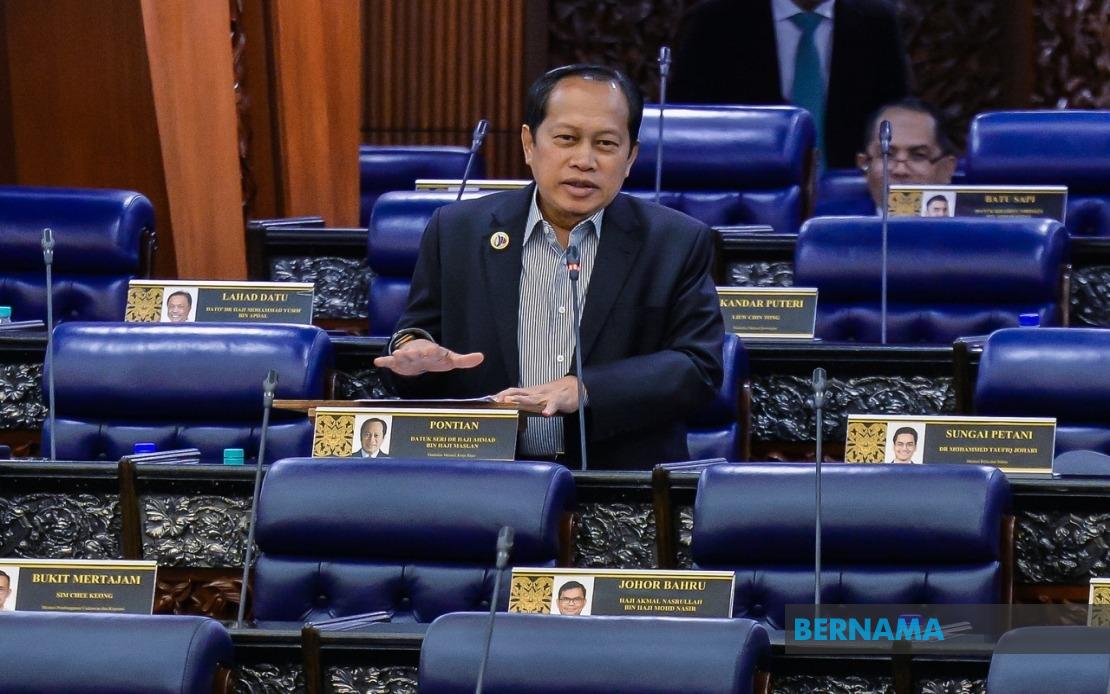
The Federal Government has opted to develop the East Coast Expressway Phase 3 (LPT3) through a public-private partnership arrangement rather than direct state investment, citing significant budgetary constraints. Deputy Works Minister Datuk Seri Dr Ahmad Maslan disclosed this approach during parliamentary proceedings on July 8, emphasising that the selected private entity would assume full responsibility for construction financing and delivery. The decision reflects contemporary challenges facing Malaysia's public finances, where competing demands across healthcare, education, and social support have squeezed the allocation available for major infrastructure initiatives.
The project will follow a Request for Proposal process to identify a qualified private sector partner capable of managing the extensive undertaking. This procurement methodology allows the government to transfer both financial and operational risk to the winning bidder while maintaining oversight of service standards and public interest protections. The RFP framework represents a pragmatic approach increasingly common across Southeast Asia, where cash-strapped administrations leverage private capital and expertise to deliver essential transportation infrastructure without immediately burdening national budgets.
The proposed expressway will span 122 kilometres of dual two-lane carriageway, linking Kampung Gemuruh in Kuala Terengganu with Tunjung in Kota Bharu. This routing strategy addresses longstanding regional connectivity challenges, particularly the seasonal congestion that intensifies during festive periods and school holidays when residents travel between the East Coast and central regions. The corridor will incorporate five interchanges designed to facilitate seamless connections with existing road networks and future transport infrastructure.
A comprehensive feasibility study conducted in 2022 established a preliminary development cost of RM9.8 billion, though this figure remains subject to refinement as detailed engineering and market conditions evolve. This substantial investment reflects the complexity of constructing a modern expressway across challenging terrain and through multiple jurisdictions. For Malaysian commuters and businesses reliant on East Coast connectivity, the project represents a critical investment in regional economic integration and reduced travel times between coastal communities and the Klang Valley industrial heartland.
Ahmad Maslan contextualised the LPT3 initiative within a broader transportation ecosystem emerging across Peninsular Malaysia. He noted that the East Coast Rail Link, upon completion, would provide an alternative passenger corridor for Klang Valley-bound travellers, whilst the forthcoming Kota Bharu-Kuala Krai Expressway and Lingkaran Tengah Utama Expressway would further expand regional mobility options. Rather than viewing LPT3 in isolation, the Deputy Minister positioned it as a complementary element within a multi-modal network offering residents and freight operators genuine alternatives for their journey planning.
The toll pricing structure for LPT3 remains undetermined at this stage, with Ahmad confirming that tariff-setting will incorporate multiple variables. Construction costs, debt servicing arrangements, operational and maintenance expenditure, forecasted traffic volumes, and the duration of the private operator's concession period will collectively influence the final toll rate. This complex calculation methodology ensures that tolls reflect genuine economic realities whilst remaining palatable to users accustomed to existing expressway charges across Malaysia. Establishing competitive yet financially viable tolls requires sophisticated modelling and stakeholder consultation.
Critical parameters including the concession duration, toll collection methodology, and physical gantry specifications await determination through the forthcoming RFP process. These technical and commercial terms will substantially shape both the viability of bids submitted by potential operators and the long-term user experience. The concession length particularly influences investor appetite, as a extended operational period provides greater revenue certainty and return on capital deployment, whilst shorter arrangements necessitate higher annual toll collections to achieve acceptable profitability thresholds.
The timing of LPT3's implementation arrives as Malaysia confronts evolving transportation demands driven by economic growth, urbanisation, and shifting commuter patterns. East Coast states including Terengganu and Kelantan have historically experienced infrastructure disadvantages relative to more densely populated regions, creating legitimate grievances about regional equity in developmental investment. The expressway addresses these longstanding concerns whilst simultaneously supporting national productivity by reducing transportation costs and journey times for goods and workers transiting between regions.
For Malaysian businesses and investors, the PPP model offers particular advantages worth noting. Private sector operators typically bring efficiency improvements, innovative technologies, and performance discipline that sometimes exceed government-managed projects. However, the toll revenue model means end-users ultimately finance the initiative through usage charges rather than general taxation, raising questions about equity between those who utilise the expressway and broader populations. This trade-off remains inherent to PPP infrastructure delivery across Southeast Asia and reflects fundamental choices about cost distribution.
The parliamentary response to LPT3's PPP framework suggests growing acceptance of private partnership models for major transportation infrastructure among Malaysia's political class. As direct government capital becomes increasingly scarce and debt servicing obligations consume larger budget shares, policymakers increasingly view private sector participation as pragmatic rather than ideologically problematic. This evolving consensus potentially accelerates infrastructure delivery whilst introducing new accountability mechanisms between private operators, government regulators, and the travelling public who depend upon these essential networks for economic and social connectivity.

