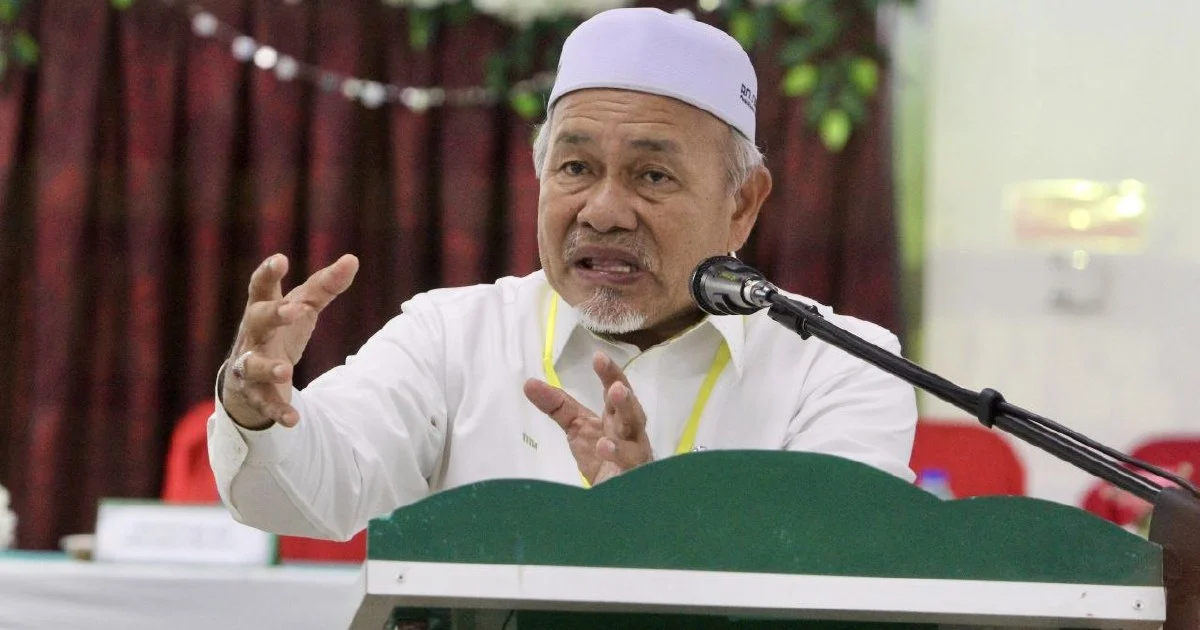
Pas deputy president Datuk Seri Tuan Ibrahim Tuan Man has indicated that the federal administration under Prime Minister Datuk Seri Anwar Ibrahim will probably avoid calling an early general election in the near term, particularly given the commanding performance delivered by Barisan Nasional in the recently concluded Johor state polls.
The assessment from the influential Pas figure carries significance within Malaysia's current political landscape, where coalition dynamics and electoral timing remain closely watched by both market watchers and observers of governance. Johor, as the nation's second-largest state by population and a consistent powerhouse for the ruling Barisan Nasional, traditionally serves as a barometer for national sentiment. The coalition's strong performance in the state elections therefore provides the federal government with a degree of political confidence and public backing that may reduce any pressing rationale for holding a nationwide ballot ahead of the constitutionally mandated deadline.
The timing of this assessment proves noteworthy given the fluid nature of Malaysian politics in recent years. The country has witnessed considerable political churning since the 2022 general election, which produced a hung parliament and ultimately led to the formation of the current unity government comprising Anwar Ibrahim's PKR, the historic Barisan Nasional coalition, and various other political parties and independents. This broad-based but intricate arrangement has required careful management to maintain stability and push through legislative priorities. An early dissolution of parliament would risk destabilising these carefully negotiated agreements and potentially trigger significant upheaval in the coalition arrangements that have proven functional, albeit delicate.
Barisan Nasional's commanding victory in Johor provides the administration with political momentum and renewed legitimacy at the grassroots level. The coalition's success suggests that the electorate, at least in this crucial state, continues to place confidence in the existing political configuration. This mandate reduces the urgency for Anwar Ibrahim to test public sentiment through a nationwide election. Instead, the federal government can leverage this victory to consolidate its position and advance its policy agenda without the considerable expense, disruption, and uncertainty that a general election would entail.
From an economic perspective, avoiding an early general election aligns with the government's efforts to maintain investor confidence and ensure macroeconomic stability. General elections invariably create periods of political uncertainty that can weigh on business sentiment, currency valuations, and capital flows. Given Malaysia's ongoing development priorities and the need to sustain growth momentum, maintaining political predictability becomes increasingly valuable. The administration can point to Johor's election outcome as evidence of continued public support, thereby reducing anxieties among both domestic and international stakeholders about the durability of current governance structures.
Tuan Ibrahim's comments also reflect calculations within Pas and the broader coalition about optimal timing for future electoral contests. The Islamist party, which has consolidated significant influence within the current government framework, likely calculates that maintaining the status quo serves its institutional interests better than triggering premature elections that could disrupt existing power-sharing arrangements. Pas commands considerable parliamentary seats and holds ministerial positions, making it a crucial component of the governing coalition. Preserving this arrangement until the constitutionally permissible timeframe becomes increasingly attractive compared to gambling on electoral outcomes that could prove less favourable.
The statement carries implications for Malaysia's political calendar and governance continuity over the medium term. Should Anwar Ibrahim's administration indeed avoid calling early elections, the country would likely proceed toward a general election in the latter part of 2024 or early 2025, aligned with the five-year cycle from the 2022 contest. This extended timeline provides the government with adequate space to implement policy initiatives, demonstrate developmental achievements, and build public support through performance rather than relying on inherited political momentum. For investors and businesses, such predictability offers the advantage of planning with greater certainty regarding the electoral horizon.
Regional observers also watch these dynamics closely, as Malaysia's political stability affects broader Southeast Asian geopolitics and economic cooperation. The country's role in regional forums, trade arrangements, and diplomatic initiatives depends partly on having stable, functioning government. Avoiding electoral instability therefore carries implications beyond Malaysia's borders, affecting the calculus of neighbouring nations and international partners regarding engagement with the Malaysian government.
Pas's political positioning deserves scrutiny, as the party balances competing interests between maintaining coalition harmony and advancing its own political fortunes. The deputy president's statement can be read partly as reassurance to coalition partners that Pas does not favour destabilising moves through early elections. Such reassurance proves important in a unity government context where multiple stakeholders must coordinate effectively to govern. By publicly discounting the possibility of early polls, Tuan Ibrahim sends signals to both PKR and Barisan Nasional components that Pas remains committed to the existing arrangement and is not contemplating political manoeuvres that would disrupt the current balance.
Looking forward, the relative stability suggested by these comments offers Malaysian policymakers the opportunity to focus on substantive governance priorities, from economic restructuring and infrastructure development to addressing cost-of-living pressures that concern voters. The government can build its electoral platform progressively through demonstrated competence and delivery rather than testing public sentiment prematurely. For ordinary Malaysians, avoiding electoral upheaval may also provide welcome respite from the intensity and division that election campaigns generate, permitting society to focus on recovery and progress.

