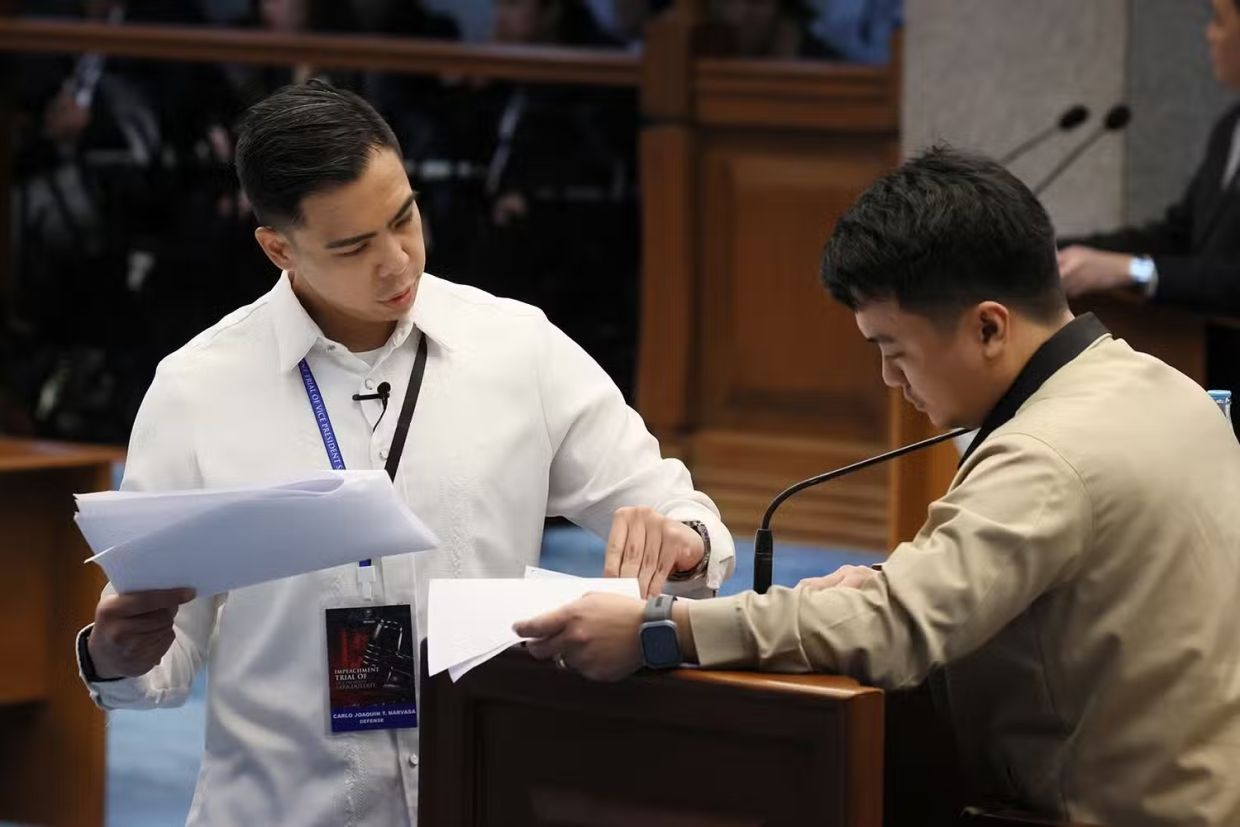
The impeachment trial of Philippine Vice President Sara Duterte entered its third day with a significant constitutional challenge to the prosecution's case. Her defence lawyers seized the opportunity to question whether statements made during a November 2024 press briefing genuinely constitute the "other high crimes" required by the 1987 Constitution to justify removing a sitting vice president from office. This legal distinction—between inflammatory rhetoric and criminally impeachable conduct—lies at the heart of proceedings that have gripped the Philippines and drawn regional attention to the country's political instability.
The defence focused its energy on deconstructing the testimony of National Bureau of Investigation senior agent John Mark Calilung, who had presented the prosecution's initial evidence. Rather than contesting the substance of Vice President Duterte's recorded statements, the defence strategy emphasised gaps in the investigative chain and the absence of formal complaints from the alleged targets. Defence counsel Mark Vinluan argued forcefully that the prosecution had failed to present any evidence demonstrating that Duterte had actually hired an assassin, insisting instead that prosecution witnesses themselves had acknowledged the video recordings did not conclusively establish such a hiring.
The constitutional framework governing impeachment emerged as the trial's defining battleground. Article XI, Section 2 of the Philippines' 1987 Constitution lists specific grounds for removal, including culpable violation of the Constitution, treason, bribery, graft and corruption, betrayal of public trust, and the nebulous category of "other high crimes." The defence team contended that Duterte's remarks, even if intemperate, did not fall within this constitutional scope. This argument carries significant implications for Philippine constitutional law, as impeachment standards—whether interpreted broadly or narrowly—will shape how future political disputes are adjudicated through this extraordinary procedure.
Vinluan presented an alternative narrative for Duterte's statements, framing them as a protective reaction rather than a governmental act. He emphasised that the Vice President had spoken "not as Sara Duterte the Vice President, but as Sara Duterte the wife, mother, daughter and sister" responding to alleged threats against her family. This characterisation seeks to remove her remarks from the realm of official conduct subject to impeachment review. The defence further alleged that Duterte and her household had been subjected to what it described as "unauthorised intelligence and surveillance operations," with her residences in both Davao and Manila profiled and security personnel removed—claims that introduce operational security concerns relevant to Southeast Asia's broader anxieties about state surveillance and protection of high officials' families.
Context emerged as the defence's second line of attack. Defence lawyers presented video evidence from Duterte's November 23 press briefing showing her chief of staff Zuleika Lopez becoming visibly distressed as she faced contempt citations and threatened transfer to a detention facility. The defence argued that Duterte's subsequent statements were triggered by this scene of perceived governmental persecution, not by calculated intent to hire assassins. This contextual argument attempts to shift judicial focus from isolated remarks to the circumstances precipitating them—a tactic that could significantly alter how the impeachment court evaluates the evidence's proper interpretation.
The prosecution's own admissions provided unexpected ammunition for the defence strategy. During questioning by Senator Risa Hontiveros, prosecution counsel Amando Ligutan had conceded that the recordings did not conclusively prove an assassin had been hired, instead characterising them as part of a broader pattern demonstrating Duterte's alleged intent. This distinction—between specific proof and inferred intention—became pivotal as the defence pressed home the constitutional requirement that impeachable offences must be clearly established, not merely suggested by circumstantial accumulation.
The NBI investigation itself faced significant scrutiny regarding its foundational legitimacy. Defence counsel Carlo Narvasa highlighted that the bureau had conducted its inquiry "motu proprio," meaning without any formal complaint from the alleged victims. Notably, neither President Marcos, First Lady Liza Araneta-Marcos, nor former Speaker Martin Romualdez had personally filed complaints or appeared before the NBI to provide sworn statements. This procedural gap raises questions about whether the investigation proceeded on solid evidentiary ground or whether it was driven by broader political motivations—a distinction that matters enormously in impeachment proceedings where constitutional safeguards typically demand rigorous procedural compliance.
Narvasa also questioned whether the NBI had genuinely conducted a thorough investigation. The bureau's revised affidavit dated February 10, 2025, notably omitted statements from the alleged offended parties themselves, nor did it include affidavits from journalists who attended the press briefing and could have testified about the statements' actual context and delivery. Agent Calilung acknowledged these absences but explained that investigators had instead executed affidavits attesting to minutes of their internal interviews—a procedural substitution that the defence suggested compromised investigative rigour and evidentiary completeness.
The tension between administrative investigation and constitutional impeachment standards became increasingly apparent as the trial progressed. Presiding Officer Senator Francis Escudero explicitly noted that discussions were converging on the central legal question: whether Duterte's acts genuinely constituted impeachable offences under constitutional definition. This acknowledgment suggests the Senate impeachment court recognises that proving statements were made differs fundamentally from proving they satisfy constitutional thresholds for presidential removal—a distinction that could prove decisive in determining the trial's ultimate outcome.
Defence allegations of systematic oppression by the House committee investigating the Office of the Vice President further complicated the narrative. Narvasa argued that Duterte and her associates had endured coordinated institutional pressure, citing the circumstances surrounding Lopez's contempt citation and transfer threats. When Senator Hontiveros probed whether the defence was essentially arguing that grave threats could be justified by legitimate grievances, Narvasa cautiously retreated, declining to adopt that expansive position while maintaining that contextual oppression remained relevant to proper interpretation of Duterte's statements.
The trial's procedural aspects themselves became contested territory. Senator Escudero intervened to remind senator-judges against posing questions requiring legal conclusions, appropriately noting such matters belonged in closing arguments. Hontiveros noted that previous impeachment trials had permitted broader questioning latitude, highlighting how impeachment jurisprudence continues evolving in the Philippines. These procedural debates matter because they shape which evidence and arguments reach the critical decision-makers—the Senate sitting as an impeachment court.
For Malaysian and broader Southeast Asian observers, the Duterte impeachment trial illuminates how constitutional systems attempt balancing executive accountability against the dangers of weaponised impeachment. The Philippines' experience demonstrates that merely recording inflammatory statements proves insufficient without establishing clear constitutional violations. Whether the Senate ultimately agrees that alleged threats constitute "high crimes" will establish precedents affecting how other Southeast Asian democracies calibrate impeachment standards and whether political opposition can successfully employ impeachment mechanisms against sitting officials. The trial's focus on investigative rigour and constitutional interpretation suggests that procedural legitimacy and legal precision—not merely the gravity of alleged statements—will prove decisive in determining whether Vice President Duterte faces removal.

