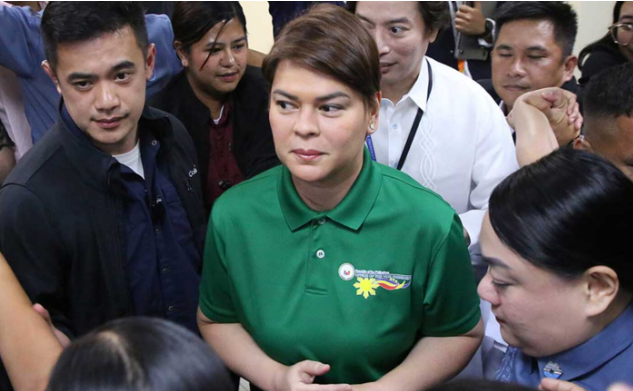
The impeachment trial of Vice President Sara Duterte intensified on Tuesday as she continued to challenge the evidentiary foundation of the charges against her, characterising the allegations as unfounded narratives constructed without factual grounding. Speaking ahead of that day's proceedings, Duterte disputed the legitimacy of the entire complaint, which alleges she orchestrated an assassination scheme targeting President Ferdinand R. Marcos Jr., First Lady Liza Marcos, and former Speaker Martin Romualdez. Her assertion came as the Senate impeachment court prepared to hear testimony from her chief of staff, Zuleika Lopez, whom the House prosecution panel intended to call as their third witness on the fourth day of hearings.
Duterte's defence team has seized upon procedural and documentary discrepancies to undermine the prosecution's case. During cross-examination of the National Bureau of Investigation's Bangsamero Autonomous Region in Muslim Mindanao Regional Director Jeremy Lotoc, defence counsel Mark Vinluan highlighted inconsistencies between the dates recorded in the affidavits and the docket numbers appearing in official NBI files. These technical irregularities have become central to the defence strategy, suggesting that the prosecution's investigative foundation rests on flawed or contradictory documentation. Rather than engaging directly with the substantive allegations, Duterte's legal team is methodically identifying gaps and contradictions in how the evidence has been documented and presented.
The Vice President's statement portrayed the proceedings as fundamentally flawed in their departure from evidence-based adjudication. She contended that the prosecution has engaged in a pattern of manufacturing allegations without corresponding factual support—making repeated claims about threats that she insists never materialised, inventing the existence of potential assassins where none existed, and constructing an evidentiary edifice on foundations of fabrication. Duterte characterised these actions as deeply corrosive to institutional integrity and public confidence in the legal system. Her language was deliberately sharp, positioning the trial not merely as a political disagreement but as a matter threatening the rule of law itself. She emphasised that speculation and manufactured narratives cannot substitute for genuine evidence in impeachment proceedings of this magnitude.
The impeachment complaint arose after Duterte herself made public statements in November alleging that she had discussed plans to have President Marcos killed, along with the First Lady and the former Speaker, should anything happen to her. Those comments triggered the formal complaint that now occupies the Senate court. The trial is currently addressing Article IV of the charges, which specifically concerns the alleged assassination plot. However, the prosecution's progress has been notably gradual; with only two witnesses presented so far and fewer than half of the 11 days allocated for Article IV examination completed, the case remains in its early stages.
The temporal scope of the entire trial suggests that this constitutional crisis will consume Philippine political attention for an extended period. The Senate court has designated 92 days total for the complete impeachment proceedings, a duration that projects completion into early 2027 at current pacing. This extended timeline reflects both the gravity with which the Senate is approaching the charges and the significant preparatory work required by both prosecution and defence teams. The trial has effectively become a fixture in the Philippine political landscape, with ramifications extending far beyond the immediate question of whether Duterte should be removed from office.
Notably, Duterte has declined to attend the trial proceedings in person, choosing instead to communicate her position through written statements and her legal representatives. This tactical decision may reflect calculations about courtroom dynamics and media presentation, though it also distinguishes her stance from that of some other political figures who have made prominent courtroom appearances in comparable proceedings. The absence of the Vice President from the chamber where her fate is being determined creates an unusual dynamic, one that may influence how senators assess her engagement with the process and her presumed concern about its outcome.
The legal strategy adopted by Duterte's defence team prioritises attacking evidentiary reliability over engaging substantively with whether the alleged threat was genuine. This approach assumes that procedural and documentary flaws can undermine the prosecution's credibility sufficiently to prevent conviction, regardless of what transpired in the Vice President's private conversations or intentions. The focus on inconsistencies in NBI documentation and affidavit dates represents a conventional prosecutorial vulnerability—the notion that official documents contain errors or contradictions that cast doubt on investigative rigor.
For Malaysian observers, the trial illustrates persistent tensions within Philippine democracy regarding presidential succession, institutional oversight, and the handling of extraordinary political conflicts. The fact that a sitting Vice President faces removal proceedings based partly on her own public statements about assassination represents a dramatic constitutional moment with few regional parallels. The trial's duration and prominence also demonstrate how deeply such crises can disrupt normal governance, consuming legislative resources and public attention for extended periods.
The case raises fundamental questions about the burdens of proof appropriate for impeachment proceedings, the weight that should be accorded to inconsistent or incomplete documentary evidence, and whether speculation about possible harm constitutes actionable conspiracy. As the trial progresses through its remaining days and weeks, the Senate will need to navigate between protecting the integrity of constitutional processes and avoiding the appearance of purely partisan proceedings. The ultimate outcome will likely shape not only Duterte's political future but also the precedential standards for impeachment in the Philippines going forward.

