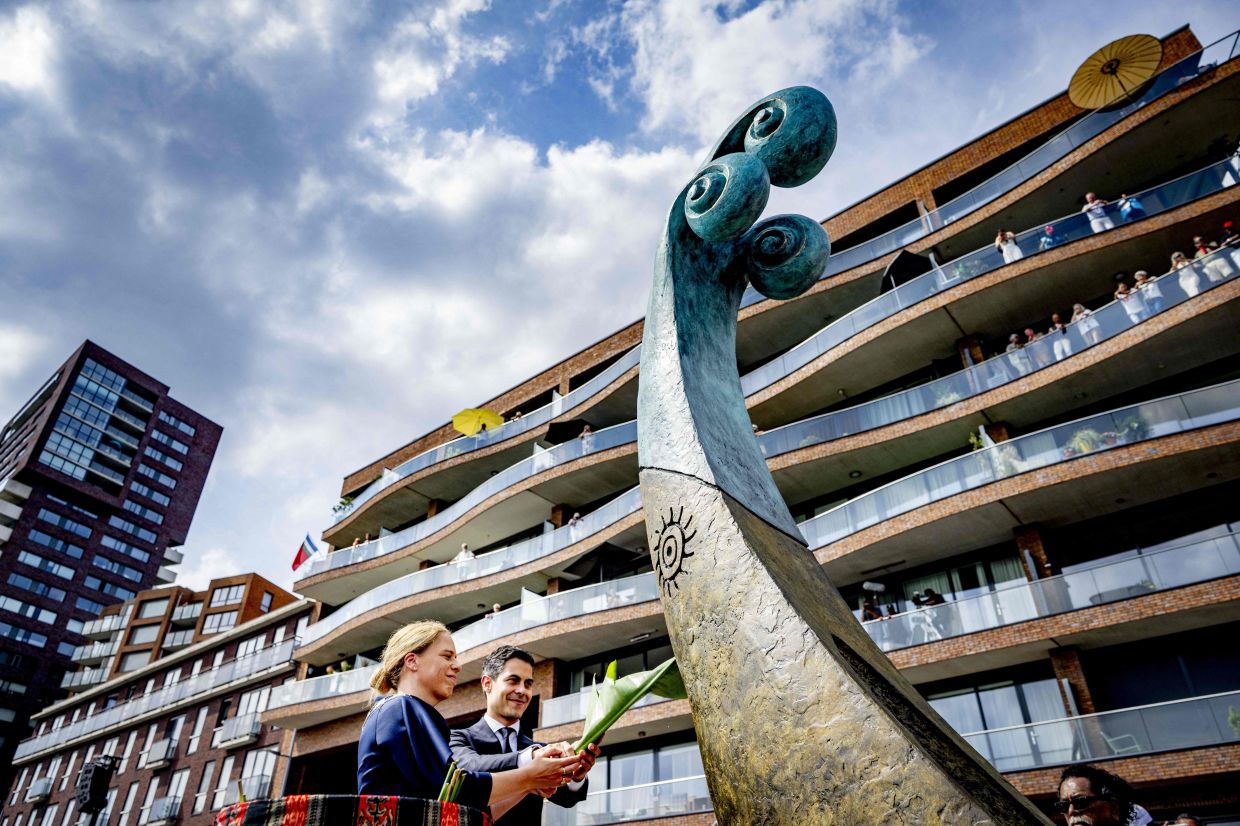
Prime Minister Rob Jetten of the Netherlands delivered a formal state apology on Sunday to members of the Moluccan diaspora, acknowledging the systematic injustices they endured after Indonesia secured independence from Dutch colonial rule. The emotional occasion marked a watershed moment in Dutch-Moluccan relations, with Jetten addressing hundreds of community members gathered in Rotterdam to witness the unveiling of a commemorative monument honouring that turbulent chapter of European and Southeast Asian history.
The Moluccans originate from the spice islands of eastern Indonesia, a region whose strategic and economic importance made it a cornerstone of Dutch colonial control in the archipelago. Following World War II, as Indonesia's independence movement gained momentum, many Moluccans enlisted in the Dutch colonial armed forces, believing they were serving the cause of stability during the transition. Their decision to support the Dutch side during the bitter independence struggle would profoundly shape their fate in the decades to come, creating a community caught between two nations and ultimately rejected by both.
When Indonesia formally achieved independence in 1949, approximately 12,500 Moluccans found themselves in a precarious position. Fearing violent retribution from Indonesian nationalists who viewed them as collaborators with the colonial oppressor, they accepted what Dutch authorities presented as a temporary relocation. The Dutch government pledged to transport them to the Netherlands as a safeguard, with explicit assurances that their stay would be brief and provisional, pending their eventual return to an independent Moluccan nation once political circumstances stabilised. This arrangement was supposedly negotiated between the Dutch and Indonesian governments as part of the independence settlement.
That promised homecoming never materialised. The Dutch government systematically reneged on its commitment to repatriate the Moluccan community, trapping thousands in a state of perpetual limbo for more than seven decades. Rather than facilitate their integration or prepare the groundwork for their eventual return, Dutch authorities confined many Moluccans to severely inadequate housing conditions, often in facilities that carried dark historical associations. Many were housed in former concentration camps that had been used to incarcerate Jews during Nazi occupation, a particularly haunting detail given the trauma these sites already represented in European consciousness.
Employment opportunities were scarce and poorly promoted, with little institutional effort to help Moluccans acquire Dutch language skills or access the job market. Social integration initiatives were minimal, leaving the community isolated and invisible within broader Dutch society. Families endured decades of separation from relatives who remained in Indonesia, with limited ability to visit or maintain connections with their homeland. The psychological toll of this indefinite displacement, combined with the humiliation of broken government promises, created deep wounds across generations.
The Ulu Kora monument was unveiled on Lloydkade in Rotterdam, the very dock where the first ships carrying Moluccan arrivals had docked in the late 1940s, completing a symbolic full circle nearly 75 years later. Standing before the assembled community, many of whom held photographs of deceased relatives from the first generation, Jetten acknowledged the government's failures with evident sincerity. He referenced the inadequate reception, the housing deprivation, the experience of being overlooked and disregarded by the state that had promised protection, and the enduring pain of unfulfilled hopes of homecoming.
The second and third generations of Moluccans, born or raised in the Netherlands without ever seeing the homeland their parents and grandparents mourned, expressed their frustration through increasingly militant means during the 1970s. Several violent incidents and protest actions during that decade reflected the desperation and betrayal felt by young Moluccans who had grown up in exile while Dutch authorities showed no genuine commitment to resolving their status or facilitating their return. These episodes represented a breaking point in the community's patience with an unresponsive Dutch system.
Jetten's remarks demonstrated awareness that ceremonial acknowledgment, while significant, cannot undo the accumulated harm of seventy-five years of displacement and broken faith. He articulated the paradox facing governments attempting to make amends for historical wrongs: words and monuments cannot restore lost time, resurrect the dead, or fully compensate communities for generations lived in exile. Yet he presented the apology as an essential act of recognition, a public acceptance of responsibility, and a formal declaration that the injustices experienced by Moluccans were real, documented, and wrong.
For Malaysian and Southeast Asian observers, the Moluccan case offers sobering lessons about the long shadow cast by colonialism and the importance of honouring international commitments regarding displaced populations. The experience of the Moluccans illustrates how Cold War geopolitics and national interest can override humanitarian obligations, and how communities caught between departing empires and emerging nations can be left permanently displaced. The delayed apology, though welcome, also underscores that justice, when it finally arrives, comes only after decades of suffering and primarily through symbolic gestures rather than material restitution or restoration.
The formal apology represents a shift in Dutch official acknowledgment of colonial-era misdeeds, a category increasingly subject to public scrutiny and demand for accountability across Europe. As Southeast Asian nations continue grappling with the legacies of colonial extraction and postcolonial state-building, the Moluccan experience serves as a cautionary tale about the vulnerability of minority communities and the persistence of injustice when governments abandon their pledges. The unveiling of the monument and the prime minister's words signal that even deeply buried historical grievances can eventually compel official recognition, though the price—measured in human suffering and lost generations—remains immeasurable.