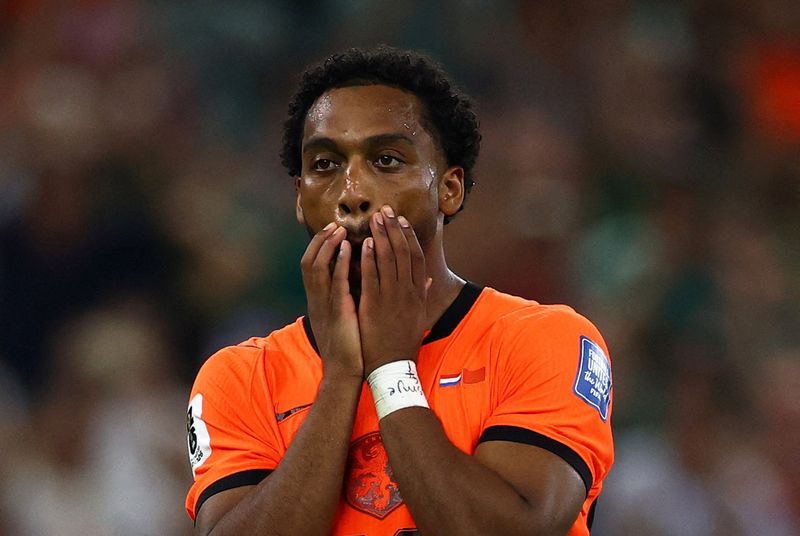
The Dutch football association has announced plans to formally report racist online abuse directed at three national team players following the Netherlands' penalty shootout elimination from the World Cup at the hands of Morocco. Justin Kluivert, Quinten Timber and Crysencio Summerville each failed to convert their spot kicks during Monday's decisive moment in Monterrey, where the match had remained locked at 1-1 after extra time before Morocco secured a 3-2 victory from the penalty mark. The three players subsequently became targets for a barrage of discriminatory and hateful comments across social media platforms, violations the KNVB views as wholly unacceptable and worthy of legal intervention.
In response to the abuse, the Dutch football authority said it would immediately escalate the matter to Meld Online Discriminatie, a specialized organization dedicated to documenting and addressing discrimination reported through digital channels. The organization's established protocol involves a thorough legal review of reported statements to determine whether they constitute criminal offences under applicable law. Once that assessment concludes, findings can be formally submitted to the Public Prosecution Service, which retains discretion to launch criminal investigations into the most serious violations. This procedural pathway reflects the Dutch commitment to treating online hate speech with the gravity of conventional criminal conduct rather than dismissing it as mere internet trolling.
The incident represents a continuation of a troubling pattern that has plagued international football tournaments in recent years. English players Marcus Rashford, Bukayo Saka and Jadon Sancho endured similar torrents of racist vitriol following their nation's devastating loss to Italy in the 2021 European Championship final, a match that hinged on a penalty shootout. The aftermath of that tournament illustrated how seriously European law enforcement agencies have begun treating such cases, with British police conducting sweeping arrests and prosecutions that ultimately resulted in multiple convictions and custodial sentences. Two individuals received prison time while a third received a suspended sentence, establishing precedent that online racist abuse directed at athletes can trigger genuine legal consequences rather than remaining consequence-free speech.
The comparison between the England incident and the current Dutch situation underscores evolving attitudes toward accountability in digital spaces across European football jurisdictions. Where online abuse might once have been tolerated as an inevitable annoyance accompanying high-stakes sports, governing bodies and law enforcement increasingly recognize the corrosive impact such behaviour exerts on both individual athletes and the broader fabric of football culture. The decision to formally report rather than simply condemn reflects recognition that institutional responses carry weight far beyond public statements.
For Southeast Asian readers following international football, the incident carries broader significance regarding how sports organizations across the region might address similar abuse targeting local players. As digital connectivity expands and regional athletes gain prominence on continental and global stages, exposure to online harassment becomes an occupational reality. The Dutch and English examples establish that formal reporting mechanisms and legal intervention represent viable tools for athletes and associations seeking redress, rather than accepting abuse as an unchangeable feature of sports fandom.
The KNVB's statement articulating opposition to discrimination extended beyond the immediate case, situating the issue within football's fundamental values and aspirations. The association emphasized that football's capacity to unite diverse populations across ethnic, cultural and socioeconomic lines represents one of its defining strengths and moral purpose. Racist discrimination fundamentally contradicts this unifying mission, creating environments where certain players feel unwelcome and targeted based on immutable characteristics rather than their athletic performance. This philosophical framing positions the legal response as defending not merely individual players but the sport's foundational commitment to inclusion.
The World Cup penalty shootout defeat itself carries particular sting for the Netherlands given the squad's status as tournament favorites and traditional powerhouse. Missing penalties against an ascendant Morocco team, which became the first African nation to reach a World Cup semi-final, represents a significant achievement for Moroccan football while marking a disappointing chapter for Dutch hopes. The emotional intensity surrounding such outcomes can amplify inflammatory online reactions, though intensity of feeling provides no justification for racist expression. The timing of when abuse occurs—immediately following defeat when emotions run highest—demonstrates how major sporting moments create windows where hateful voices operate with reduced inhibition.
Morocco's historic run through the tournament reflected broader shifts in global football's competitive landscape, challenging established hierarchies and expanding the range of nations capable of contending at the highest level. For Malaysian football followers accustomed to watching traditional European and South American dominance, the Moroccan team's success illustrates how investment, organizational development and tactical sophistication can elevate any national program. This makes the racist abuse directed at Dutch players not only morally objectionable but strategically counterproductive, as it detracts from celebrating quality football and instead amplifies xenophobic narratives that diminish the sport.
The ongoing cycle of racist abuse following major tournaments suggests that unilateral responses by individual associations and law enforcement agencies, while necessary, may prove insufficient without coordinated action across platforms, jurisdictions and football's international governing bodies. The structural problem—that social media platforms have consistently prioritized engagement and growth over safety and inclusion—requires pressure from multiple stakeholders simultaneously. FIFA, national associations, player unions, and technology companies all bear responsibility for establishing systems that make abusive accounts easily reportable, rapidly removed, and genuinely consequential.
For Dutch players specifically, the formal reporting process offers potential vindication and establishes that their experience will receive serious institutional recognition rather than dismissal as unfortunate but inevitable consequences of high-profile sports participation. Whether legal consequences ultimately materialize for those responsible for the abuse remains uncertain, but the act of reporting itself signals that racist speech carries costs and that athletes need not silently absorb discrimination. This may encourage other players who experience similar abuse to similarly report incidents rather than suffering privately, gradually building a comprehensive record of the problem's scope.
The broader trajectory evident across these incidents suggests gradual institutional evolution toward treating online racist abuse with equivalent seriousness to its offline equivalents. Football's global reach and passionate fan base guarantee that high-stakes matches will generate intense emotional reactions, some unhealthy. The challenge facing sport in coming years involves preserving passionate engagement and robust debate while establishing firm boundaries against dehumanizing expression. The Dutch response, following established international precedent, represents measured progress within this ongoing struggle.

