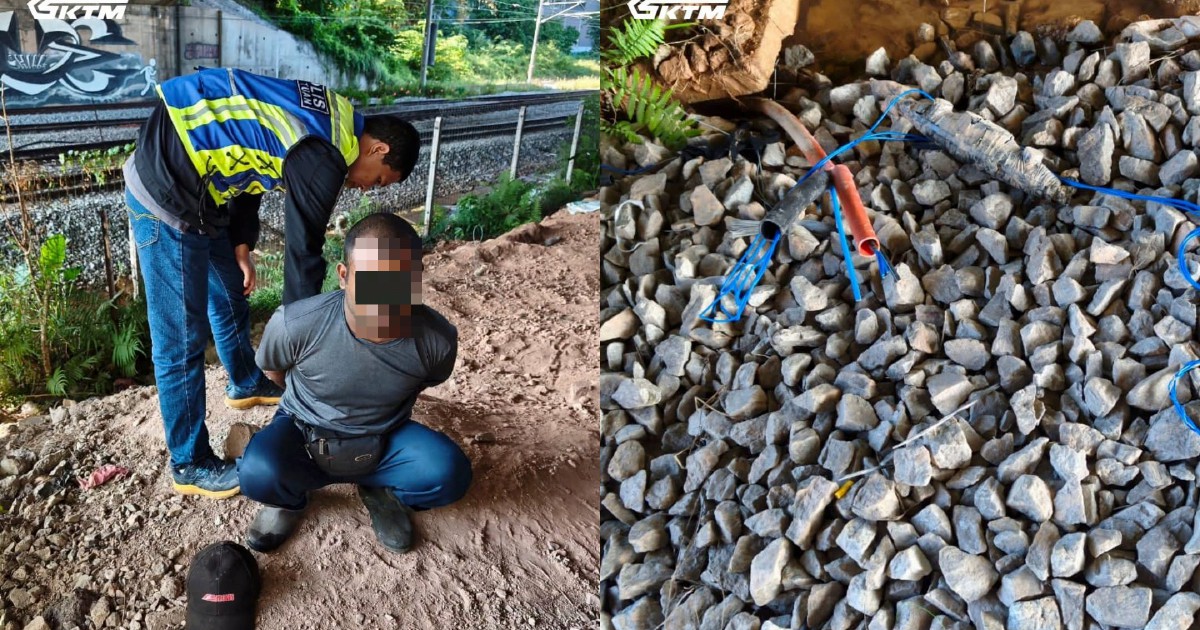
Keretapi Tanah Melayu Bhd (KTMB) auxiliary police officers have apprehended two suspects caught in the act of attempting to steal railway cables near Shah Alam yesterday, marking another notable arrest in the railway operator's ongoing battle against metal theft along its tracks.
The detention comes as Malaysian railway infrastructure continues to face recurring challenges from opportunistic thieves targeting high-value copper and other conductive materials. Cable theft not only damages critical equipment but disrupts service schedules, creates safety hazards for maintenance workers, and imposes significant financial burdens on KTMB's already stretched operational budget.
The Shah Alam incident underscores a pattern that has persisted for years across Malaysia's rail network. Copper and other metals extracted from railway cables fetch reasonable prices in the scrap metal market, making them attractive targets for individuals facing economic hardship or organised criminal networks operating across the region. KTMB has invested in enhanced security patrols and surveillance systems, yet thefts continue at concerning frequency.
Auxiliary police forces deployed by KTMB play a vital frontline role in deterring such activities. These uniformed officers, stationed at key locations and conducting regular patrols, serve as both a visible deterrent and rapid response capability when suspicious activity is detected. The successful apprehension yesterday demonstrates the effectiveness of maintaining vigilant ground presence along vulnerable sections of the railway corridor.
The broader implications of cable theft extend beyond immediate operational costs. Passengers experience service delays when infrastructure requires emergency repairs following theft incidents. Railway safety standards can be compromised if damaged cables affect signalling systems or power distribution. Furthermore, the need for constant repairs diverts maintenance resources that could otherwise address deferred maintenance backlogs plaguing Malaysia's ageing rail infrastructure.
Copper theft particularly affects railway operations because the metal is integral to electrical distribution, signalling systems, and telecommunications infrastructure. A single successful theft can incapacitate multiple systems, requiring extensive investigation and costly replacement. This cascading impact explains why railway authorities treat such offences seriously and allocate significant security resources to prevention.
The scrap metal trade, while legitimate when sourcing is lawful, inadvertently fuels demand for stolen materials. Stricter protocols requiring sellers to verify material provenance, combined with buyer education campaigns, could reduce the financial incentive driving opportunistic theft. However, enforcement remains challenging across informal dealers and unregistered collection points operating in less regulated areas.
State Selangor, where Shah Alam is located, has experienced particular vulnerability to railway infrastructure theft due to high population density, proximity to industrial areas, and accessibility of rail corridors. The combination creates both supply opportunity for thieves and ready markets for black-market metals. KTMB's enhanced presence in Shah Alam reflects this vulnerability.
The psychological deterrent effect of visible arrests cannot be understated. When potential offenders witness enforcement action against their peers, it reinforces perception of genuine risk. However, sustained deterrence requires consistent enforcement rather than sporadic arrests, placing ongoing demand on KTMB's security budget and personnel.
Investigative work following yesterday's arrest will likely reveal whether the individuals acted independently or as part of a coordinated network. Organised metal theft rings often employ scouts to identify vulnerable sections and timing, then coordinate extraction and sale through established scrap networks. Such operations represent more serious threats requiring inter-agency coordination between KTMB, railway police, and commercial crime units.
For Malaysian commuters relying on rail services for daily transportation, successful prevention and prosecution of cable theft translates into service reliability. Each prevented theft represents one fewer disruption, one fewer delay, and one fewer opportunity for cascading system failures affecting multiple train services.
Moving forward, KTMB faces the challenge of balancing security investment against operational sustainability. The railway operator continues exploring technological solutions including improved surveillance, cable marking systems, and smart sensors that alert authorities to tampering. Community engagement initiatives, particularly in areas surrounding vulnerable sections, also show promise in generating local awareness and cooperation against theft.

