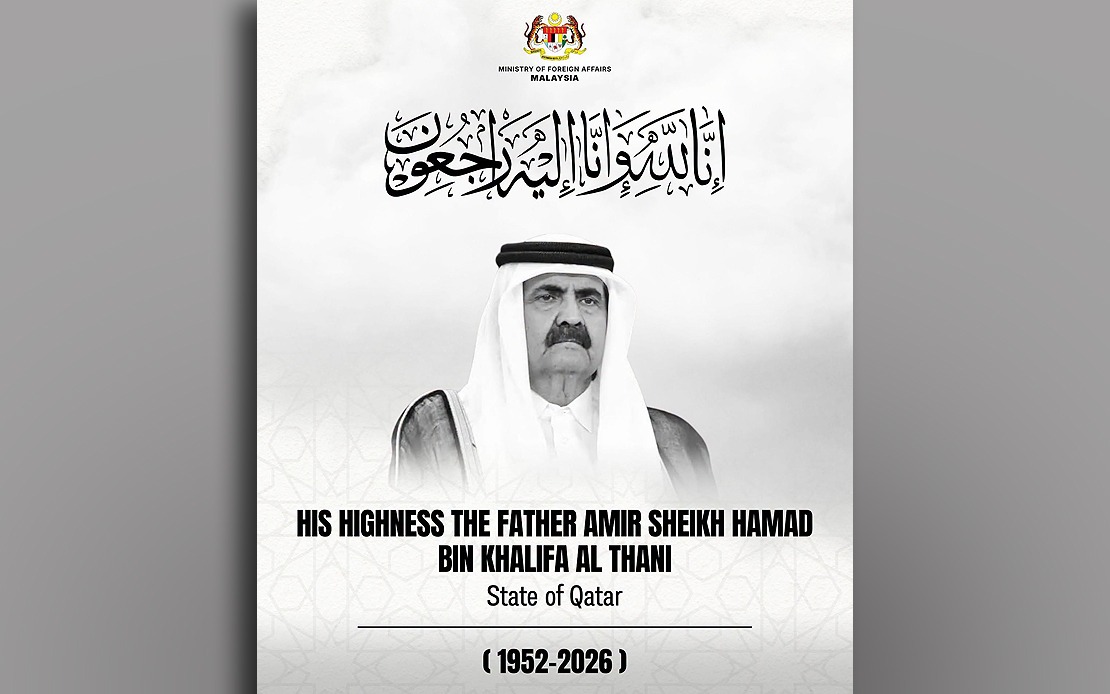
Malaysia dispatched its Higher Education Minister Datuk Seri Dr Zambry Abdul Kadir to Qatar to participate in state mourning ceremonies honouring the late Father Amir, Sheikh Hamad bin Khalifa Al Thani, in what represents a significant diplomatic gesture acknowledging the longstanding bilateral relationship between the two nations. The ministerial delegation will be present throughout the official mourning period spanning July 13 to 14, underscoring Malaysia's commitment to expressing solidarity with Qatar's leadership during this period of national grief.
The timing of this high-level representation reflects the diplomatic protocols governing relations between Malaysia and Qatar, with the Foreign Ministry emphasising the depth of bilateral ties through its statement. The decision to send a senior cabinet minister rather than merely consular staff demonstrates the weight Kuala Lumpur attaches to its relationship with Doha. This approach aligns with Malaysia's broader regional diplomacy strategy, whereby significant state occasions are marked through the participation of senior government figures capable of conveying both respect and substantive engagement.
The formal reception of condolences from international leaders will take place at Lusail Palace, where the current Amir of Qatar, Sheikh Tamim bin Hamad Al Thani, will receive delegations from foreign heads of state, members of the Al Thani ruling family, and various dignitaries and citizens throughout the three-day period from July 13 to 15. This ceremonial framework provides an opportunity for the international community to pay formal respects whilst simultaneously enabling bilateral discussions among world leaders gathered for the occasion. The venue itself—Lusail Palace—carries symbolic significance as a seat of governance and authority within the Qatari state structure.
The passing of Sheikh Hamad bin Khalifa Al Thani represents a momentous event in Gulf politics, as the late Father Amir served as a transformative figure in Qatar's modern history. His leadership shaped the nation during critical decades of development and geopolitical repositioning. The broad international response to his death, with delegations arriving from across the globe, attests to his significance not merely as a regional leader but as a figure whose influence extended across multiple spheres of international relations and economic development.
Qatar's declaration of four days of official national mourning beginning July 12 reflects the magnitude accorded to this loss within the state apparatus. The comprehensive nature of this mourning period—encompassing the closure of all ministries, government entities, and public institutions—demonstrates the formal protocols through which the Qatari state manages its collective grief whilst maintaining essential functions. This suspension of routine governmental activities serves both a symbolic and practical function, allowing the nation's leadership and populace to focus on commemorative ceremonies and reflective observance.
The Foreign Ministry's statement, which conveyed Malaysia's profound sadness and expressed solidarity with Qatar, represents the official articulation of Malaysian sentiment regarding this development. By framing Malaysia's response in terms of standing alongside Qatar's leadership and people, the statement elevates the relationship beyond mere diplomatic courtesy to suggest a deeper alignment of interests and shared values. Such language, carefully calibrated in diplomatic communications, serves to reinforce the bonds between nations whilst acknowledging the emotional dimensions of state mourning.
For Malaysia, the presence of Dr Zambry at these ceremonies carries implications extending beyond formal condolence-offering. The minister's participation provides an occasion for private consultations with Qatari officials and other international dignitaries who will be gathered in Doha. These informal settings, occurring alongside the formal ceremonies, often prove fertile ground for discussing bilateral matters, regional concerns, and matters of mutual interest. The convergence of world leaders at such occasions has historically facilitated diplomatic engagement on multiple fronts simultaneously.
The broader context of Malaysia-Qatar relations encompasses significant economic dimensions, with Qatar serving as an important source of investment and trade partnerships for Malaysia. The energy sector, financial services, and infrastructure development represent areas of substantial bilateral engagement. Maintaining and strengthening these ties through appropriate diplomatic gestures during significant moments in Qatar's political calendar serves long-term strategic interests for both nations.
South-East Asian nations, including Malaysia, maintain varied but generally constructive relations with the Gulf Cooperation Council states, with Qatar occupying a distinctive position due to its independent foreign policy trajectory and its hosting of regional and international institutions. Malaysia's participation in the mourning ceremonies thus positions the country within the broader international acknowledgment of Qatar's role in regional and global affairs. This positioning carries subtle but meaningful implications for Malaysia's standing within both South-East Asia and the wider Muslim world, where Qatar holds particular significance.
The ministerial delegation's visit also reflects Malaysia's diplomatic flexibility and its capacity to engage meaningfully across multiple regions and political contexts. By dispatching a senior minister to represent national sentiments, Malaysia demonstrates institutional sophistication in managing international relations and honouring the protocols that govern state interactions. This approach enhances Malaysia's reputation as a reliable and respectful international partner, a consideration that extends beyond the immediate ceremonial occasion to influence longer-term diplomatic relationships and opportunities.

