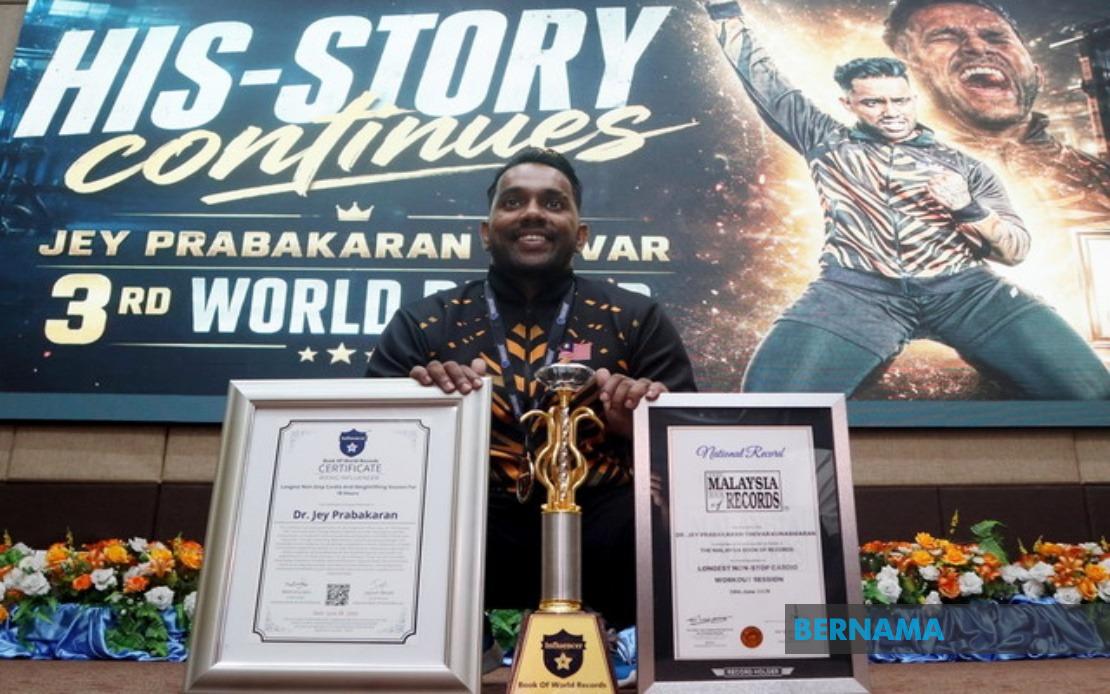
Fitness athlete K. Jey Prabakaran Thevar, professionally known as Dr Kjey, has etched his name into record books once again by completing an arduous 18-hour non-stop cardio and weightlifting challenge. The 29-year-old from Kuala Lipis, Pahang, successfully achieved this feat last Sunday, beginning at 4 am and concluding at 11 pm at Healthland Kuala Lipis, thereby cementing entries in both the Malaysia Book of Records and the Influencer Book of World Records. For Dr Kjey, this accomplishment carries profound personal significance, as he chose to dedicate the achievement to his late father, Kunasigaran Suppiya Thevar, who passed away on March 3, 1999.
Growing up without paternal presence shaped much of Dr Kjey's determination and resilience. In conversations with reporters, he reflected on how the loss of his father became a driving force rather than a limitation, transforming grief into motivation. "Despite growing up without a father's love, the loss was a source of inspiration and strength that motivated me to continue fighting until I succeeded in bringing glory to the country on the world stage," he explained. This perspective underscores a deeper narrative beyond the physical achievement—one of channelling personal adversity into national pride and international recognition.
Dr Kjey's record-breaking progression demonstrates a systematic approach to pushing human endurance boundaries. His journey in establishing world records began in 2023 when he first conquered a 12-hour non-stop cardio and weightlifting challenge, documented in both the Malaysia Book of Records and Guinness World Records. The following year, he extended this to 15 hours, establishing another record. Additionally, he broke the Asian record with a 13-hour performance, creating a clear trajectory of escalating challenges. The latest 18-hour accomplishment represents the culmination of this progression, showcasing not merely increased duration but also the refinement of training methodologies and physical conditioning.
The preparation phase for this monumental attempt commenced immediately after Dr Kjey completed a national record challenge during the National Sports Day celebrations in October of the previous year. Rather than rushing into the attempt, he invested months in meticulous planning and physical transformation. The most significant dietary intervention involved a complete overhaul to a vegetarian diet, through which he managed to shed 32 kilogrammes. This substantial weight loss was coupled with ongoing training to build the cardiovascular and muscular endurance necessary for such an extended exertion period.
During the 18-hour endeavour itself, Dr Kjey confronted multifaceted physiological and psychological obstacles. Beyond the obvious challenge of sustained physical activity, he battled fatigue and drowsiness—perhaps the most insidious threats during extended endurance events when the body's natural circadian rhythms and biological systems resist continued exertion. Managing these variables required not only pre-event conditioning but also moment-to-moment mental fortitude and strategic pacing throughout the full day-spanning challenge. His successful completion despite these hurdles underscores the mental discipline required alongside physical capability.
Beyond his personal achievements, Dr Kjey holds a leadership position within Malaysia's fitness community as president of the Malaysian India Fitness Association. This role provides him with a platform to amplify the impact of his record-breaking endeavours beyond mere personal accomplishment. He views his achievements as catalysts for broader social change, particularly in encouraging younger Malaysians to prioritise health and embrace fitness as a lifestyle rather than a temporary pursuit. In an era when sedentary lifestyles increasingly characterise many communities, such visible examples of dedication to physical wellness carry significant cultural importance.
Dr Kjey's vision extends into the coming months with further ambitious plans. He intends to attempt a national record for 5,000 jumping jacks completed within a five-hour window, which is scheduled to coincide with the National Sports Day celebrations planned for October. This successive challenge maintains momentum and demonstrates a commitment to continuous self-improvement and boundary-pushing. The strategic timing with National Sports Day also reinforces the connection between personal athletic achievement and national sporting values, embedding his efforts within the broader Malaysian sports framework.
From a regional perspective, Dr Kjey's achievements represent the growing prominence of Malaysian athletes in establishing international records across diverse disciplines. His presence in both Malaysian and world record books reflects the country's capacity to produce world-class performers in endurance and fitness categories. This recognition has implications for Malaysia's sporting profile globally and contributes to a narrative of national capability in athletic pursuits. The coverage of such achievements within international record databases provides visibility for Malaysian talent on the world stage.
The personal narrative threading through Dr Kjey's achievements—dedicating records to a deceased parent—also resonates deeply within Malaysian cultural contexts where filial piety and honouring family members remain significant values. His transformation of loss into motivation and national pride offers an aspirational framework that extends beyond fitness discourse into broader themes of resilience, family legacy, and channelling adversity constructively. This dimension makes his achievements psychologically meaningful to audiences beyond the fitness community, touching on universal human experiences of grief and perseverance.
Dr Kjey's trajectory also highlights the evolving landscape of fitness as a legitimate competitive domain with internationally recognised standards and validation mechanisms. Through Guinness World Records and comparable international bodies, fitness achievements gain formal recognition equivalent to traditional sports accomplishments. This professionalisation of fitness records creates pathways for athletes like Dr Kjey to build credibility and establish themselves as figures within global athletic discourse, regardless of whether their discipline falls within conventional Olympic or professional sporting frameworks.

