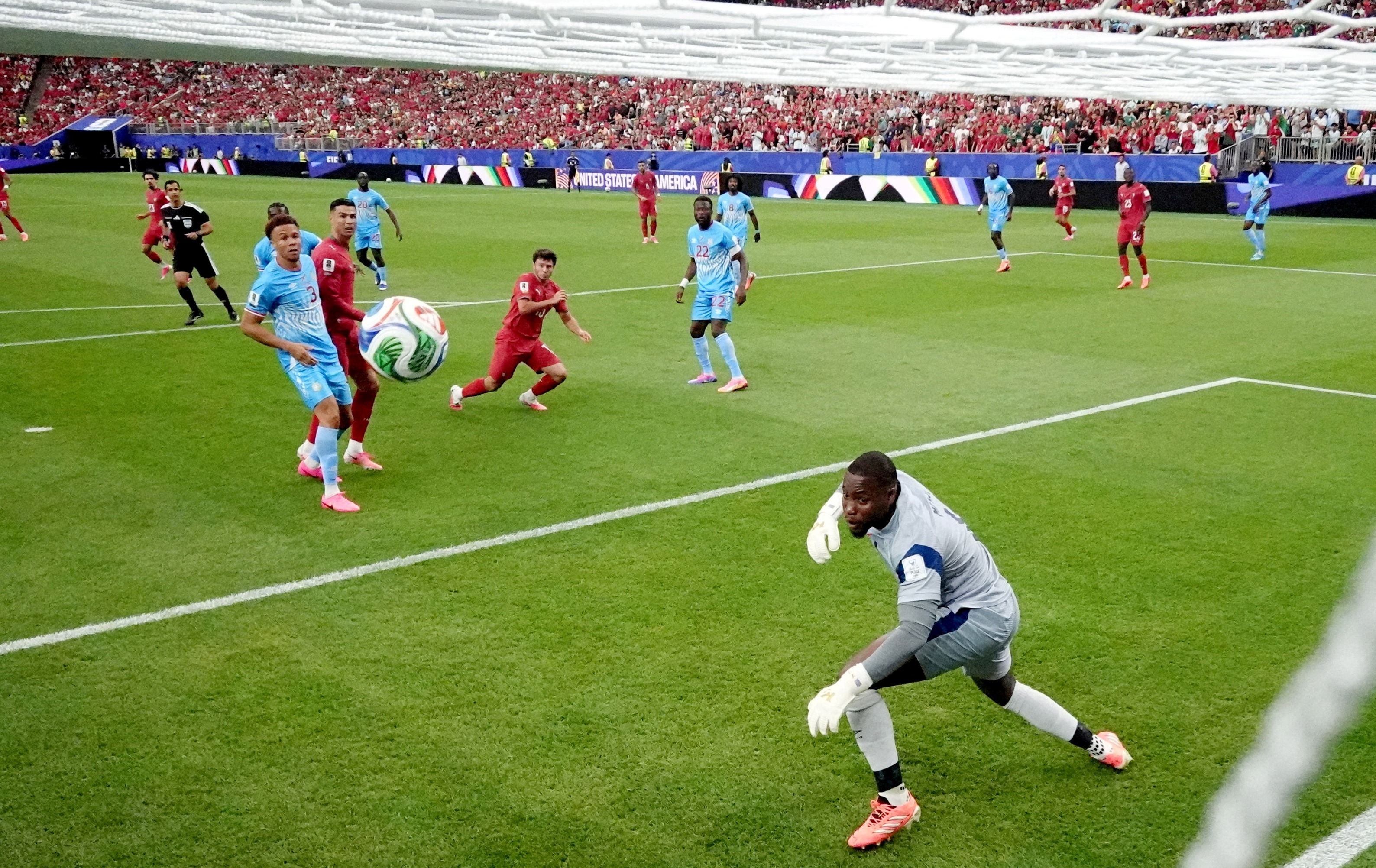
In a result that will resonate across African football and beyond, the Democratic Republic of the Congo held Portugal to a 1-1 draw in their Group K encounter at Houston Stadium during the 2026 FIFA World Cup. The match on Wednesday proved that tournament newcomers and underdogs remain capable of delivering moments that captivate global audiences and challenge established hierarchies within the sport. For DR Congo, this draw represents far more than a single point in the standings—it marks a watershed moment for a nation whose football history has long been defined by near-misses and unfulfilled potential.
Portugal's early dominance set the tone for the opening phase of the encounter. Joao Neves broke the deadlock with a commanding header in the sixth minute, collecting a precisely weighted cross from Pedro Neto along the left flank. The goal reflected Portugal's superior technical control and their intention to establish early territorial advantage. The European side continued to press forward with conviction, their attacking movements orchestrated with the precision expected of a squad featuring world-class players. However, Portugal's continued pressure yielded diminishing returns as the half progressed, with their attacks becoming increasingly laboured and lacking the cutting edge required to extend their advantage.
DR Congo's resilience during this period of Portuguese ascendancy proved crucial to their eventual outcome. Rather than crumble under the weight of their opponents' ambitions, the Central African nation's players remained compact in defence and alert to opportunities. This pragmatic approach bore fruit in unexpected fashion when Yoane Wissa rose above goalkeeper Diogo Costa to deliver an equalizing header during stoppage time at the end of the first half. The timing of Wissa's goal in the 45th minute plus five seconds transformed the narrative entirely, turning what had appeared a likely defeat into a statement of defiance and capability.
The significance of Wissa's strike transcends ordinary match statistics. DR Congo's first appearance at a World Cup came in 1974, when the nation competed as Zaire. More than half a century would pass before the country registered its first goal at football's premier tournament. This 52-year gap underscores the historical importance of Wednesday's achievement and the emotional weight it carries for supporters whose patience and faith had been tested across multiple generations. The eruption from DR Congo's fans in the stands spoke to the validation of hope deferred but finally realized.
The second half unfolded in markedly different fashion from the opening period. With both teams entering the interval locked at 1-1, the dynamics shifted considerably. Portugal retained possession and continued to orchestrate play with typical composure, yet DR Congo's defensive organization had been bolstered by the psychological boost of equalizing. The remainder of the match became a study in contrasting approaches—Portugal seeking the breakthrough through controlled build-up play while DR Congo sought to defend their maiden World Cup point with discipline and determination.
CristiMy Ronaldo emerged as the focal point of Portugal's second-half offensive efforts, with supporters anticipating that his individual brilliance might unlock the deadlock. The veteran forward operated across multiple zones, attempting to generate the spark that would restore his team's advantage. Yet despite his presence and his team's technical superiority, Portugal could not break through the increasingly resolute Central African defence. The absence of a decisive second goal meant that Portugal departed Houston without victory, a result that would undoubtedly frustrate a squad widely regarded as contenders for the tournament.
The final whistle delivered contrasting emotions for both camps. Portugal's camp absorbed what amounted to a disappointing outcome, failing to convert dominance into victory against opponents they had entered the match expecting to overcome. The surprise was not merely about conceding an equalizer but about the manner in which DR Congo had competed throughout, suggesting that assumptions about hierarchies in Group K would require revision. For DR Congo, conversely, the full-time whistle triggered celebrations that extended well beyond what a single draw might ordinarily justify.
The standings following this fixture reveal a dramatic reshuffling of Group K's hierarchy. DR Congo's single point elevated them to the summit of the group, while Portugal occupied second place. This arrangement, a consequence of goal difference and wins elsewhere in the group, placed unusual pressure on the traditionally stronger European side. The implications for the knockout stages became immediate—Portugal would need to secure victories in their remaining group matches to guarantee advancement, their path to the later stages now complicated by an unexpected stumble against opposition that many had underestimated.
The result carries broader significance for African football's standing within World Cup competition. While African nations have historically produced memorable upsets, DR Congo's achievement demonstrates that preparation, tactical discipline, and mental fortitude can elevate smaller footballing nations to unexpected heights. Analysts observing the match saw a team that had clearly prepared thoroughly for their assignment, rather than a side simply hoping to absorb punishment and escape with respectability. This distinction suggests that DR Congo could remain competitive throughout their group matches and potentially challenge entrenched perceptions of their capabilities.