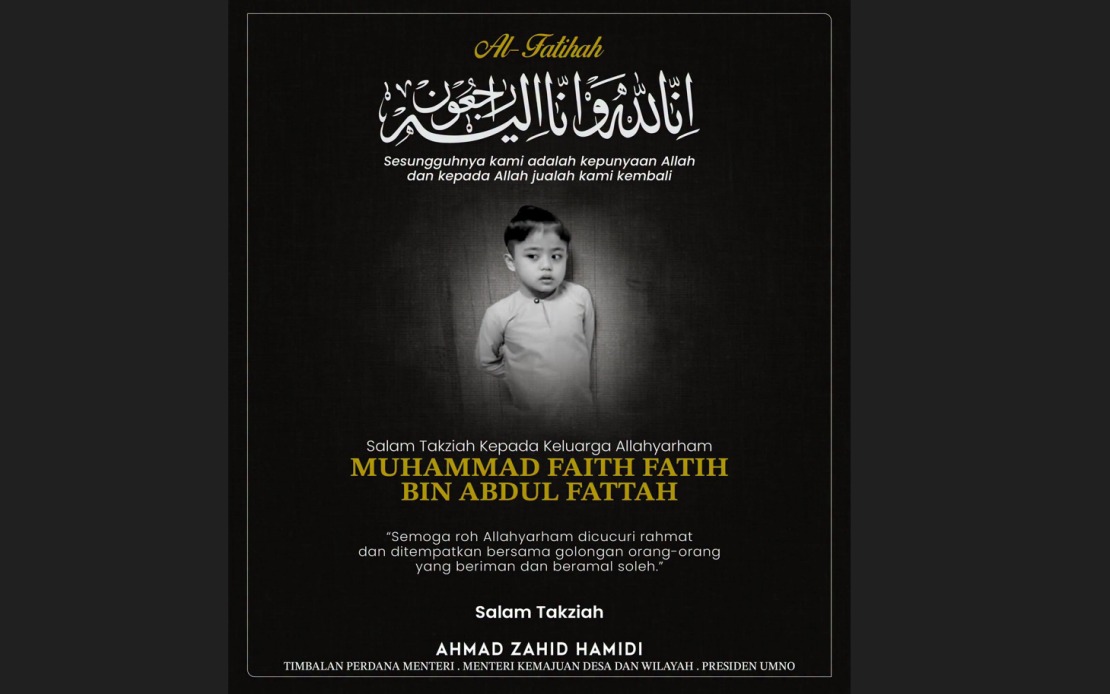
Deputy Prime Minister Datuk Seri Dr Ahmad Zahid Hamidi has expressed deep sorrow over the death of Muhammad Faith Fatih Abdullah Fattah, a six-year-old boy with autism, whose body was discovered in an oil palm plantation near Sungai Sumun in Hutan Melintang, Perak. The tragic incident has drawn attention to the vulnerabilities faced by children with special needs in Malaysia and the emotional toll such losses place on families within the community.
The young boy went missing on June 30 and was located deceased in a drainage channel within the plantation area at approximately 10:08 pm during an active search and rescue operation. Authorities had begun their investigation after receiving reports at 4:54 pm that the child had last been seen in his family home. The discovery marked the conclusion of a frantic search effort that had mobilised local emergency services in the rural Perak district.
In a statement posted on social media on July 1, Ahmad Zahid, who represents Bagan Datuk as the Member of Parliament for the constituency, acknowledged the profound grief experienced by the bereaved family. He characterised the child's passing as particularly distressing given his young age and special needs status, recognising that losing a child with autism presents unique emotional and practical challenges for parents and caregivers who have invested significant energy in their child's development and wellbeing.
The Deputy Prime Minister's remarks underscored the particular vulnerability of children with disabilities in Malaysian society. Children with autism spectrum disorder often require heightened supervision and support due to communication difficulties and potential safety risks, challenges that are exacerbated in rural areas where emergency services may be geographically distant and resources stretched. The incident highlights ongoing concerns about safeguarding mechanisms for special needs children and the psychological strain experienced by their families.
Ahmad Zahid offered prayers for the family, invoking religious sentiments that resonate deeply within Malaysia's Muslim-majority society. His reference to reciting Al-Fatihah and seeking divine mercy reflected both personal compassion and recognition of the spiritual comfort many Malaysian families draw upon during times of profound loss. Such statements from senior political figures serve not only to acknowledge individual tragedies but also to signal broader societal concern for vulnerable populations.
The circumstances surrounding the child's death—being found in a drainage channel within an agricultural setting—raise questions about environmental hazards in plantation areas and the adequacy of safety measures in locations frequented by local residents. Rural agricultural zones in Malaysia, while economically vital, sometimes lack adequate safety infrastructure or warning systems that might prevent such incidents. The case may prompt discussions about better coordination between agricultural operators and local communities regarding child safety protocols.
Bagan Datuk police chief Supt Mohammad Ali Mohd Jali indicated that investigators had received the missing person report in the late afternoon and subsequently coordinated the search operation that ultimately located the child. The relatively rapid discovery, while tragic, reflected effective coordination between law enforcement and community search efforts. However, the outcome underscores the time-sensitive nature of child disappearances and the critical importance of immediate response mechanisms.
In the Malaysian context, where extended family networks and community support systems traditionally play significant roles in child welfare, such incidents often prompt broader reflection on shared responsibility for child safety. The DPM's public acknowledgement of the tragedy served to elevate awareness of the incident beyond immediate family and local circles, potentially encouraging national dialogue about supporting families with special needs children and enhancing community vigilance.
The death of a child with autism also intersects with ongoing debates within Malaysia regarding support services for individuals with disabilities. Families caring for autistic children often face financial burdens, limited access to specialised services, and social stigma, challenges that vary significantly between urban centres and rural regions. This incident may reinvigorate advocacy efforts for improved mental health support, respite care services, and community awareness programmes benefiting families in vulnerable circumstances.
Beyond the immediate family tragedy, such incidents influence public discourse regarding child protection frameworks and the role of government institutions in safeguarding vulnerable populations. Ahmad Zahid's statement, while primarily offering condolences, implicitly acknowledged government responsibility to ensure that all Malaysian children, particularly those with special needs, have access to safe environments and protective systems. Whether the incident will catalyse policy reviews or resource allocation changes remains to be determined.

