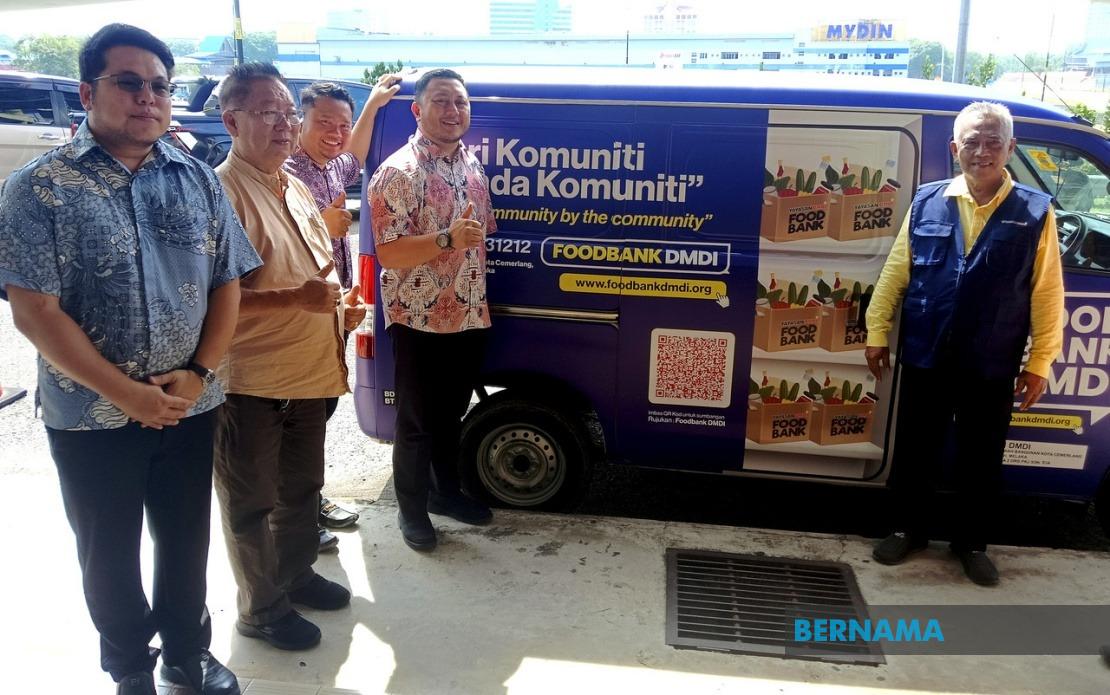
The Dunia Melayu Dunia Islam (DMDI) Foundation has unveiled an ambitious food assistance scheme designed to reach 2,000 disadvantaged households across Melaka, marking a significant expansion of its charitable operations in the state. Beginning with an initial 200 families, the foundation aims to gradually scale up its Food Bank DMDI programme to distribute monthly food packages spanning a full year. This phased rollout reflects both the foundation's commitment to sustained poverty alleviation and the practical realities of managing aid delivery across diverse communities.
Datak Mohd Ridhwan Mohd Ali, the foundation's chairman, explained that the programme deliberately targets vulnerable population segments often overlooked by mainstream welfare systems. The beneficiary categories encompass those living below the poverty line, members of the asnaf community (those eligible for zakat distribution under Islamic law), individuals with disabilities, single mothers navigating financial hardship, and families whose income streams remain unpredictable or precarious. By concentrating resources on these groups, DMDI acknowledges the structural inequalities that continue to affect household food security in Malaysia despite overall economic growth.
The mechanics of the selection process reveal a community-based approach rooted in local knowledge. Rather than relying solely on administrative databases, programme administrators invite recommendations from grassroots community leaders who possess intimate understanding of local circumstances. These nominations then undergo formal verification by the Food Bank committee, ensuring that assistance reaches those genuinely in need while maintaining transparency and accountability. This hybrid system of community input combined with institutional screening seeks to balance accessibility with responsible stewardship of donated resources.
Each participating family receives a food kit containing basic staple items designed to reduce the immediate pressure on household budgets. While the specific contents of these packages were not detailed, such schemes typically include rice, cooking oil, preserved proteins, and other non-perishable essentials. The cumulative effect of monthly distributions over twelve months provides meaningful relief for families operating with minimal financial buffers, effectively allowing them to redirect limited cash resources toward rent, utilities, healthcare, or education expenses.
The announcement came as the foundation received donations valued at RM16,000 from multiple contributors, demonstrating the capacity of corporate and individual donors to support structured charitable initiatives. This initial injection of funds signals encouraging momentum as DMDI prepares to operationalise the programme across Melaka. The foundation's ability to mobilise resources from its donor network will prove critical to sustaining distributions across the full projected reach of 2,000 families.
Beyond its core monthly distribution function, DMDI has positioned its food bank as a rapid-response mechanism for sudden humanitarian crises. The foundation already maintains capacity to provide emergency food assistance to communities affected by natural disasters such as flooding, a particular concern in Malaysia's coastal and low-lying regions where monsoon seasons periodically displace thousands. This dual-track approach—combining planned long-term support with emergency responsiveness—positions the foundation as a more comprehensive social safety net operator.
The financial barrier to participation has been deliberately minimised to maximise donor reach. Contributions as modest as RM1 become meaningful when aggregated across thousands of supporters, and the foundation has established an accessible online donation platform at www.foodbankdmdi.org to facilitate seamless giving. This digital infrastructure lowers transaction costs and removes geographical constraints, potentially attracting donations from Malaysians working abroad or based in other states who wish to support Melaka communities.
Tax incentive structures will further encourage larger donations. The foundation is actively pursuing approval from the Lembaga Hasil Dalam Negeri (LHDN) to issue tax exemption receipts, a development that would allow corporate entities and high-income individuals to deduct contributions against their tax liability. Such mechanisms have historically proven effective in mobilising substantial philanthropic resources in Malaysia, particularly among businesses seeking to balance profit with community responsibility.
The programme's significance extends beyond immediate food provision to signal broader trends in Malaysian charitable practice. Rather than ad hoc handouts, structured food banking represents a shift toward sustainable, dignity-preserving assistance that recognises recipients as ongoing participants in their own welfare rather than one-time beneficiaries of emergency relief. The one-year timeline for support also implies that DMDI views this as a foundation for longer-term economic stabilisation rather than perpetual dependency management.
For Melaka specifically, this initiative addresses documented gaps in existing welfare provisions. While the state government operates various assistance schemes, coverage remains incomplete and application processes frequently prove burdensome for the most vulnerable. Private philanthropic efforts like DMDI's food bank programme can complement state provision, particularly in reaching marginalised populations such as undocumented migrants or those suspicious of formal bureaucratic engagement.
The programme also reflects evolving Islamic social responsibility frameworks in Malaysia. DMDI's organisational name deliberately signals its dual commitment to Malay and Islamic values, and food assistance aligns with fundamental Islamic principles of community care and zakat obligations. By institutionalising these values through systematic charitable operations, the foundation models how religious identity can translate into concrete poverty-reduction outcomes.
Looking ahead, the success of this Melaka initiative may shape DMDI's expansion into other states, establishing a replicable template for scaling food security interventions across Malaysia. If the foundation successfully reaches its 2,000-family target while maintaining operational efficiency and donor confidence, stakeholders across the region may reference this model when designing their own community assistance programmes.

