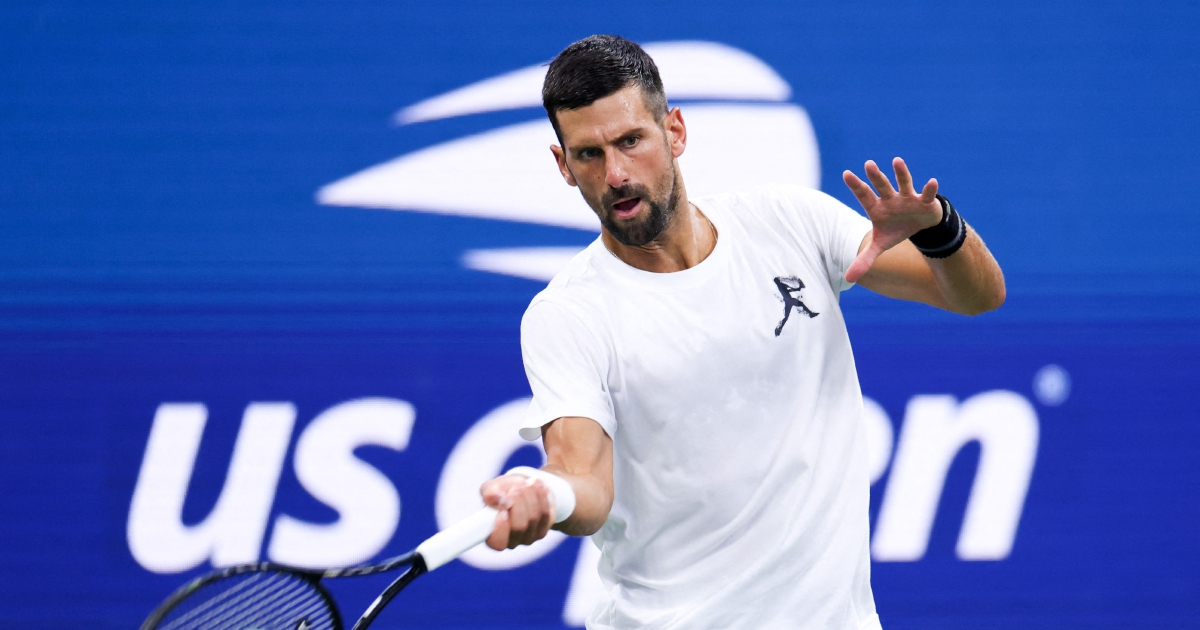
Novak Djokovic enters the US Open tournament with a singular, well-defined objective: to claim his 25th Grand Slam championship and become the outright record holder for most major titles in tennis history. The Serbian competitor's pursuit of this milestone represents one of the sport's most compelling narratives, combining athletic excellence with the quest to cement an unparalleled legacy. Since his triumphant 2023 campaign in New York, where he captured the trophy and matched Margaret Court's legendary tally of 24 major victories, Djokovic has maintained unwavering focus on surpassing that benchmark.
Djokovic's journey to this moment reflects both the consistency and determination that have defined his career over the past two decades. The 37-year-old has demonstrated remarkable resilience in pursuit of Grand Slam dominance, competing at the highest level despite facing numerous rivals, injuries, and external challenges that have tested his resolve. His previous US Open victory came at a time when many questioned whether he could continue performing at an elite level, yet he has continued to compete meaningfully in the sport's most prestigious tournaments.
The significance of potentially breaking Margaret Court's record extends beyond mere statistical achievement. Court's 24 Grand Slam titles, compiled across multiple decades and during an era when professional opportunities for women were significantly limited compared to men, established a standard that many observers believed would never be surpassed. Djokovic's pursuit of this record has reignited important discussions within tennis about the sport's history, the evolving nature of competition, and what it means to be considered the greatest player of an era.
For Malaysian tennis enthusiasts and Southeast Asian sporting audiences, Djokovic's continued presence at the US Open holds particular interest. The region has produced emerging tennis talent and maintains passionate followings for major international tournaments. Djokovic's quest for historical achievement provides compelling television narratives and demonstrates the possibilities available to dedicated athletes across different sports and nationalities who pursue perfection over extended careers.
The competitive landscape at this year's US Open reflects the depth of modern professional tennis. Djokovic faces formidable opponents across multiple generations of players, each bringing distinct playing styles and levels of preparation. The tournament's format, with its hard court surface and demanding weather conditions, presents specific challenges that require peak physical conditioning and mental acuity. Djokovic's preparation for these conditions has been meticulous, reflecting his understanding that achieving a historic milestone requires leaving nothing to chance.
Physically, maintaining competitive sharpness at 37 presents genuine challenges that transcend typical professional sport demands. Recovery from matches, managing accumulated wear on joints and muscles, and sustaining the explosive movement patterns required for elite tennis all demand sophisticated approaches to training and sports medicine. Djokovic's team has presumably invested considerable resources into ensuring that he arrives at the tournament in optimal condition, capable of performing across multiple rounds of increasingly demanding matches.
The psychological dimension of pursuing such a record cannot be understated. The weight of expectation, combined with the knowledge that any early-tournament loss eliminates the opportunity to make history at that particular event, creates mental pressures distinct from ordinary tournament competition. Djokovic has cultivated a reputation for thriving under such circumstances, but acknowledging these pressures remains important when assessing what he faces.
For the broader tennis world, a successful Djokovic campaign at the US Open would represent a continuation of an extraordinary era defined by several dominant male players. The long rivalry between Djokovic, Rafael Nadal, and Roger Federer has elevated the sport's profile globally and created a compelling narrative across multiple seasons. That rivalry's evolution remains central to understanding contemporary professional tennis, even as younger competitors increasingly assert themselves.
The US Open itself has served as a particularly significant venue throughout Djokovic's career, representing multiple championship moments and important chapters in his biographical narrative as an athlete. The tournament's neutral ground and its status as one of tennis's four major championships ensure that success there carries weight and legitimacy that purely symbolic achievements might lack. Victory in New York would carry authenticity that transcends mere record-breaking.
Looking ahead, Djokovic's performance at the US Open will likely influence not only his own career trajectory but broader conversations about retirement timing, athletic longevity, and the measures by which tennis greatness should ultimately be evaluated. Whether he succeeds in his quest for the 25th title or faces disappointment, his continued competitive participation at this level represents a remarkable athletic achievement worthy of respect and recognition from audiences throughout Southeast Asia and globally.

