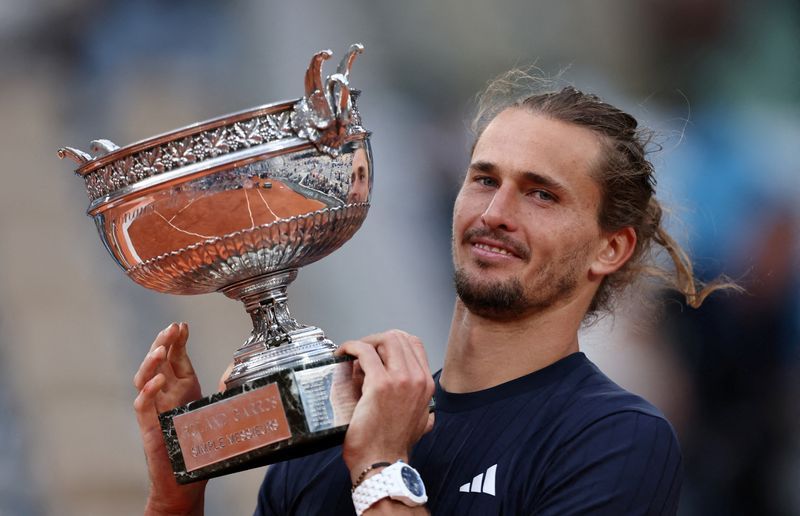
Novak Djokovic's pursuit of a standalone record 25th Grand Slam title at the U.S. Open has taken on fresh momentum as the tennis landscape shifts unexpectedly in his favour. With Jannik Sinner sidelined by a knee injury and defending champion Carlos Alcaraz struggling to regain match sharpness after four months away treating a wrist problem, the 37-year-old Serbian champion faces an unusual window of opportunity to finally overtake Margaret Court's all-time record of 24 major titles. Alexander Zverev, however, has emerged as a formidable barrier to Djokovic's ambitions following his breakthrough French Open victory and subsequent appearance in the Wimbledon final.
Djokovic's quest to stand alone atop the all-time major winners list has been remarkably frustrating in recent seasons despite his continued dominance at Grand Slams. Since capturing his last major crown at Flushing Meadows in 2023, the Serbian veteran has remained competitive at the sport's most prestigious tournaments, yet Sinner and Alcaraz have accumulated an almost stranglehold on the men's game by combining to win 10 of the last 11 major championships. More pointedly for Djokovic, these two younger rivals have systematically dismantled his ambitions, combining to defeat him five times across the six most recent Grand Slams, with Alcaraz denying him victory in this year's Australian Open final after he had invested considerable effort in his preparation.
At 37 years old, facing questions about his physical conditioning and having arrived at Flushing Meadows with limited competitive build-up, Djokovic appears an unlikely candidate to end his major drought. Yet the Serbian champion has drawn upon a distinctly cultural source of motivation as he prepares for his fifth U.S. Open title hunt. In a newly released documentary aired ahead of the year's final major, Djokovic invoked the Serbian concept of "inat"—a term describing a powerful form of stubborn defiance that emerges when external doubts and opposition mount. This deeply rooted cultural characteristic, he suggested, represents the very force that drives him to prove sceptics wrong when the circumstances seem most unfavourable.
The injuries to his primary challengers represent the most significant break Djokovic has received in a competitive landscape dominated by the next generation. Sinner's withdrawal from the tournament due to his knee injury removes the player who has most convincingly surpassed the Serbian veteran in recent months, while Alcaraz's prolonged absence introduces genuine uncertainty about his ability to peak immediately upon return. The defending champion has built an enviable reputation for summoning his finest performances on the game's grandest stages, yet the extended layoff creates legitimate questions about whether he will have sufficient rhythm and confidence to maintain his extraordinary major-winning streak.
Zverev's emergence as perhaps the principal threat to Djokovic's aspirations marks a significant shift in the competitive hierarchy. The German player finally achieved his breakthrough major victory at the French Open earlier this summer, decisively ending a long period of major disappointment that had followed his earlier Grand Slam final appearances. His subsequent run to the Wimbledon final underscored that his French Open success was not a one-off achievement, instead representing the culmination of years of patient development and refinement of his all-court game. At the U.S. Open, a surface where hard courts typically reward aggressive baseline play and serve-based tennis, Zverev's powerful game appears particularly well-suited to pose consistent problems for his opponents.
Roger Federer, the Swiss tennis legend observing the tournament from New York, offered a characteristically measured assessment of Djokovic's prospects despite the apparent advantages in his favour. Federer pointedly noted that Djokovic's mere presence in any draw, particularly at the major championships, renders him a legitimate threat to capture the trophy. The 17-time major winner emphasised that Djokovic has demonstrated his capacity to perform at the highest levels not occasionally but across multiple decades and venues, establishing a track record of excellence that transcends the typical career arc. As long as Djokovic remains active and committed to competing, Federer suggested, his chances of winning tournaments cannot reasonably be discounted.
The American contingent pursuing the title represents perhaps the most compelling home narrative at the event. Ben Shelton, the recent Canadian Open champion who rebounded from a disappointing Wimbledon first-round exit to capture the Montreal title, has thrust himself into genuine contention following his successful preparation. Cincinnati runner-up Frances Tiafoe and Taylor Fritz, who reached the final last year, both harbour realistic aspirations of capturing what would be the first American-born men's champion in 23 years. Andy Roddick, the American champion from 2003, acknowledged Shelton's credentials while cautioning that the younger player must demonstrate consistency throughout the tournament's early rounds to genuinely contend in the latter stages.
Roddick's assessment of Shelton's trajectory highlights the broader challenge facing talented American players seeking major breakthrough victories. Despite showcasing four titles across different surfaces that theoretically prepare players for major competition, Shelton has yet to consistently navigate the early rounds of Grand Slam tournaments with the consistency required to mount serious second-week campaigns. His dominant performance in Montreal suggests significant upside potential, yet the inability to sustain peak form throughout entire tournaments has previously restricted his impact on the sport's biggest stages. The question of whether Shelton possesses the mental resilience and technical refinement to transition from occasional title winner to major champion remains the defining uncertainty surrounding his U.S. Open prospects.
Beyond the established contenders, the tournament draw contains emerging talents poised to make significant impacts. Arthur Fils and Rafael Jodar represent the next wave of rising players seeking breakthrough moments, while Felix Auger-Aliassime, who reached the semi-final stage last year and has achieved his career-best major performance at Flushing Meadows, will look to build upon his recent encouraging trajectory. The depth of talent throughout the draw underscores that while Djokovic's path has been cleared somewhat by circumstance, genuine threats remain at multiple levels of the draw capable of derailing any potential run toward the record 25th major.
Djokovic's bid for the historic title ultimately encapsulates a compelling sporting narrative that transcends the immediate results at Flushing Meadows. His persistence at 37 years old in pursuing an all-time record that seemed increasingly distant represents either a remarkable testament to championship mentality or a poignant coda to an extraordinary career. The convergence of favourable circumstances—the injuries to his primary rivals, his own demonstrated belief, and the endorsement of fellow champions—suggests the possibility remains real, though Zverev's proven ability to perform on major stages and the strength of the American challenge ensure uncertainty remains paramount.

