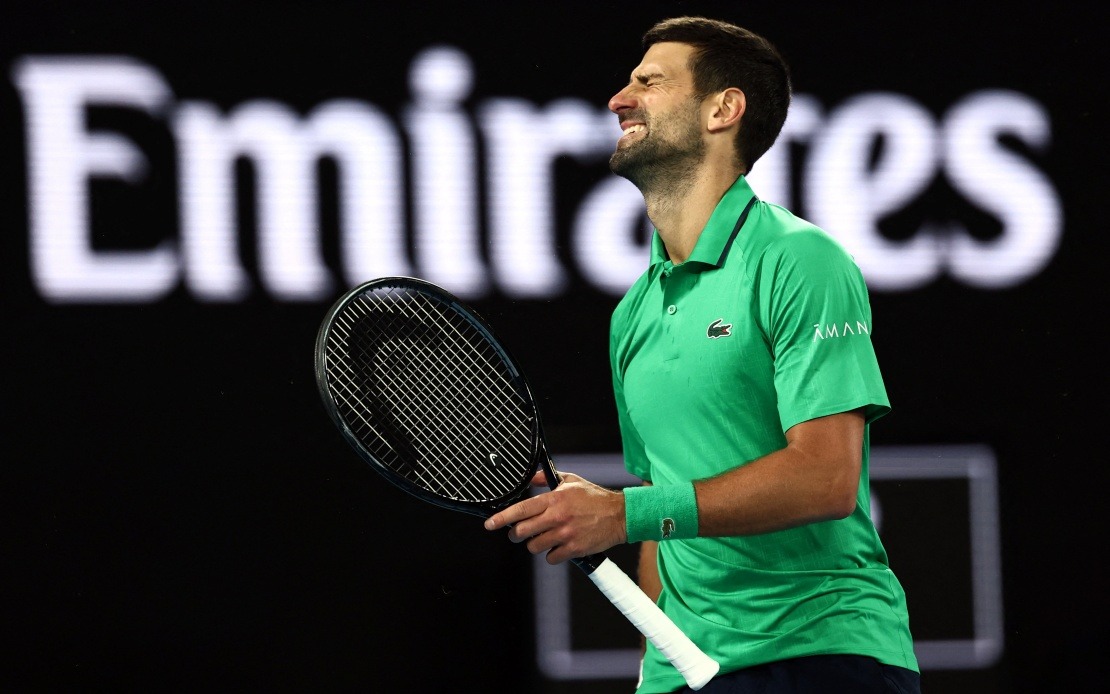
Novak Djokovic has etched another chapter into tennis history at Wimbledon, drawing level with Roger Federer's remarkable men's singles achievement of 105 match victories at the grass-court Grand Slam. The Serbian champion dispatched France's Arthur Rinderknech across four sets in a gripping contest that stretched three hours on Centre Court, propelling himself into the fourth round and securing his 18th appearance in the tournament's last 16 stages.
The match itself proved a compelling display of contrasting styles and competitive resilience. Djokovic prevailed 7-5, 6-4, 1-6, 7-6 (7-4) in what represented a characteristic test of his durability and mental fortitude. Despite Rinderknech mounting a spirited resistance with a commanding third set and pushing matters to a tiebreak in the fourth, the seven-time Wimbledon champion's experience and precision ultimately proved decisive. For Southeast Asian followers of tennis, the contest demonstrated why Djokovic remains formidable even at 39 years of age, defying conventional assumptions about athletic decline in professional sport.
Djokovic's response to reaching this historic milestone carried characteristic humour and perspective. The 24-time Grand Slam title holder joked during his on-court interview about proposing a match against Federer to determine who would claim the 106th victory, suggesting they mutually retire the statistic rather than engage in further competition. Yet beneath the levity lay genuine reflection on the magnitude of his accomplishment. He acknowledged the privilege of making history within a sport he has dominated, while emphasizing that his focus remained squarely on the immediate challenge ahead rather than accumulating records.
His philosophical approach to record-chasing reveals a champion still driven by the pursuit of victories on any given day rather than statistical obsession. Speaking thoughtfully in his interview, Djokovic described Wimbledon as a tournament of childhood dreams, the kind of sentiment that resonates across generations of tennis enthusiasts globally. The achievement gains additional significance when considered against the backdrop of his sustained excellence across nearly two decades of professional competition at the highest echelon.
Djokovic's path forward at the championship now leads through Russian qualifier Roman Safiullin, a match that offers little respite given his consistent high-level performance. The pairing underscores how the draw has unfolded favourably for the Serbian competitor, though seeding and rankings ultimately matter less than execution on grass courts where serve and volley precision determine outcomes.
In a parallel narrative of dominance, defending champion Jannik Sinner continued his imperious progression through the draw. The Italian world number one dispatched American Jenson Brooksby with comprehensive ease, winning 6-4, 6-3, 6-4 in a performance that highlighted his superior court positioning and net play. Sinner's achievement carries particular resonance for Asian audiences, as his consistent excellence reflects the globalization of tennis excellence beyond traditional European and American strongholds. His perfect third-round Grand Slam record now extends to 20 consecutive victories, an Open Era men's record that underscores his extraordinary consistency across the sport's most demanding tournaments.
On the women's side, the tournament has coalesced around several compelling storylines. Top seed Aryna Sabalenka dismantled former French Open champion Jelena Ostapenko with a clinical 6-4, 6-4 victory, demonstrating the aggressive baseline tennis that has established her as a consistent Grand Slam contender. Her relentless power and court coverage proved too much for Ostapenko, though the Latvian has shown throughout her career that she remains capable of explosive tennis on any surface. Sabalenka's Wimbledon campaign remains animated by her pursuit of a first title at the All England Club, a gap in her Grand Slam portfolio that drives her ambitions this fortnight.
The Belarusian's fourth-round opponent will present significantly more formidable resistance. Naomi Osaka, the four-time Grand Slam champion, has reached the Wimbledon fourth round for the first time in her career after dispatching Daria Kasatkina 6-1, 6-3. Osaka's trajectory through the draw featured a dominant performance against the Russian, showcasing the kind of aggressive tennis that has made her a major championship force across multiple surfaces. Her relative unfamiliarity with deep Wimbledon runs makes the matchup particularly intriguing, as Osaka continues rebuilding her career following her well-documented mental health challenges and subsequent maternity leave.
Sabalenka's assessment of the impending clash acknowledged Osaka's aggressive style and power output, suggesting she anticipated a fiercely contested battle requiring maximum intensity. The Belarusian's willingness to engage in extended baseline exchanges with similarly powerful strikers has established her competitive identity, yet Wimbledon's faster courts and lower bounces can favour the more dynamic server and net player. For Malaysian readers and Southeast Asian tennis enthusiasts, this matchup represents a collision between two disparate playing styles, each capable of delivering the kind of explosive tennis that attracts global audiences.
The championship's progression reflects the predictable advancement of top-seeded players, yet with sufficient complexity in the draw to maintain suspense regarding ultimate outcomes. Djokovic's historic milestone arrives at a moment when succession planning preoccupies tennis commentators, with younger champions like Sinner positioning themselves as potential inheritors of the sport's dominant traditions. Meanwhile, the women's draw's openness suggests that no player has definitively established supremacy comparable to that enjoyed by the men's elite for the past two decades. These dynamics will shape the remainder of the championship as the field narrows toward the concluding rounds.

