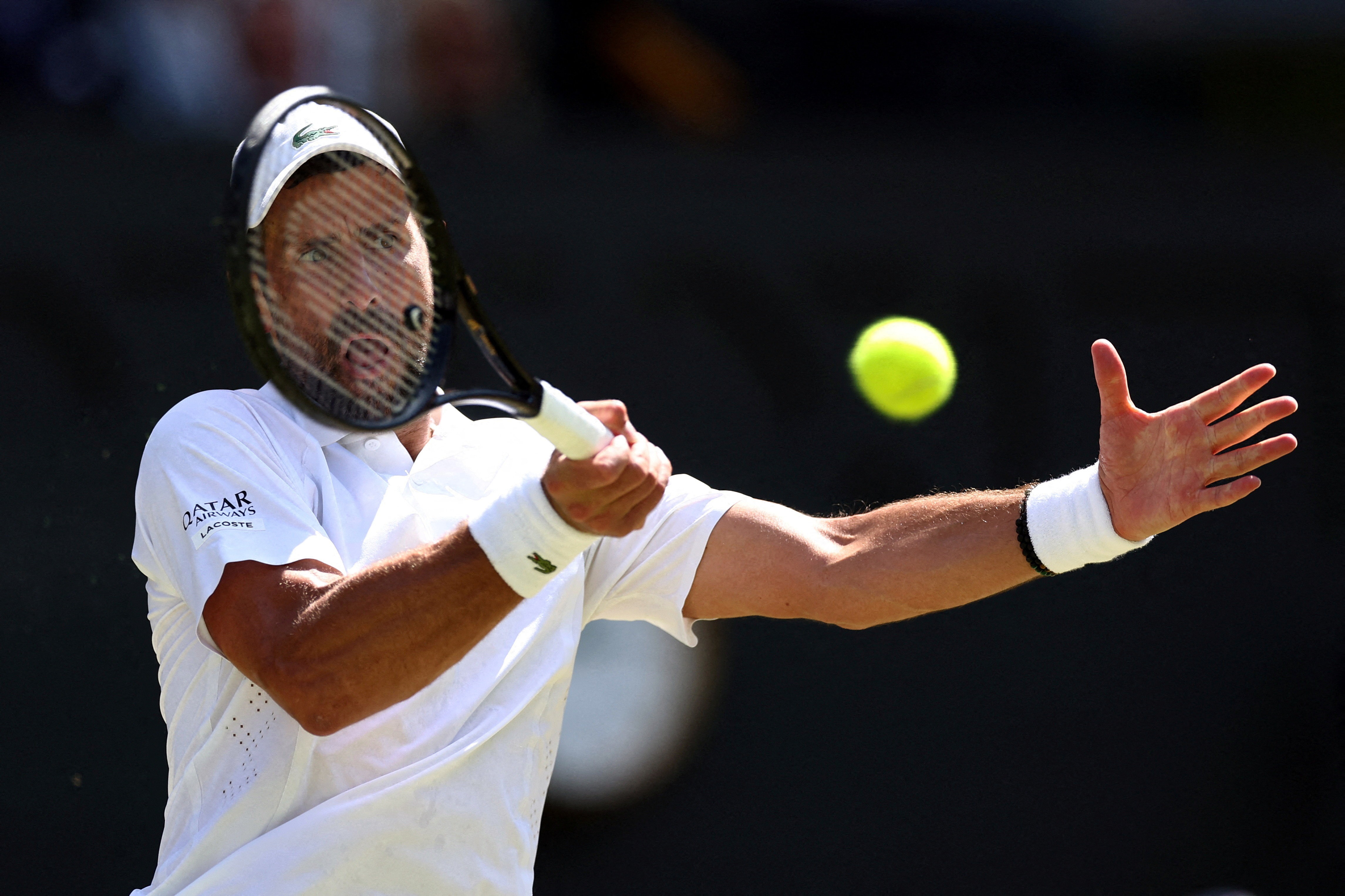
Novak Djokovic reached the Wimbledon semifinals through sheer determination and theatrics on Monday, outlasting Canadian Felix Auger-Aliassime in an epic five-set encounter that stretched the quarterfinal format to its breaking point. The 39-year-old Serbian champion prevailed 7-6 (12-10), 3-6, 6-3, 6-7 (4-7), 7-6 (10-4) in a gruelling five hours and 15 minutes of play, finishing mere minutes before the All England Club's 11 pm curfew. The victory sets up a fascinating semifinal clash against defending champion Jannik Sinner, whose form throughout this championship has been formidable.
The match became as much a contest of wills between Djokovic and the tournament administration as it was a showcase of professional tennis. With the first two sets split evenly and darkness approaching, tournament referee Denise Parnell made the decision to close the Centre Court roof at 7.40 pm, a move that incensed the world's 39-year-old competitor. Djokovic launched into an animated protest, arguing vociferously that sufficient daylight remained to complete another set in the open air, challenging Parnell's interpretation of the tournament's rules and procedures. His frustration stemmed partly from strategic considerations: the 26-year-old Auger-Aliassime has built a reputation as a formidable indoor performer, and Djokovic clearly preferred to maintain the match in natural light conditions.
The disagreement drew pointed comparisons to earlier matches during the fortnight. Djokovic referenced his opening-round encounter against Wu Yibing, where the roof remained open until approximately 8.30 pm, suggesting an inconsistent application of the curfew protocols. He expressed bewilderment at what he characterised as arbitrary enforcement, declaring with evident irritation that the tournament positioned itself as outdoor competition yet made decisions seemingly contradictory to that identity. The tension escalated when Djokovic, dismissing concerns about similar closure issues in Sinner's previous match against Shintaro Mochizuki, pointedly remarked that he focused solely on his own contest rather than hypothetical scenarios involving others.
Parnell's rationale for the premature closure carried legitimate weight, even if Djokovic refused to accept it gracefully. The referee had witnessed Sinner's fourth-round match interrupted mid-set when encroaching darkness forced an unexpected roof deployment, creating operational chaos and undermining the sport's flow. Her caution reflected institutional memory of that disruption. However, the unfolding sequence of play appeared to vindicate Djokovic's argument: Auger-Aliassime's subsequent service hold in the third set's opening game consumed 14 minutes, demonstrating precisely the kind of extended rally patterns that might have indeed extended beyond usable daylight had the roof remained open.
Djokovic entered the quarterfinal carrying physical uncertainty that would have derailed lesser competitors. Early in the opening set, he visibly tweaked his left calf muscle, requiring medical attention as he grimaced through subsequent serves. Despite this discomfort, he powered through the tiebreaker that decided the first set, ultimately winning 12-10 after extended rallying. The injury concern momentarily suggested the possibility of retirement or serious performance decline, yet the Serbian champion demonstrated the movement quality and competitive intensity that has defined his career, gradually appearing more fluid and confident as the match progressed. His ability to elevate play despite physical adversity proved decisive in the crucial moments.
Auger-Aliassime, seeded third in the tournament and remarkably consistent throughout this fortnight, presented a genuine threat to Djokovic's ambitions. The Canadian had lost serve only once during his first four matches, establishing a defensive fortress that typically crumbles under sustained pressure from elite competitors. Djokovic's breakthrough finally materializing when he broke Auger-Aliassime to love whilst building the third set represented a crucial turning point, shifting momentum decisively toward the experienced veteran. The subsequent set was surrendered meekly to Auger-Aliassime's superior groundstroke production, forcing the fourth set into a tiebreaker that the Canadian dominated, evening the match at two sets apiece.
The deciding set evolved into the nerve-shredding first-to-10 format that modern tennis employs for Grand Slam deciding sets, creating an intense bidding war where both players operated on razor-thin margins. Every point carried extraordinary consequence, and the psychological pressure accumulated with each rally. Djokovic's eventual triumph in the final tiebreaker, winning 10-4, came after sustained periods of extraordinary tension where either competitor might have claimed victory. In the immediate aftermath, Djokovic reflected on the emotional and physical toll, acknowledging the extreme tension inherent in such prolonged contests. He characterised his performance as an expression of competitive passion, suggesting these momentous challenges represent the precise reason he continues professional tennis rather than retiring on past accomplishments.
The semifinal against Sinner presents an intriguing narrative, pitting Djokovic's experience and psychological fortitude against a generational talent who has already claimed this year's Australian Open and demonstrated remarkable consistency throughout the season. The defending champion has not lost a set at Wimbledon thus far, advancing through his rounds with clinical efficiency that suggests peaking at precisely the right moment. For Djokovic, facing such a formidable opponent immediately following an exhausting five-hour battle raises legitimate questions about physical recovery and freshness. His expressed concern that he "doesn't need to worry about how the body will feel tomorrow" captures the reality of professional tennis at the highest level, where even victory carries demanding consequences.
For regional audiences observing from Malaysia and Southeast Asia, the quarterfinal encounter illustrated broader themes about tennis administration and the tension between competitive ideals and pragmatic institutional concerns. The dispute between Djokovic and Parnell exposed genuine ambiguity in tournament rule implementation, where discretionary judgment inevitably produces inconsistent applications that frustrate competitors. Such controversies, whilst perhaps seeming peripheral to match outcomes, actually shape how elite athletes perceive fairness and competitive integrity. The incident also reinforced Djokovic's standing as a figure willing to challenge authority and tournament protocols, a willingness that has characterised his career and occasionally generated both admiration and criticism depending on perspective. His passage to the semifinals ensures continued compelling tennis at the sport's most prestigious venue.

