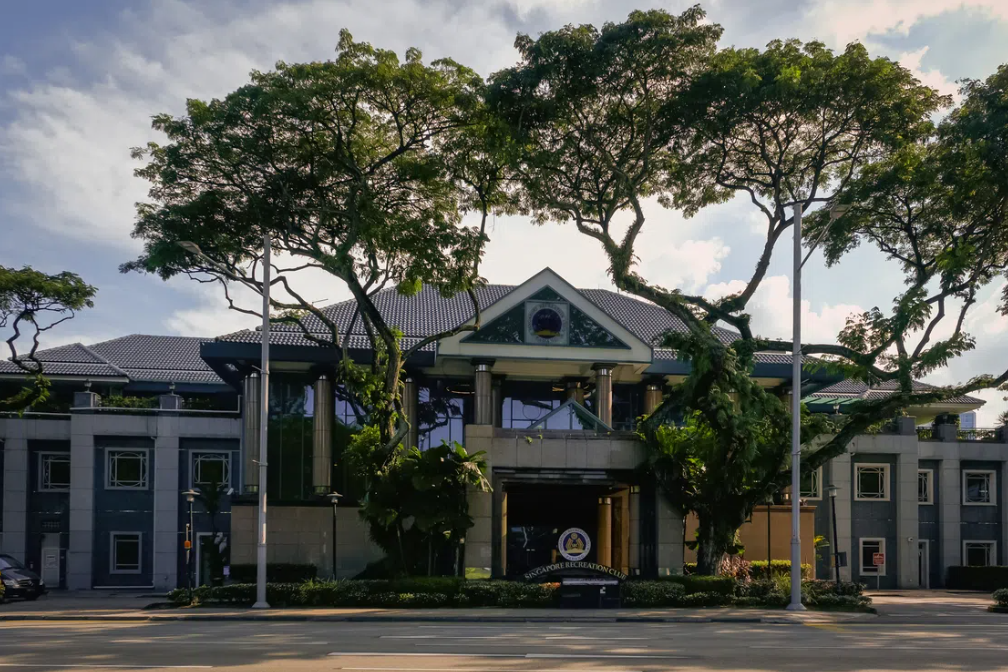
A Singapore High Court judge has ordered that a trial proceed in a dispute pitting two members of the Singapore Recreation Club against the club's leadership over plans to convert the billiards section into a co-working space. Senior Judge Chan Seng Onn issued his written decision on August 26, concluding that the lawsuit raises legitimate questions about the validity of the resolution passed at an extraordinary general meeting in October 2025.
The two dissenting members, Sean Kerwin Mathews and Mu Yee Shyong, filed their challenge in November 2025, arguing that the voting process used by the club's management committee failed to comply with constitutional rules governing how major decisions must be made. According to the club's governing document, they contended that such resolutions require approval from a majority of members physically present at the meeting – a threshold they calculated at 280 members out of the 559 who attended on October 18, 2025. Since only 151 members voted in favour, Mathews and Mu argued the resolution never achieved the necessary support.
The dispute centres on a complex voting arrangement designed by the management committee to navigate conflicting preferences within the membership. Members received two separate voting slips with distinct purposes and constraints. The first slip allowed them to choose between proceeding with a previously approved relocation plan that would now cost $4.9 million in additional land charges, or declining that option. Importantly, if a member voted "yes" to the first proposition, they were instructed that the second voting slip would not apply to them. The second slip offered a binary choice between two alternative approaches: converting the billiards room into a co-working space, or integrating the billiards room within a co-working facility. This design meant members could not vote against both alternative solutions without their ballot becoming invalid.
The underlying context for this dispute stretches back to March 2024, when the club's membership had enthusiastically endorsed an ambitious $16.6 million transformation initiative. The original plan involved moving the billiards room from level 2 down to basement 2 and creating a modern co-working space on the vacated upper level. The initial budget included $1.5 million as a contingency for potential land betterment charges – a form of taxation applied when property values increase. However, when authorities assessed the actual charges at $4.9 million, the management committee concluded the original relocation scheme was no longer financially sustainable.
When the October 2025 extraordinary general meeting was convened, the management committee essentially presented a scenario where the membership could either absorb the higher costs or select from predetermined alternatives. The voting framework created what Judge Chan would later describe as a constrained choice mechanism that disadvantaged those who wished to reject both replacement options. A member wishing to say "no" to the co-working space alternatives would find their ballot marked as spoilt rather than recorded as a dissenting vote.
Out of 514 ballots cast at the October meeting, the results showed 151 votes in favour of the second resolution (converting the billiards room to co-working space), 125 against, 183 spoilt, and 55 blank ballots. The management committee subsequently declared the resolution passed, citing a simple majority of 54.7 percent of valid votes. However, Mathews and Mu argued that the 55 blank votes should be counted alongside the 125 opposing votes, creating a total of 180 votes against the proposal – a sum that would constitute a majority of those present.
When an assistant registrar initially sided with the club in May and attempted to dismiss the entire lawsuit, Mathews and Mu appealed with the assistance of their lawyer, Clarence Lun. Judge Chan allowed the appeal on June 24 and provided comprehensive written reasons for reversing the lower court's decision. The judge identified two substantial issues requiring resolution at trial: whether the club's constitutional rule regarding majority voting actually applied to this particular resolution, and whether blank and spoilt ballots could legitimately be treated as votes against the proposal.
Judge Chan's reasoning emphasised the unusual circumstances of the voting structure. He acknowledged that blank or spoilt votes typically carry no meaning in standard voting procedures. However, he observed that the management committee had created an exceptional situation by constraining the available voting options in ways that effectively eliminated members' ability to reject all proposed outcomes. The judge noted that when members were given conflicting instructions about how to vote and their capacity to express opposition was curtailed, the treatment of blank and spoilt votes assumed greater significance.
The management committee, represented by Walter Alexander, had contended that invalidating the resolution would serve no productive purpose and would leave the club in operational gridlock. They argued that undoing the decision would create administrative paralysis. Judge Chan rejected this reasoning, observing that fresh balloting could resolve the impasse and that fairness in the voting process itself served a legitimate purpose regardless of whether a particular outcome would follow. The judge emphasised that the claimants were seeking nothing more than a properly conducted vote on the substantive question.
The Singapore Recreation Club itself is a prominent social and recreational institution serving approximately 7,000 members. The club's constitutional governance structures, like those of many established membership organisations, contain specific provisions governing how major decisions must be made and what voting thresholds must be satisfied. The dispute thus touches on broader questions about democratic procedure within private associations and whether management committees must strictly adhere to constitutional voting requirements even when doing so creates inconvenient outcomes.
For Malaysian observers, the case offers instructive parallels to governance challenges faced by clubs, chambers of commerce, and professional associations throughout Southeast Asia. As many regional organisations undertake modernisation initiatives requiring capital expenditure and land utilisation changes, similar disputes over voting procedures and constitutional compliance are likely to arise. The Singapore judgment provides useful precedent regarding how courts assess the legitimacy of constrained voting mechanisms and how blank or abstaining votes should be interpreted in contested circumstances.
The trial will ultimately determine whether the October 2025 resolution withstands legal scrutiny or whether the membership must vote anew. Either outcome carries implications for the club's $16.6 million capital programme and the future of its billiards section. Beyond the immediate parties, the case highlights how constitutional rules designed decades ago may require careful interpretation when applied to modern challenges like workplace co-working spaces and how management committees must balance operational efficiency against procedural fairness.

