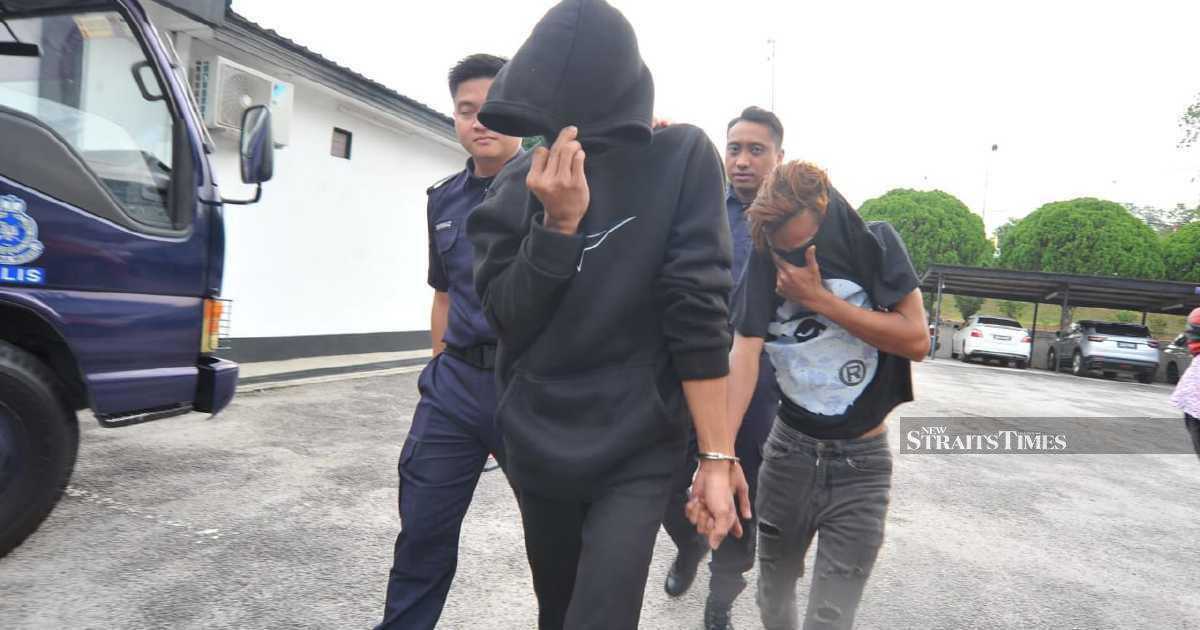
Two mechanics appeared before the magistrate's court in Kulai today to face charges arising from what authorities allege was an illegal street race conducted on the Johor Second Link expressway last Saturday. Among the accused is a disabled mechanic, raising questions about enforcement mechanisms and driver safety regulations on one of the country's busiest expressway corridors linking Peninsular Malaysia and Singapore.
The charges relate specifically to reckless and dangerous driving, offences that carry serious penalties under Malaysian traffic law. These prosecutions underscore ongoing enforcement efforts by traffic authorities to curb illegal racing activities on major expressways, where high speeds and dangerous manoeuvres pose significant risks to other motorists and travellers.
The Second Link, formally known as the Sultan Iskandar Bridge, serves as a critical transportation artery connecting Johor Bahru with Singapore's Tuas port. The expressway experiences substantial daily traffic volumes, with thousands of vehicles traversing the route daily for work, commerce, and leisure. Alleged illegal racing on such a heavily utilised corridor raises safety concerns that extend beyond the participants themselves to innocent commuters and commercial vehicles sharing the roadway.
The involvement of mechanics in this incident is noteworthy, given their professional familiarity with vehicle mechanics and performance capabilities. Street racing has long attracted individuals with automotive expertise who may be tempted to test modified vehicles or demonstrate technical knowledge through dangerous highway driving. Authorities have previously identified illegal racing as a recurring problem requiring sustained intervention and deterrence.
The case involving a disabled mechanic presents particular dimensions worth examining. Questions may arise regarding how the prosecution intends to establish culpability and whether any considerations regarding his disability status factor into legal proceedings. Malaysian courts have occasionally grappled with cases involving accused persons with disabilities, balancing legal accountability with humane considerations, though the severity of dangerous driving allegations typically remains paramount in judicial assessment.
Second Link incidents have periodically grabbed headlines when they involve rule-breaking motorists. The expressway's modern infrastructure and relatively straightforward design make it attractive to individuals inclined toward high-speed driving, contrasting with urban roads where traffic congestion naturally enforces compliance with speed restrictions. The bridge's characteristics—essentially a long, relatively unobstructed corridor—may create false impressions of safety among participants in illegal racing activities.
Traffic enforcement agencies have implemented various measures to discourage illegal racing, including increased patrols, speed cameras, and public awareness campaigns highlighting the dangers of street racing. Prosecutions such as these serve as visible deterrents, demonstrating that authorities will pursue legal action against offenders caught participating in such activities. Magistrate's court proceedings generate public records and potentially media attention that amplify deterrent effects beyond the individuals directly charged.
The timing and location of charges being filed in Kulai adds a jurisdictional element, as this falls within southern Johor's enforcement purview. The Johor Road Transport Department and police traffic divisions work collaboratively on expressway safety, though coordination challenges sometimes complicate enforcement efforts across different administrative boundaries and jurisdictions.
For Malaysian road users, particularly those who regularly commute via the Second Link, such incidents and subsequent prosecutions carry reassuring implications that authorities take illegal racing seriously. Commuters on busy expressways depend on predictable traffic patterns and expect that fellow motorists will adhere to traffic regulations. When individuals engage in dangerous driving behaviours on high-speed corridors, they jeopardise the safety assumptions upon which lawful road users rely.
The charges carry potential consequences including fines and imprisonment terms, with reckless and dangerous driving provisions under the Road Transport Act providing courts with substantial sentencing discretion. Conviction records can affect individuals' employment prospects, particularly those in professions where trustworthiness and rule-compliance receive emphasis.
Beyond the immediate legal consequences, this case illustrates broader societal challenges surrounding motor vehicle safety in Southeast Asia. Regional road fatality rates remain concerning compared to developed countries, with dangerous driving behaviours contributing significantly to accident statistics. Malaysia's ongoing efforts to improve road safety require not only infrastructure investment and enforcement but also cultural shifts in how motorists regard their responsibilities to fellow road users.
As legal proceedings continue in the magistrate's court, the case will likely serve multiple functions simultaneously: addressing accountability for the specific individuals charged, sending deterrent signals to others contemplating similar activities, and reinforcing public understanding that expressway safety standards apply to all motorists regardless of profession or personal circumstances. The outcome will be watched by road safety advocates monitoring judicial approaches to dangerous driving prosecutions.

