%22%2F%3E%3C%2Fpattern%3E%3C%2Fdefs%3E%3Crect%20width%3D%22100%25%22%20height%3D%22100%25%22%20fill%3D%22url(%23phb7mmg)%22%2F%3E%3Crect%20width%3D%22100%25%22%20height%3D%22100%25%22%20fill%3D%22url(%23phb7mmp)%22%2F%3E%3Ctext%20x%3D%2250%25%22%20y%3D%2250%25%22%20text-anchor%3D%22middle%22%20dominant-baseline%3D%22central%22%20fill%3D%22rgba(255%2C255%2C255%2C0.95)%22%20font-family%3D%22Georgia%2C%20'Times%20New%20Roman'%2C%20serif%22%20font-weight%3D%22700%22%20font-size%3D%22226%22%20letter-spacing%3D%22-0.02em%22%3EDiesel%3C%2Ftext%3E%3C%2Fsvg%3E)
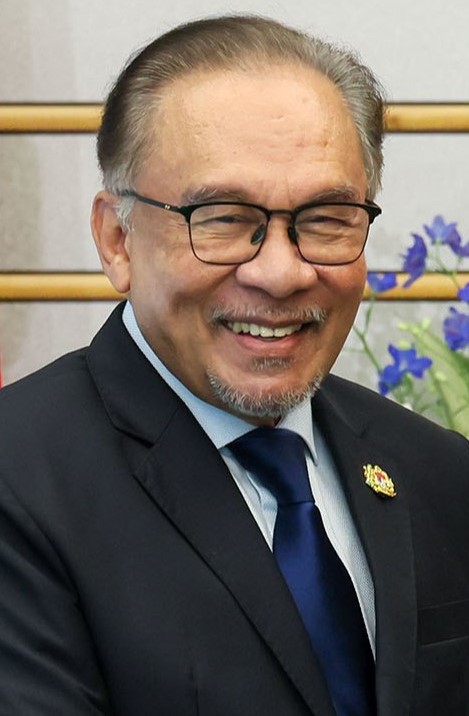
Malaysia is moving to reduce its subsidised diesel price to RM2.10 per litre beginning in July, marking a tangible win for the MADANI Government's broader strategy to ease the burden of living costs for ordinary Malaysians. The announcement, made by Prime Minister Datuk Seri Anwar Ibrahim, represents a concrete outcome from the economic reforms and subsidy restructuring that the administration has championed since taking office. Minister in the Prime Minister's Department (Sabah and Sarawak) Datuk Mustapha Sakmud characterised the price cut as evidence that the government's carefully calibrated approach to subsidy distribution is functioning as intended, delivering measurable relief to households already stretched by inflation and rising expenses across multiple sectors.
The price reduction carries significance beyond its immediate impact at the petrol pump. Under the current pricing structure, Sabah and Sarawak residents have been paying RM2.15 per litre for subsidised diesel, while consumers in Peninsular Malaysia face the unsubsidised price of RM4.37 per litre, creating a substantial disparity across the country. The adjustment to RM2.10 for the two East Malaysian states reflects a commitment to maintaining differential pricing that acknowledges the transport and logistics challenges unique to these regions, where fuel costs disproportionately affect the cost of essential goods and services in remote communities.
Central to this price adjustment is the government's implementation of the targeted subsidy mechanism, which leverages MyKad verification to ensure that fuel subsidies reach only eligible Malaysian citizens. This approach addresses a longstanding vulnerability in the country's subsidy system: the persistent problem of leakage, whereby subsidised fuel is diverted to black markets or smuggled across borders to neighbouring countries where unsubsidised prices are significantly higher. By tying subsidies directly to individual identity verification, the government aims to restore the integrity of a system that has historically bled billions in wasteful expenditure and lost revenue. Mustapha emphasised that this mechanism protects the fiscal sustainability of subsidy programmes while simultaneously preventing the cross-border smuggling operations that have undercut domestic fuel supply chains.
The timing of this announcement reflects the government's acute awareness of the volatile international energy landscape. The minister explicitly referenced the geopolitical uncertainties affecting global energy markets, particularly the ongoing conflict in West Asia, which continues to create supply pressures and price volatility that ramify through Asian economies. Malaysia, as an energy exporter but also a significant energy consumer, faces a delicate balancing act: maintaining affordable domestic energy prices for its population while protecting its export revenues and ensuring long-term energy independence. This announcement demonstrates that the government believes it can afford modest price reductions while maintaining fiscal discipline, a calculation that depends heavily on stable global oil prices and successful revenue management elsewhere in the economy.
Towards this end, the MADANI administration has prioritised strengthening energy partnerships with major producers beyond the traditional Middle Eastern suppliers. Mustapha highlighted Malaysia's efforts to deepen cooperation with Russia and Turkmenistan, and to secure energy supply assurances through strategic ties with major energy-producing nations. These diplomatic initiatives reflect a recognition that energy security is no longer merely a commodity market issue but fundamentally a matter of geopolitical positioning. For Malaysian policymakers, diversifying energy partnerships serves multiple objectives: it reduces dependence on any single source or region, mitigates the impact of regional conflicts on supply chains, and creates leverage in bilateral negotiations with both energy suppliers and regional neighbours.
The diesel price reduction also functions as a political indicator of the government's confidence in its economic management trajectory. Prime Minister Anwar's administration has staked significant credibility on the proposition that disciplined fiscal reform and structural economic adjustments can simultaneously deliver macroeconomic stability and household cost relief. The price cut, modest though it may be at five sen per litre, serves as tangible evidence for this narrative. In a political environment where citizens remain anxious about cost-of-living pressures and where previous governments faced intense criticism for subsidy mismanagement, even incremental reductions carry symbolic weight. They demonstrate to voters that the administration's economic strategy is yielding concrete benefits, not merely abstract promises of long-term prosperity.
The BUDI MADANI RON95 programme, which forms the foundation for the MyKad-based subsidy approach now being extended to diesel, has been operational for regular petrol for some time. Its expansion to diesel represents a logical extension of a targeting mechanism that the government evidently views as successful. The programme's architecture assumes that Malaysian citizens can be reliably identified and that subsidy eligibility can be accurately verified at the point of sale. This technological and administrative capability, while taken for granted in developed economies, represents a genuine achievement in a country with Malaysia's diverse population spread across widely dispersed geography. However, the programme's success depends critically on robust implementation at the ground level—at thousands of petrol stations, many in rural areas with limited digital infrastructure.
For Southeast Asian observers, Malaysia's approach to fuel subsidy reform offers instructive lessons. The region has long grappled with the tension between maintaining energy affordability for ordinary citizens and avoiding the fiscal distortions that blanket fuel subsidies create. Indonesia, the Philippines, and Thailand have each pursued different strategies, with varying degrees of success. Malaysia's combination of targeted subsidies, differential pricing across regions, and identity-based eligibility represents a middle path between complete subsidy elimination and universalised fuel support. If successfully implemented, it could provide a template for other governments seeking to balance equity concerns with fiscal discipline.
The practical implications for Malaysian businesses and consumers extend well beyond the diesel price itself. Transport operators, who are among the largest diesel consumers, will experience modest savings that could gradually translate into lower logistics costs and, theoretically, reduced prices for goods requiring extensive transport. Agricultural producers, fishing communities, and industrial enterprises dependent on diesel-powered equipment will similarly benefit from lower operating costs. However, these gains remain contingent on stable global oil prices and continued government commitment to the subsidy mechanism. Volatility in international energy markets could force the government to reassess its pricing formula, particularly if crude oil prices surge significantly, as has occurred repeatedly over the past two decades.
Looking ahead, the sustainability of this price reduction depends on factors largely beyond Malaysia's direct control. Global geopolitical developments, OPEC production decisions, and the pace of renewable energy transitions in major consuming nations will shape the energy price environment. Domestically, the government must demonstrate that the MyKad-based subsidy system can be administered efficiently and fairly across all states and regions, particularly in Sabah and Sarawak where logistics complexities complicate service delivery. If implementation proves effective and leakage is genuinely reduced, the fiscal savings generated could enable the government to maintain or even deepen fuel price cuts in future rounds. Conversely, if the system proves porous or administratively burdensome, pressure will mount to abandon the targeted approach in favour of simpler, if less efficient, alternatives.
The diesel price announcement ultimately encapsulates the MADANI Government's broader economic philosophy: strategic state intervention combined with administrative efficiency, aimed at delivering tangible benefits to ordinary Malaysians without sacrificing long-term fiscal prudence. Whether this approach proves sustainable will depend on the government's ability to navigate the treacherous waters of international energy markets, implement complex subsidy mechanisms effectively, and maintain public confidence in the fairness and transparency of its resource allocation decisions. For now, the five-sen reduction per litre represents a modest but meaningful acknowledgment that the administration understands the cost-of-living pressures facing its citizens and possesses both the will and the capacity to provide some relief.