%22%2F%3E%3C%2Fpattern%3E%3C%2Fdefs%3E%3Crect%20width%3D%22100%25%22%20height%3D%22100%25%22%20fill%3D%22url(%23ph1pww4g)%22%2F%3E%3Crect%20width%3D%22100%25%22%20height%3D%22100%25%22%20fill%3D%22url(%23ph1pww4p)%22%2F%3E%3Ctext%20x%3D%2250%25%22%20y%3D%2250%25%22%20text-anchor%3D%22middle%22%20dominant-baseline%3D%22central%22%20fill%3D%22rgba(255%2C255%2C255%2C0.95)%22%20font-family%3D%22Georgia%2C%20'Times%20New%20Roman'%2C%20serif%22%20font-weight%3D%22700%22%20font-size%3D%22170%22%20letter-spacing%3D%22-0.02em%22%3EDialogue%3C%2Ftext%3E%3C%2Fsvg%3E)
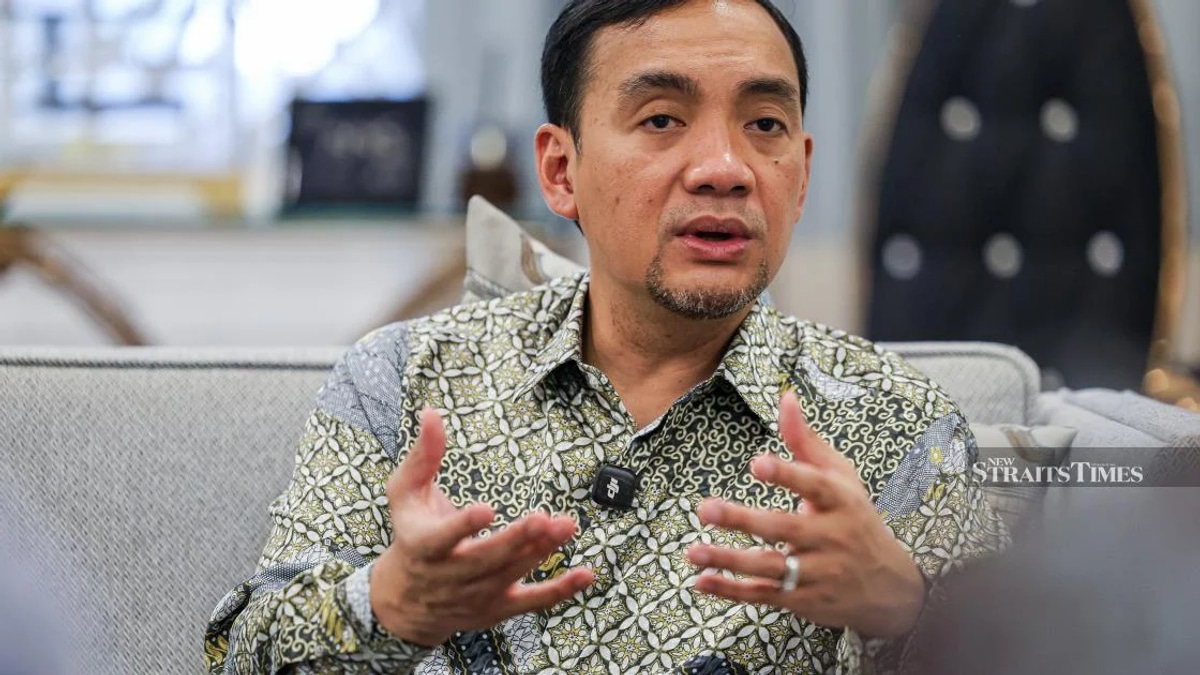
Prime Minister Datuk Seri Anwar Ibrahim has stressed that sustained diplomatic engagement between nations remains essential in navigating an increasingly complex global landscape marked by mounting challenges and unpredictability. Speaking following a gala dinner hosted by President Vladimir Putin at the ASEAN-Russia Commemorative Summit in Kazan, Anwar highlighted how multilateral platforms such as this gathering serve as vital instruments for deepening mutual comprehension among participating states, transcending the traditional bilateral approach to international relations.
The summit, held in Kazan, the capital and largest city of Tatarstan, brought together leaders from across Southeast Asia and Russia for a two-day engagement from June 17 to 18. Anwar, who attended in his dual capacity as Prime Minister and Finance Minister, noted that such high-level forums create meaningful opportunities for participating nations to forge stronger institutional connections while simultaneously building the foundational trust necessary for broader cooperation frameworks.
Beyond ceremonial functions, Anwar characterised these engagement platforms as instrumental mechanisms for identifying and cultivating areas of mutual benefit that can yield tangible outcomes for both ASEAN member states collectively and Russia individually. Rather than viewing such summits as purely symbolic exercises, he positioned them as pragmatic spaces where leaders can align strategic interests and explore concrete pathways for economic, security, and cultural collaboration that serve the broader aspirations of their respective regions.
The gala dinner itself served a dual purpose in the diplomatic calendar. It functioned simultaneously as a cultural showcase demonstrating Russia's considerable heritage, historical significance, and traditional customs, while simultaneously providing an informal setting conducive to candid dialogue among the attending leadership contingent. This blend of cultural presentation and substantive engagement reflects how modern summitry often leverages soft power alongside formal negotiations to establish rapport among policymakers.
For Malaysia and other ASEAN nations, Russia represents both a significant geopolitical actor and an economic partner with whom deeper engagement could yield advantages across multiple dimensions. The summit underscored ASEAN's commitment to maintaining balanced relationships with major powers, a principle long central to the bloc's foreign policy doctrine. By hosting such commemorative gatherings, the ASEAN-Russia relationship signals maturation beyond episodic contact toward institutionalised dialogue mechanisms.
The timing and venue selection also carry strategic implications. Kazan, situated at the intersection of Europe and Asia, symbolises the cross-continental nature of both ASEAN and Russian interests. For Southeast Asian leaders, this location underscores how engagement with Moscow cannot be compartmentalised within traditional Cold War frameworks but rather must be understood within contemporary multipolar realities where Russia seeks to strengthen ties across diverse regions.
Anwar's emphasis on mutual understanding represents a nuanced diplomatic approach that acknowledges differing perspectives while emphasising common ground. In an era where great power competition threatens to create rigid alignments, ASEAN's insistence on maintaining equidistant relationships with major powers becomes increasingly valuable. This posture allows Southeast Asian nations to benefit from engagement with multiple partners without sacrificing strategic autonomy.
The exchange of perspectives among participating leaders at such summits holds particular significance for Malaysian policymakers navigating regional complexities. These forums enable sharing of experiences on governance challenges, economic development strategies, and security concerns that transcend bilateral relationships. The informal nature of gala dinners often facilitates frank discussions that might prove difficult in formal negotiating chambers, potentially yielding unexpected areas of convergence.
Beyond immediate diplomatic outcomes, these engagement platforms contribute to the broader architecture of regional stability. By maintaining institutional channels of communication and periodic high-level meetings, ASEAN and Russia reduce the risk of misunderstanding escalating into confrontation. In a region where historical tensions and contemporary geopolitical rivalries create friction points, the existence of such forums provides safety valves for addressing concerns before they metastasise into serious disputes.
The ASEAN-Russia Commemorative Summit also reflects evolving regional preferences for inclusive multilateralism that accommodates diverse power centres. Rather than constructing exclusive blocs that demand binary allegiances, this approach permits smaller and medium powers like Malaysia to construct foreign policies reflecting their own interests and values. For Southeast Asia, this flexibility remains essential given the region's geographic position and economic interdependencies with multiple global actors.
Looking forward, sustaining and expanding such engagement mechanisms will prove crucial for ASEAN's continued relevance in addressing transnational challenges ranging from climate change to cyber security and pandemic preparedness. Russia's expertise in various technical and scientific domains could complement Southeast Asian requirements, while ASEAN's demographic dynamism and economic potential holds attraction for Moscow seeking to strengthen its Asian partnerships. The summit thus represents not merely ceremonial diplomacy but rather the foundation for potentially productive collaboration benefiting multiple stakeholders.