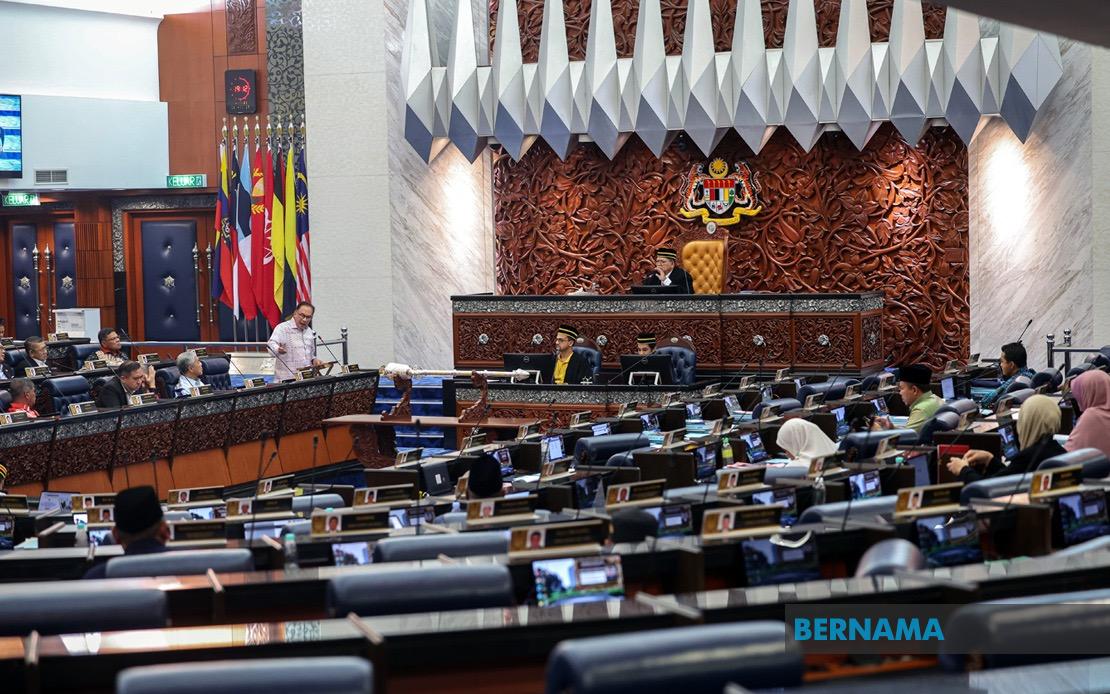
Parliament has endorsed amendments to the Employment Insurance System (Amendment) Bill 2025 that establish a tiered penalty framework targeting employers who fail to inform the Social Security Organisation (PERKESO) of available positions. The legislative changes, approved through a majority voice vote in the Dewan Rakyat on June 30, follow months of deliberation and consultation with the business community across Malaysia. The amendments introduce fines of RM1,000 for an initial breach, RM3,000 for a second violation, and up to RM5,000 for subsequent offences, representing a compromise between government oversight and practical business concerns.
The legislative journey reflects the parliament's iterative approach to employment regulation. The Dewan Negara had previously endorsed the amendments on March 12, specifically addressing Clause 11 and Subsection 45F(4) of the original legislation. The bill's passage through the lower house came after substantive debate involving 13 MPs representing both government and opposition parties, demonstrating cross-parliamentary engagement on labour market issues. This bipartisan discussion underscores the importance of the employment ecosystem to Malaysia's economic stability and workforce development.
Deputy Human Resources Minister Datuk Khairul Firdaus Akbar Khan, in his concluding remarks, characterised the amendments as advancing a compliance-first philosophy rather than purely punitive enforcement. He emphasised that employers would receive compliance notices allowing them time to rectify reporting failures before any financial penalties materialise. This graduated approach reflects lessons learned from previous regulatory implementations across Southeast Asia, where harsh penalties without warning periods have sometimes triggered business resistance and unintended market distortions. The ministry's strategy prioritises education and cooperative engagement, positioning PERKESO as a facilitating body rather than solely an enforcement agency.
Considerable stakeholder feedback shaped the final penalty structure, particularly regarding the maximum fine quantum. The government originally proposed a ceiling of RM10,000, but extensive consultation sessions with employers across various industrial sectors led to a revision downward to RM5,000. This adjustment demonstrates responsiveness to business community input and recognition of the compliance cost burden, particularly for smaller enterprises. The first-offence fine was similarly recalibrated to RM1,000, reflecting discussions with sectors ranging from manufacturing and services to agriculture and hospitality throughout Malaysia's diverse regional economy.
PARLIAMENTARY debate revealed underlying concerns about implementation feasibility and equity in enforcement. Azahari Hasan, the Padang Rengas representative from Perikatan Nasional, advocated for a streamlined reporting system that minimises administrative friction for employers while ensuring data quality for labour market analysis. He articulated the connection between job vacancy reporting, effective job matching, unemployment reduction, and evidence-based policymaking. The substance of his intervention reflects broader recognition that Malaysia's labour market efficiency depends fundamentally on information flows between employers, jobseekers, and government institutions. Without reliable vacancy data, PERKESO cannot optimise its matching algorithms or provide meaningful labour market intelligence to policymakers.
Rural and regional equity emerged as a significant parliamentary concern. Nurul Amin Hamid, representing Padang Terap, welcomed the reduced maximum penalty but flagged awareness gaps among rural businesses regarding their statutory obligations under employment legislation. Rural enterprises, often smaller and with less formal human resources infrastructure, may struggle to understand or comply with reporting requirements without substantial government outreach. This observation carries implications for policy implementation across provincial Malaysia, where internet connectivity, digital literacy, and familiarity with federal regulatory regimes vary considerably. The government's commitment to guidance sessions must therefore extend beyond urban centres to ensure equitable compliance opportunities.
Transparency in job advertising emerged as a separate but complementary concern. Syerleena Abdul Rashid, the Bukit Bendera MP from Pakatan Harapan, stressed that mandatory job vacancy reporting should integrate with transparent advertising through official government portals. This integration serves multiple objectives: it prevents discriminatory hiring practices, ensures equitable access to employment information for all jobseekers regardless of socioeconomic background, and builds public confidence that vacancy reporting serves genuine labour market purposes. Her intervention reflects growing emphasis on employment transparency and anti-discrimination principles within Malaysia's legislative framework.
The legislative context reveals employment insurance and labour market regulation as evolving policy domains in Malaysia. PERKESO's expanded role in job matching and employment intermediation represents a significant institutional evolution from its traditional social security focus. The amendments codify this expanded mandate by making job vacancy reporting a statutory requirement with financial consequences for non-compliance. This regulatory shift aligns Malaysia with international labour market practices where employment services agencies actively aggregate vacancy information to match workers with opportunities more efficiently.
Implementation success depends critically on system design and user experience. Parliamentary interventions highlighted that reporting mechanisms must be sufficiently accessible and user-friendly to achieve genuine employer compliance rather than grudging submission to penalty avoidance. If the system proves technically cumbersome or administratively burdensome, employers may resent the requirement, potentially undermining voluntary cooperation. Conversely, a well-designed platform that demonstrates clear benefits—such as efficient worker recruitment—can transform mandatory reporting from perceived compliance burden into valued business tool. This implementation dimension often determines whether legislation achieves its intended policy objectives or merely generates enforcement conflicts.
The amendments reflect Malaysia's broader policy direction toward active labour market intervention and information-based economic governance. Rather than relying exclusively on market mechanisms or passive regulation, the government is building institutional capacity to facilitate labour market matching through mandatory information collection and government-provided intermediation services. This approach requires sustained employer engagement, clear communication of requirements, and demonstrated value to participating businesses. The graduated penalty structure, combined with emphasis on guidance over enforcement, represents a pragmatic implementation strategy that acknowledges both the government's legitimate regulatory interests and businesses' operational realities.
Looking forward, successful implementation will require robust execution of promised support mechanisms. PERKESO must develop genuinely accessible reporting systems, particularly for smaller enterprises and rural businesses less familiar with digital government platforms. Training and assistance programmes should be widely publicised and geographically dispersed. Government agencies must also demonstrate that reported vacancy data translates into tangible employment outcomes and labour market improvements, justifying the compliance burden for participating employers. As Malaysia competes for talent within Southeast Asia's increasingly integrated labour markets, employment system modernisation through better information and matching capabilities represents a credible competitive advantage.

