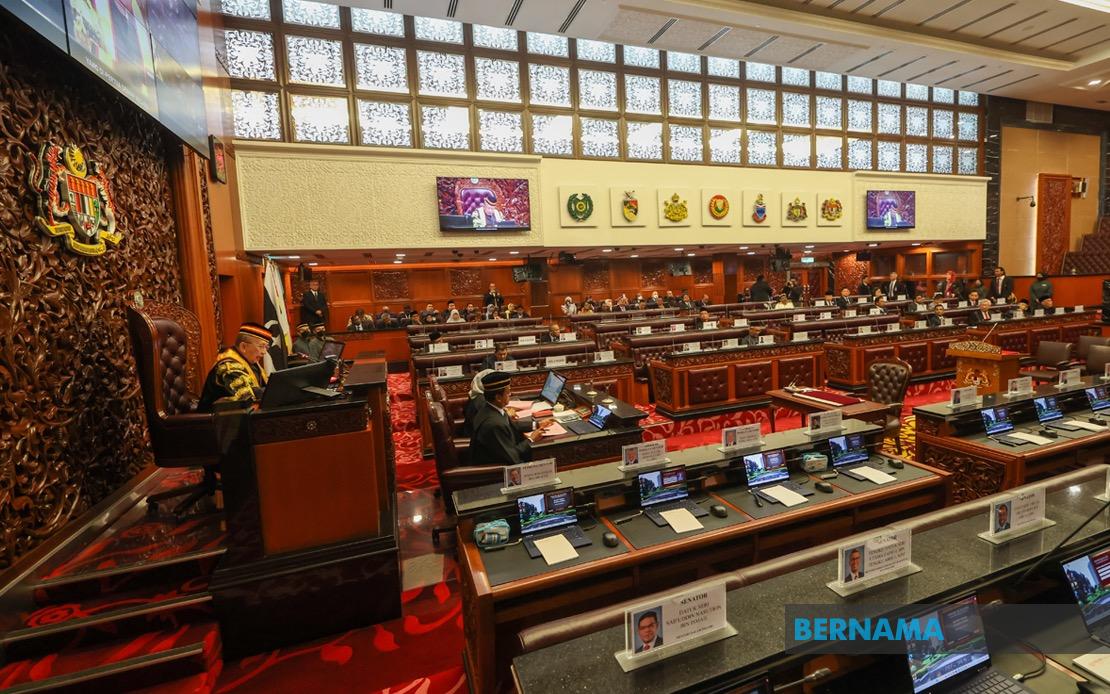
The Dewan Negara has formally concluded its second meeting of the current parliamentary session with the successful passage of the National Trust Fund (KWAN) Bill 2026 and the Statistics Bill 2026, marking substantial progress on the government's governance reform agenda. The 10-day sitting, which commenced on July 20, addressed a broad spectrum of national priorities ranging from economic competitiveness to energy security, reflecting the upper house's role in scrutinising policy implementation across multiple sectors.
The KWAN Bill, tabled by Deputy Finance Minister Liew Chin Tong, represents a notable effort to tighten administrative controls over Malaysia's National Trust Fund. The legislation establishes more rigorous protocols for fund withdrawals and enhances overall governance mechanisms, addressing longstanding concerns about the fund's operational transparency and financial discipline. By codifying clearer withdrawal criteria and oversight procedures, the bill aims to prevent ad-hoc decisions that could compromise the fund's long-term financial sustainability, a critical consideration for an entity responsible for managing significant public resources.
Complementing this governance initiative, the Statistics Bill 2026 introduced by Deputy Economy Minister Datuk Mohd Shahar Abdullah overhauls Malaysia's statistical infrastructure with a modern, comprehensive legal framework. This legislation acknowledges that contemporary data collection and analysis demands updated mechanisms suited to digital-era requirements, ensuring that national statistics remain reliable, comparable internationally, and responsive to emerging analytical needs. The modernisation of statistical frameworks carries particular importance for evidence-based policymaking and for maintaining investor confidence in Malaysia's economic data transparency.
The parliamentary sitting reflected considerable government focus on economic resilience in the face of international volatility. Following geopolitical tensions in West Asia, the administration outlined protective measures including supply chain security, price stability initiatives, industrial support mechanisms, and broader economic fortification efforts. This forward-looking approach demonstrates recognition that Malaysia's open economy requires proactive government intervention to maintain stability during periods of external uncertainty, a lesson particularly relevant for Southeast Asian nations dependent on global trade and investment flows.
A notable discussion centred on the Retirement Fund (Incorporated) (KWAP), where Prime Minister Datuk Seri Anwar Ibrahim called for balanced assessment of the pension fund's performance despite its reported RM12.9 billion net profit. The Prime Minister's intervention suggests sensitivity to public scrutiny of sovereign wealth and pension fund investments, particularly following the eFishery investment experience, which he characterised as providing instructive lessons for future decision-making. This candid acknowledgment reflects growing maturity in how Malaysia discusses investment outcomes, moving beyond simple profit-and-loss calculations toward comprehensive evaluation of strategic lessons learned.
Postal sector transformation also featured prominently in parliamentary discussions. Pos Malaysia is implementing comprehensive restructuring aimed at eliminating operational losses through network optimisation, digital channel expansion, and stringent cost management. The government is simultaneously exploring establishment of a Postal Service Fund as a sustainable long-term financing mechanism, signalling recognition that postal services, while economically challenged globally, perform essential social functions requiring innovative funding models. This approach mirrors strategies adopted by advanced economies grappling with similar postal sector pressures.
Energy security emerged as a paramount concern, with the government examining establishment of a strategic petroleum reserve encompassing fiscal implications, operational logistics, governance architecture, and international precedents. Concurrent with this strategic consideration, Malaysia concluded a 20-year fuel supply agreement with Russia encompassing petrol, diesel, crude oil, and gas. This diversification aligns with the National Energy Transition Roadmap objectives, suggesting the government balances energy security imperatives with longer-term decarbonisation commitments, a delicate equilibrium facing many developing economies.
Foreign direct investment developments provided encouraging signals for Malaysia's manufacturing competitiveness. Japanese investors committed RM10.5 billion across 46 electrical and electronics sector projects between 2021 and 2025, anticipated to generate 9,009 employment opportunities. This sustained Japanese investment in Malaysia's high-technology manufacturing base underscores the country's continued appeal to quality investors, even as regional competition intensifies. The figures suggest that despite geopolitical headwinds and supply-chain reorganisation trends, Malaysia retains competitive advantages in attracting sophisticated manufacturing operations.
Competitiveness rankings featured prominently in parliamentary discourse, with Deputy Economy Minister Mohd Shahar Abdullah confirming Malaysia's trajectory toward inclusion among the world's 12 most competitive economies by the conclusion of the 13th Malaysia Plan. The country's improved standing in the 2026 World Competitiveness Ranking reflects the cumulative impact of structural reforms undertaken across multiple policy domains. This achievement carries symbolic and practical significance, enhancing Malaysia's attractiveness to multinational enterprises evaluating regional investment locations.
Bank Negara Malaysia's implementation of a new Performance Measurement Framework for Development Financial Institutions commencing July 1, 2027 represents technical but consequential reform. The enhanced framework broadens assessment beyond traditional financial metrics to encompass development mandate realisation, systemic impact, governance quality, and operational effectiveness. This comprehensive approach acknowledges that developmental banking institutions serve multiple constituencies whose interests extend beyond conventional profitability measures, requiring multifaceted performance evaluation.
The electric vehicle sector expansion illustrated private sector-led development without government price controls on public charging infrastructure. With 6,416 public EV chargers installed nationwide by May 31, Malaysia is constructing the charging ecosystem necessary for EV adoption acceleration. This market-driven approach contrasts with government-mandated pricing, reflecting confidence that competitive dynamics will deliver consumer-friendly pricing while maintaining investment incentives, though its long-term efficacy remains subject to observation.
Fiscal consolidation constituted another parliamentary emphasis, with the Finance Ministry reporting the fifth consecutive year of federal fiscal deficit narrowation following economic and fiscal reforms. Nearly RM5 billion in spending restrictions implemented during the first half achieved efficiency gains without compromising critical service delivery. These figures demonstrate that fiscal discipline, when executed strategically, can strengthen long-term government financial capacity without immediate disruption to essential functions. Federal debt remained within statutory limits, reinforcing market confidence in Malaysia's fiscal trajectory.
The concluding of this parliamentary session with two substantive bills and extensive policy discussions reflects the Dewan Negara's substantive contribution to national governance. Rather than serving merely as a ceremonial body, the upper house functioned as an active venue for government accountability, policy evaluation, and legislative refinement across multiple sectors. The postponement of announcement regarding the date of subsequent proceedings leaves the government scheduling flexibility while concluding this session's substantive work.

