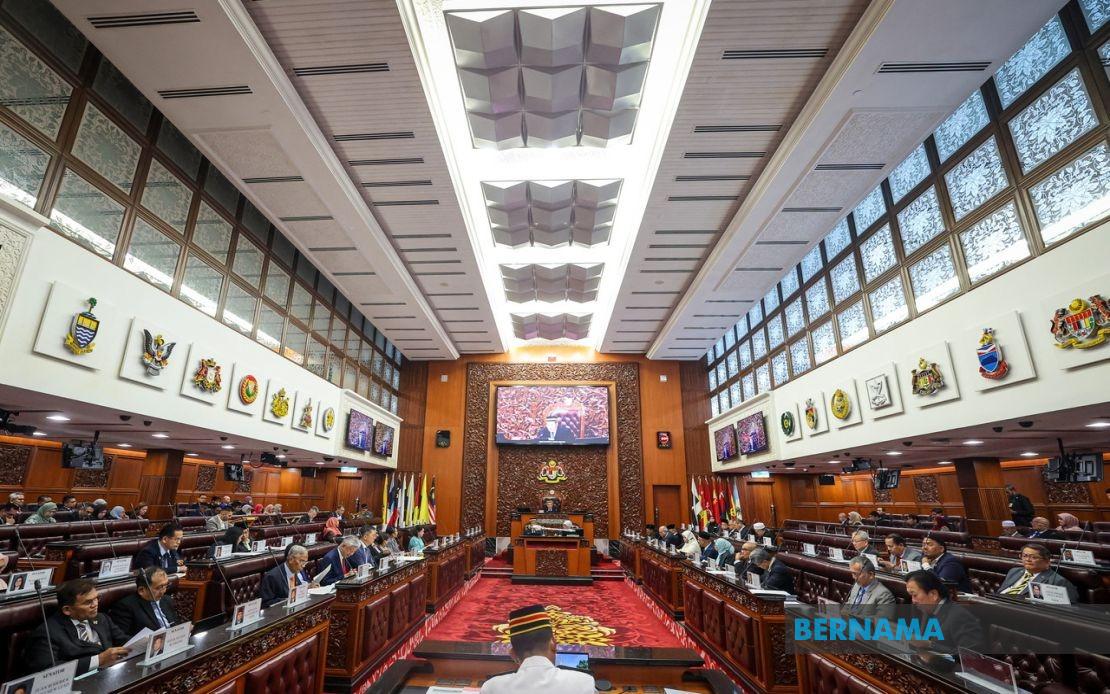
Malaysia's upper house of Parliament has wrapped up its sitting after a productive 10-day session during which lawmakers approved 12 significant pieces of legislation. The Second Meeting of the Fifth Term of the 15th Parliament of Dewan Negara concluded today, marking another milestone in the nation's legislative calendar that began on July 20. The breadth of measures passed reflects the range of governance challenges facing the country, from digital security to rural development.
Among the most consequential bills enacted was the Cybercrimes Bill 2026, a crucial update to Malaysia's digital security framework at a time when cyber-related threats have become increasingly sophisticated and pervasive. This legislation sits alongside the Road Transport (Amendment) Bill 2026, which strengthens road safety regulations, and the Witness Protection (Amendment) Bill 2026, addressing law enforcement needs in prosecuting serious crimes. Additionally, Parliament approved the Sexual Offences against Children (Amendment) Bill 2026, underscoring the government's commitment to child protection through updated statutory safeguards.
The legislative package also encompassed two competition-related bills designed to modernise Malaysia's regulatory framework. The Competition (Amendment) Bill 2026 and the Competition Commission (Amendment) Bill 2026 together represent an effort to keep pace with evolving market dynamics and emerging monopolistic practices in the digital economy. These measures are particularly relevant for Malaysian businesses navigating an increasingly complex commercial landscape where traditional competition rules must adapt to new business models and cross-border operations.
Dewan Negara also ratified several bills with direct implications for Malaysia's agricultural and social sectors. The National Trust Fund Bill 2026 establishes new mechanisms for financial governance, while the Padi and Rice Control (Amendment) Bill 2026 refines regulatory oversight of Malaysia's critical rice supply chain—a sector of considerable importance to food security and the livelihoods of rural communities. The Social Work Profession Bill 2026 elevates professional standards in an expanding field increasingly recognised as essential to social cohesion and community wellbeing.
Communications regulation was similarly strengthened through passage of the Communications and Multimedia (Amendment) Bill 2026 and the Malaysian Communications and Multimedia Commission (Amendment) Bill 2026. These complementary measures modernise the governance structure overseeing telecommunications and digital services at a moment when Malaysia seeks to position itself as a regional technology hub. The Statistics Bill 2026 rounds out the legislative agenda by establishing contemporary frameworks for data collection and management—foundational infrastructure for evidence-based policymaking.
Beyond the formal bills, the session incorporated an adjournment debate mechanism rarely deployed in recent years. The Dewan Negara Adjournment Speech session, convened under Standing Order 16 for the first time since 2022, provided senators an opportunity to raise two critical policy matters outside the main legislative agenda. Senators debated the escalating threat posed by cross-border e-commerce platforms such as Pinduoduo and Temu to Malaysia's micro, small and medium enterprise sector. These Chinese-founded digital marketplaces have expanded aggressively throughout Southeast Asia, undercutting local retailers through low-cost imports and favourable platform algorithms, prompting concern among policymakers about the sustainability of Malaysia's traditional retail ecosystem.
The second motion addressed electoral participation for auxiliary police members, proposing mechanisms to facilitate early or postal voting for uniformed personnel unable to vote on standard election day. This reflects a broader discussion within democratic systems about ensuring voting accessibility for workers with irregular schedules or deployment obligations. The inclusion of such motions demonstrates the Dewan Negara's function as a chamber for deliberating matters beyond formal legislation—providing a space for considered debate on issues affecting specific constituencies and sectors.
Dewan Negara Speaker Datuk Awang Bemee Awang Ali Basah emphasised during his closing remarks that the diversity of backgrounds and expertise represented among senators had meaningfully enriched parliamentary processes. This perspective underscores the intended role of the upper house as a deliberative body offering perspectives distinct from partisan pressures that can dominate the lower chamber. The speaker highlighted how varied viewpoints contribute to robust checks and balances while shaping legislation that reflects broad consensus rather than narrow partisan advantage.
Connecting these legislative achievements to Malaysia's broader national narrative, the speaker's adjournment address invoked the upcoming dual commemoration of National Day and Malaysia Day 2026. By framing the parliamentary session's achievements within this patriotic context, he called upon all political actors to reaffirm commitment to national sovereignty, uphold constitutional supremacy, and strengthen the rule of law. These values—constitutional democracy, national unity, and institutional integrity—serve as the philosophical foundation upon which Malaysia's legislative system is constructed and should remain the reference points guiding implementation of the bills now enacted.

