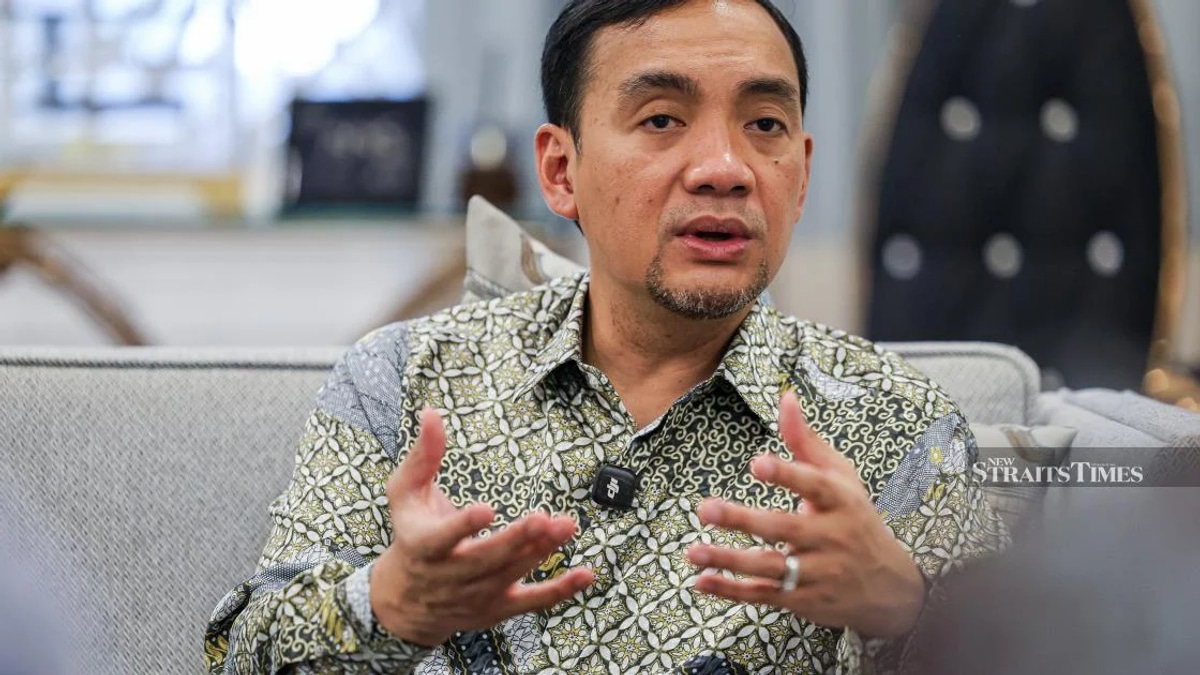
Prime Minister Datuk Seri Anwar Ibrahim has issued a pointed warning that developing nations will look beyond Europe for partnerships if Western European countries persist in pursuing policies the Malaysian leader characterizes as inequitable and discriminatory. The cautionary remarks, made in reference to an unresolved defence-related matter involving Norway, underscore mounting frustration among Global South nations over what they perceive as a double standard in how developed and developing economies are treated within international frameworks.
The dispute centring on Norway has become emblematic of broader tensions between developed and developing countries over trade practices, investment terms, and defence cooperation arrangements. Malaysia's prime minister signalled that tolerance for what he views as unfair treatment has limits, particularly when wealthy nations deploy their economic leverage to impose conditions that disproportionately burden nations with fewer resources and negotiating power. This stance reflects a shift in how Southeast Asian leaders publicly address their relationships with European counterparts, moving from deference to more assertive advocacy for equitable terms.
Anwar's comments arrive at a moment when many developing nations are reassessing their strategic alignments. The rise of alternative partnerships—whether through Belt and Road Initiative investments, ASEAN-centred cooperation mechanisms, or strengthened ties with other Global South economies—has provided options that were less available a generation ago. European nations that once dominated the international order now compete for influence alongside China, India, and other rising powers. Malaysia's position as a significant economy within Southeast Asia gives particular weight to the prime minister's warnings about where developing nations might redirect their attention and resources.
The Norwegian defence issue appears to have been a catalyst rather than the sole irritant. Developing nations have articulated grievances over European Union regulations that affect their exports, investment restrictions justified on political grounds, and what many perceive as selective application of international standards. When wealthy nations enforce stringent environmental, labour, or governance requirements as prerequisites for market access or investment, developing countries argue such measures often reflect the economic circumstances and institutional capacities of Europe rather than universal benchmarks.
Malaysia's readiness to signal openness to alternatives carries strategic weight in the regional context. As a nation with substantial trade relationships across multiple continents, Malaysia could plausibly reorient certain partnerships if incentives shifted. Other Southeast Asian nations would likely follow similar calculus, potentially reshaping the region's external relationships. This dynamic gives substance to Anwar's warning—it is not merely rhetorical posturing but reflects real geopolitical and economic considerations.
The tension between developed and developing nations over fairness in international dealings has long simmered beneath the surface of diplomatic exchanges. Developing nations often point out that today's wealthy countries industrialized under conditions of lower environmental standards, weaker labour protections, and more lenient regulatory frameworks than those now demanded of latecomers to economic development. They argue that applying identical standards without accounting for development stage effectively locks in advantages enjoyed by already-prosperous nations.
Europe's approach to bilateral and multilateral negotiations has traditionally reflected its economic strength and political influence. However, the diffusion of power in the international system has created space for developing nations to articulate alternative visions of fair cooperation. ASEAN's emphasis on non-interference and mutual benefit contrasts sharply with conditions that Western partners often attach to economic engagement. Anwar's remarks signal that Malaysia views the balance as having shifted sufficiently that European partners cannot take Southeast Asian cooperation for granted.
The practical implications extend beyond grand strategic competition. Trade relationships, investment flows, technology transfer agreements, and defence partnerships all operate within frameworks shaped by the quality of bilateral relationships. When prime ministers publicly warn that unfair treatment will drive nations toward alternatives, they signal to both their domestic audiences and international partners that patience is finite. European policymakers reading such statements understand that continued policies perceived as inequitable risk losing influence and commercial opportunities in strategically important regions.
Malaysia itself has benefited substantially from diverse international partnerships, allowing it to maintain strategic autonomy while developing economically. The prime minister's warning effectively communicates that this model—neither exclusively aligned with any single bloc nor dependent on traditional Western relationships—remains the preferred approach. Should Europe persistently breach what developing nations consider acceptable standards for fair dealing, however, Malaysia and similar-minded nations have demonstrated capacity to intensify engagement with alternative partners and frameworks.
Anwar's comments also reflect frustration with what developing nations perceive as European inconsistency. Wealthy nations frequently invoke universal principles while making exceptions for strategic interests, security concerns, or regional allies. Developing countries see these exceptions as confirmation that stated principles serve instrumental purposes rather than representing genuine commitments to fairness. Such perceived hypocrisy strengthens the case for seeking partnerships with nations that acknowledge explicitly that relationships are founded on mutual interest rather than universal values.
The broader context includes recognition that developing nations' bargaining power has genuinely increased. As some emerging economies have achieved technological sophistication, manufacturing capacity, and substantial consumer markets, they have become less dependent on Western markets and investment. This shift undermines the leverage that European and other developed countries once wielded automatically. Anwar's warning should be understood as articulating this new reality: unfair treatment now carries costs that previously would have been inconceivable.
Moving forward, the challenge for European nations involves calibrating engagement with developing countries to balance legitimate policy objectives with recognition of the realities underpinning the international system's evolution. Malaysia's prime minister has made clear that the region expects relationship terms reflecting the twenty-first-century distribution of economic and political capacity rather than twentieth-century hierarchies. How Europe responds to such signals will substantially influence its continued relevance and influence in one of the world's most dynamic regions.