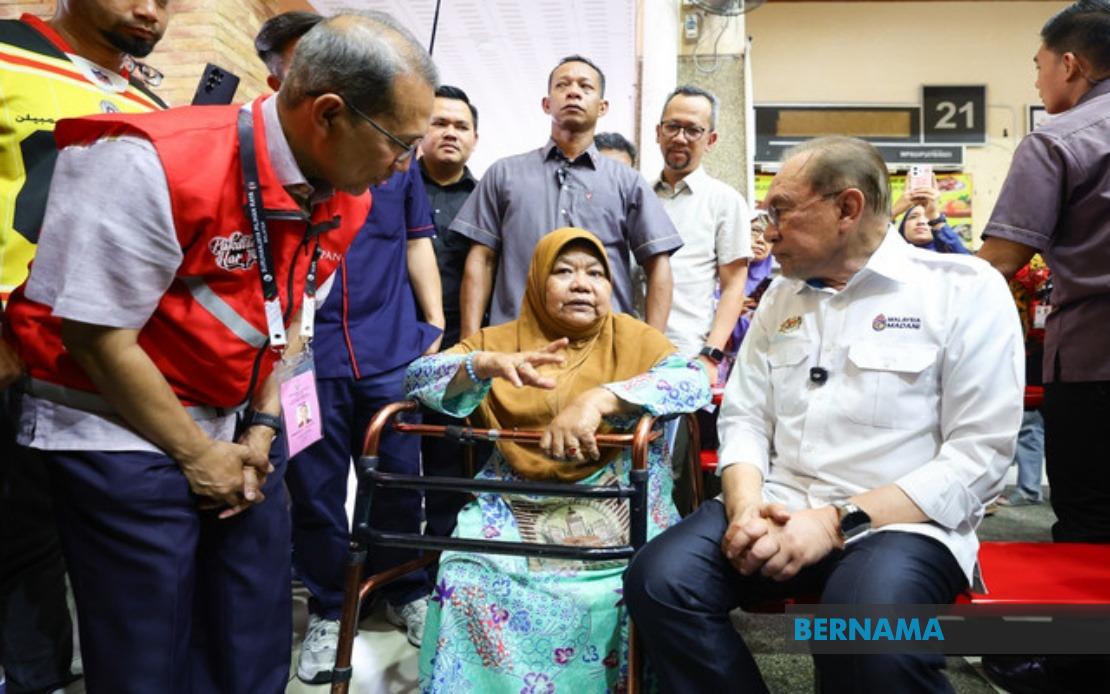
In Seremban on Monday, Jumaah Mohd Alif, a 68-year-old person with disabilities, accomplished a long-held aspiration when she travelled on her three-wheeled motorcycle from Kampung Gedung Lalang to Benteng Ampangan to encounter Prime Minister Datuk Seri Anwar Ibrahim. Despite wet weather conditions and the physical barriers she navigates daily, Jumaah's resolve proved stronger than the obstacles in her path, underscoring a deeply personal moment she described as something she would treasure throughout her remaining years.
Jumaah's journey was prompted by word from neighbours that the country's top leader would be visiting the Ampangan area. Though rain fell steadily, she made the decision to embark on her journey, prioritising the opportunity to meet Anwar face-to-face over comfort and convenience. Her arrival at the campaign event marked the fruition of an ambition she had harboured for considerable time, one that had seemed distant and improbable until circumstances aligned to make it possible.
Having lost her left leg in a mishap three and a half decades ago, Jumaah has navigated life with significant physical constraints. Prior to this encounter, her exposure to the Prime Minister had been limited to glimpses from television screens or distant views when he appeared in public settings. The prospect of engaging directly with him, of having a genuine conversation rather than observing from afar, represented something extraordinary in her lived experience.
During her interaction with Anwar, Jumaah voiced aspirations for Malaysia's future direction. She articulated hope that the government would intensify its focus on safeguarding the interests of vulnerable populations, particularly the elderly and individuals living with disabilities. Her message reflected concerns that extend beyond her personal circumstance, touching on broader systemic support for marginalised demographic groups across the nation.
Anwar's presence in Negeri Sembilan formed part of a broader campaign initiative aimed at bolstering Pakatan Harapan's electoral position within the state. As chairman of the coalition, he has been actively engaging with communities to energise support ahead of crucial voting. The Prime Minister's state visit demonstrates the coalition's strategic focus on maintaining and expanding its political influence in regions where state-level elections determine local governance structures.
The Negeri Sembilan state election represents a significant electoral contest within Malaysia's broader political landscape. The Election Commission designated July 28 as the early voting date, while August 1 has been set as the general polling day. This timeline creates a concentrated campaign period during which political parties intensify their outreach and messaging to voters across the state's constituencies.
Jumaah's determination to participate in this civic moment, despite her physical circumstances and challenging weather, illustrates the human dimension often absent from routine political coverage. Her story demonstrates how electoral campaigns and political events touch individual lives in ways that extend beyond vote tallying and seat calculations. For many Malaysians, particularly those from marginalised communities, a direct interaction with national leadership can represent validation and acknowledgment of their existence within the broader national conversation.
The encounter also highlights broader questions about accessibility and inclusion within Malaysian political processes. While Jumaah's initiative and resilience enabled her to reach the campaign event independently, her experience raises considerations about whether such accessibility should require such extraordinary personal effort. For persons with disabilities seeking fuller participation in civic life, the infrastructure and accommodations available at political events and public spaces remain crucial factors determining their ability to engage meaningfully.
Jumaah's aspirations regarding elderly welfare and disability support align with policy discussions occurring at multiple levels of Malaysian governance. Federal and state governments have increasingly acknowledged the growing elderly population and the need for comprehensive support systems. Disability rights organisations continue advocating for enhanced accessibility standards, improved social safety nets, and greater inclusion within mainstream economic and social structures. Personal testimonies from individuals like Jumaah provide authentic grounding for these policy discussions, moving beyond abstract demographic statistics to human realities.
The broader context of the Negeri Sembilan campaign reflects Malaysia's federal structure, where state governments retain significant autonomy over local development priorities, resource allocation, and service delivery. Electoral contests at the state level therefore carry importance for determining which coalitions and parties will shape regional governance. Anwar's campaign involvement signals Pakatan Harapan's commitment to competing seriously for state control, recognising that electoral victories at state level strengthen the coalition's overall political foundation.
Jumaah's narrative also underscores the diversity within Malaysian society and the varied experiences citizens bring to their relationship with government and governance. Her three-decade navigation of life with a physical disability, her residence in a rural village setting, and her fundamental desire to connect with national leadership all converge in a moment that transcends typical election-day coverage. Such stories remind observers that electoral politics ultimately concerns itself with how governance decisions affect individuals managing complex life circumstances.

