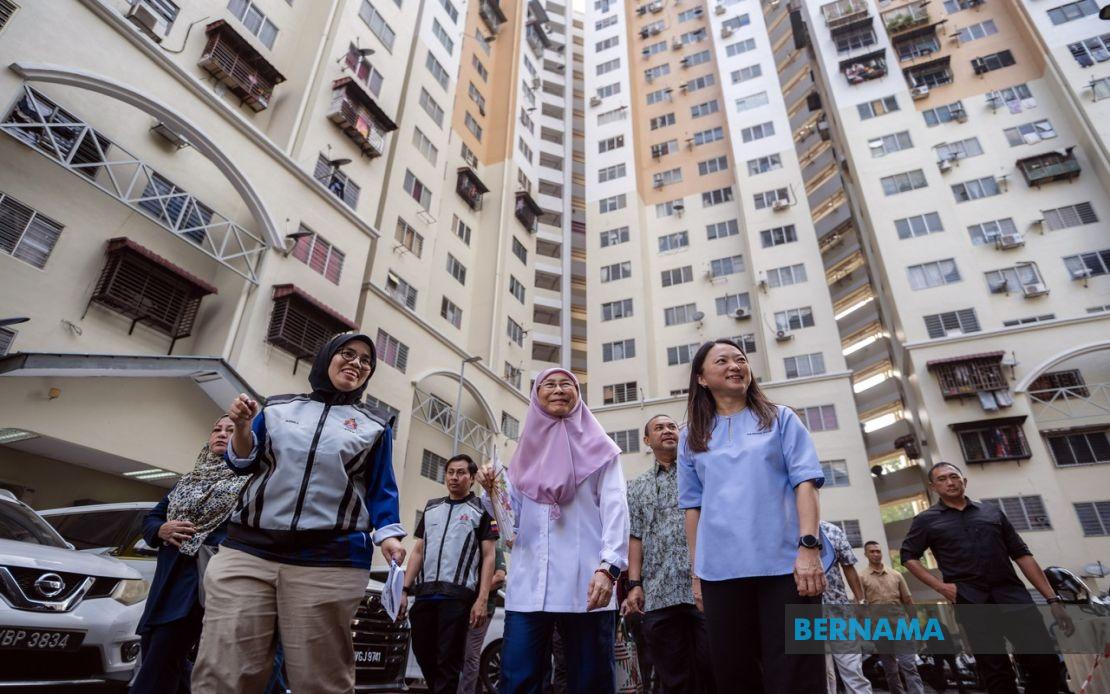
The completion of upgrading work at Desa Tun Razak People's Housing Project (PPR) in Kuala Lumpur represents a significant milestone in the federal government's systematic effort to rehabilitate affordable housing stock across the capital. The RM9.6 million project, which concluded this month, is part of a broader initiative to address maintenance deficits that have accumulated over decades of operation at multiple PPR facilities serving tens of thousands of residents throughout the city.
Minister in the Prime Minister's Department (Federal Territories) Hannah Yeoh emphasised that the completion of Desa Tun Razak is one of 22 projects now finished from a total of 61 planned upgrades across Kuala Lumpur's PPR network. The comprehensive approach reflects a shift in government philosophy toward preventative and systematic maintenance rather than reactive repairs that had previously characterised housing management. Yeoh underscored that while constructing new residential developments is relatively straightforward, ensuring proper upkeep of existing facilities demands sustained financial commitment and strategic planning to preserve both asset value and resident safety.
The government's commitment to this maintenance philosophy is evident in its decision to earmark an additional RM300 million this fiscal year exclusively for PPR improvements. This allocation was secured through agreement among all Members of Parliament representing Kuala Lumpur constituencies, signalling broad political consensus on the necessity of upgrading aging public housing infrastructure. The funding mechanism represents a departure from ad hoc spending patterns that often left critical infrastructure in disrepair, with maintenance budgets frequently sacrificed when financial pressures mounted elsewhere in municipal budgets.
Specific improvements at Desa Tun Razak, which has housed residents since 1998, addressed vulnerabilities that had become increasingly apparent. The facility, home to more than 8,000 residents across multiple blocks, underwent comprehensive electrical system overhaul, with technicians replacing outdated wiring throughout the complex. Road surfaces that had deteriorated over two decades of use were resurfaced to improve accessibility and reduce hazards. Perhaps most critically, fire safety infrastructure was substantially upgraded following incidents in the previous year that exposed dangerous gaps in emergency response capabilities at PPR facilities throughout the city.
Kuala Lumpur Mayor Datuk Fadhlun Mak Ujud provided granular details on how the RM9.6 million investment was allocated across priority areas. Repainting work consuming RM7 million of the budget may appear cosmetic on the surface, but such renovations carry significance beyond aesthetics in public housing contexts, improving resident morale and demonstrating visible government attention to their living conditions. The allocation of RM1.68 million specifically for fire prevention systems and electrical upgrades reflects lessons learned from previous emergencies, ensuring that no future incident would stem from preventable infrastructure failures. Nearly RM1 million was dedicated to road resurfacing, addressing a basic infrastructure element that affects daily resident mobility and safety.
Beyond the major expenditure categories, Fadhlun noted that the fire riser system—essential for water distribution during emergencies—received complete replacement, while drainage infrastructure underwent modernisation to prevent water accumulation and associated property damage during monsoon seasons. These systems, often invisible to residents until they fail catastrophically, form the backbone of habitable housing and justify substantial investment even when their importance remains unrecognised until emergencies occur.
The timeline for completing the full RM300 million upgrading portfolio remains ambitious. Fadhlun projected that all 61 PPR projects should conclude by year's end, contingent on contractor performance and absence of unforeseen complications. If achieved, this completion rate would deliver tangible improvement to housing conditions for approximately 250,000 residents living across Kuala Lumpur's multiple PPR locations, substantially enhancing their living environment within a remarkably compressed timeframe.
Parking shortages, a perennial challenge at densely populated public housing estates, received specific attention during the inspection. The City Hall committed to identifying suitable vacant land adjoining Desa Tun Razak to establish temporary parking arrangements, acknowledging that infrastructure upgrades mean little if residents cannot access their homes conveniently. This ancillary intervention demonstrates recognition that comprehensive housing improvement extends beyond structural renovation to encompass practical amenities that define daily resident satisfaction.
Bandar Tun Razak Member of Parliament Datuk Seri Dr Wan Azizah Wan Ismail used the occasion to appeal for resident responsibility in maintaining the upgraded facilities. Her message carries particular weight given patterns of vandalism and deterioration that have sometimes characterised public housing complexes in other jurisdictions, where government investment in improvements has been undermined by inadequate community stewardship. Fostering a culture of collective responsibility for shared facilities becomes especially important when substantial public resources have been committed to enhancement, and long-term sustainability depends on residents treating upgraded infrastructure with appropriate care and respect.
The broader context for this upgrading initiative reflects recognition that public housing serves essential functions in Malaysian urban development, providing affordable accommodation for residents who might otherwise struggle with private rental markets dominated by investor-driven pricing. Desa Tun Razak and similar facilities represent significant government assets that, if properly maintained, will serve residents effectively for decades to come. Conversely, deferred maintenance at such facilities creates compounding problems that ultimately require exponentially larger remedial expenditure to address.
This initiative also carries implications for other Malaysian states and federal territories considering similar approaches to aging public housing stock. The systematic allocation of dedicated funds specifically for maintenance, combined with transparent project tracking and completion reporting, establishes a replicable model for housing authorities elsewhere. As urbanisation accelerates across Malaysia and public housing portfolios continue expanding, establishing robust maintenance frameworks becomes increasingly critical to preventing deterioration of housing standards across the nation's major cities.
The completion of Desa Tun Razak PPR upgrades demonstrates that substantial improvement in public housing conditions remains achievable through coordinated government action, sustained funding, and political commitment transcending partisan boundaries. With nearly two-thirds of the planned improvements still pending completion, the trajectory suggests meaningful progress in addressing maintenance backlogs that have accumulated over years of constrained budgets and competing priorities.

