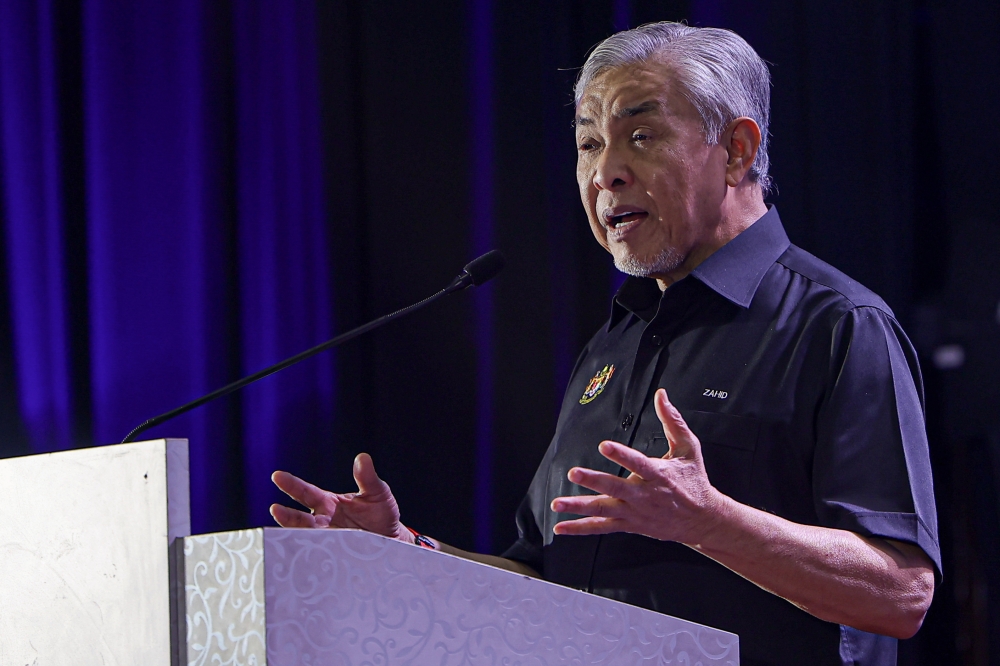
Deputy Prime Minister Datuk Seri Ahmad Zahid Hamidi has levelled serious allegations that ministry officers faced pressure to participate in Barisan Nasional-affiliated activities during the recent state elections, a claim that touches on the sensitive intersection of government administration and political party machinery in Malaysia. Speaking in Putrajaya on August 6, Zahid suggested that civil servants encountered coercion to attend these events, an issue that strikes at the heart of debates over administrative neutrality and the proper conduct of election campaigns.
The deputy premier's statement introduces a troubling dimension to Malaysia's ongoing political discourse, particularly as the nation navigates the complexities of managing state resources and maintaining public service impartiality during electoral periods. If substantiated, such allegations would represent a breach of the fundamental principle that government machinery and civil service apparatus should remain neutral during campaign seasons, irrespective of which political coalition is in power. This principle has been codified in various civil service guidelines and represents a critical safeguard against the politicization of the administrative apparatus.
Zahid's comments emerge within a broader context of growing scrutiny regarding the boundaries between party politics and government operations in Malaysia. The Democratic Action Party and other opposition figures have frequently raised concerns about the perceived blurring of these lines, particularly during election campaigns when ruling coalition resources have been deployed to mobilize support. Such allegations, whether from government or opposition figures, underscore the persistent challenge Malaysian institutions face in maintaining clear operational distinctions between elected political offices and neutral administrative functions.
The timing of Zahid's remarks is noteworthy, arriving amid a period when multiple state electoral contests have drawn considerable media and public attention. These election cycles have consistently served as flash points for debates about fair play, equitable resource allocation, and the proper role of government machinery in democratic competitions. Each state election becomes an opportunity to test whether regulatory frameworks governing civil service conduct are being respected or circumvented.
For Malaysian civil servants, such allegations raise serious concerns about their professional autonomy and working conditions. Public sector employees occupy a precarious position during election seasons, as they are expected to maintain political neutrality while potentially facing pressure from various quarters to demonstrate loyalty to the ruling administration. The existence of such pressures, if confirmed, would compromise their ability to perform duties independently and fairly, potentially affecting service delivery and public trust in government institutions.
International observers of Malaysian governance have consistently emphasized the importance of civil service independence as a cornerstone of democratic institutions. Countries that maintain strong administrative neutrality tend to experience greater public confidence in government operations and more credible electoral processes. Conversely, when government machinery becomes intertwined with party political objectives, it erodes citizen confidence and can distort the competitive landscape during elections.
The implications of Zahid's allegations extend beyond immediate concerns about administrative conduct. If ministry officers were indeed pressured to participate in political events, questions arise about the mechanisms through which such pressure was exerted and which individuals or departments were responsible for implementing it. These questions point toward potential systemic issues within government that warrant investigation and clarification from relevant authorities.
For Southeast Asian readers, Malaysia's experience offers broader lessons about governance challenges facing democracies in the region. The struggle to maintain institutional separation between government administration and political parties remains a common theme across multiple Southeast Asian nations, suggesting that this represents a structural tension inherent to democratic systems operating within competitive party frameworks.
The allegations also carry implications for the ruling Barisan Nasional coalition's political standing and public perception. Whether deserved or not, suggestions that government resources are being leveraged for party-political purposes generate controversy and provide ammunition for political opponents seeking to frame the government as abusing its administrative authority. The resulting damage to institutional credibility can persist well beyond any particular election cycle.
Zahid's own position as Deputy Prime Minister adds weight to the allegations, as his comments carry the imprimatur of someone occupying one of Malaysia's highest executive offices. However, his role as a senior Barisan Nasional figure also means his statements may be interpreted through a partisan lens by observers skeptical of his motivations or concerned about potential political calculations underlying his remarks.
Moving forward, these allegations suggest the need for strengthened mechanisms to protect civil service neutrality during election periods. This might include clearer guidelines delineating which government activities constitute acceptable political engagement and which cross the line into inappropriate pressure, more robust monitoring and reporting systems, and stronger safeguards against reprisals against officials who refuse to participate in partisan activities.
The broader question underlying Zahid's allegations concerns whether Malaysia's institutional frameworks are sufficiently robust to enforce political neutrality within government agencies, or whether additional reforms are necessary to address perceived gaps. This remains a critical issue as the nation continues to refine its democratic institutions and reinforce public confidence in government administration.

