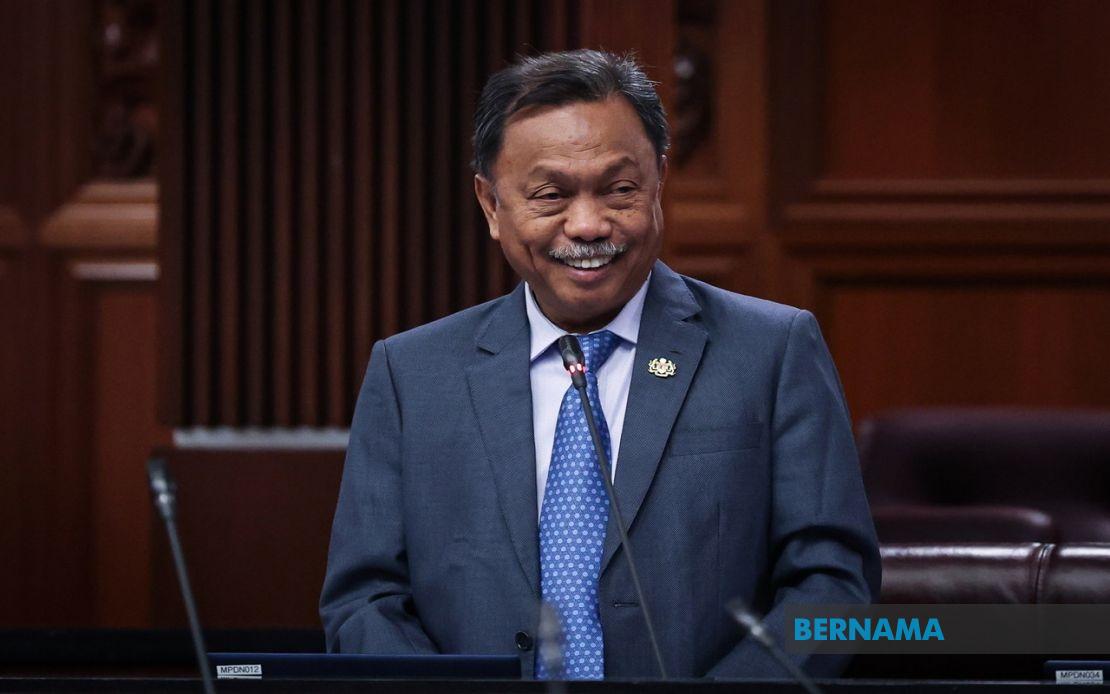
Datuk Dr Mohammad Yusof Apdal, the Deputy Minister for Science, Technology and Innovation, has categorically rejected allegations circulating on social media that he has stepped down from his ministerial position and disengaged from the federal administration. Speaking in Lahad Datu on Wednesday, the Parti Warisan lawmaker stated unequivocally that he remains firmly committed to his role within the Unity Government coalition and continues to fulfil the responsibilities entrusted to him by the administration.
The denial comes after a post spread rapidly across social platforms claiming that Yusof Apdal had decided to resign from his deputy ministerial portfolio, with the resignation supposedly taking effect immediately. Recognising the potential damage posed by such unfounded claims in an era where misinformation travels faster than official corrections, Yusof Apdal moved swiftly to issue a public statement countering the narrative and clarifying his actual status within government.
In his response to Bernama, the minister characterised the claims as not merely false but deliberately malicious in intent. He emphasised that the circulation of unverified information serves a dual purpose of misleading the general public whilst simultaneously attempting to undermine his credibility and professional standing. This framing suggests awareness that such rumours, if left unchallenged, could accumulate legitimacy through repetition and shared circulation, particularly among constituents and political observers who might not have immediate access to official clarification.
Yusof Apdal represents the Lahad Datu parliamentary constituency and holds significant standing within Parti Warisan, a Sabahan-based party that forms part of the broader Unity Government coalition. His position in the science and technology portfolio places him at the intersection of Malaysia's broader development agenda, particularly relevant for Sabah's economic diversification efforts and technological advancement. Any genuine departure would have ramifications not only for ministerial continuity but also for state-level political dynamics within the coalition structure.
The minister's statement reflects a broader challenge facing Malaysian political figures and government officials in the current information landscape. Social media has become a vector for rapid dissemination of unconfirmed claims that can undermine institutional credibility and individual reputations before official sources have opportunity to respond. The speed with which false information propagates stands in stark contrast to the deliberate, formal processes through which legitimate government changes are typically announced through official channels and media.
Yusof Apdal's appeal to the public to cease sharing unverified news and instead consult authoritative sources represents a call for greater digital literacy and responsibility among citizens. He specifically urged reliance on official announcements rather than viral social media posts as the appropriate avenue for confirming developments affecting government personnel and ministerial compositions. This reflects frustration within government circles at what they perceive as a coordinated or at least systemic tendency to weaponise unverified information for reputational damage.
The incident underscores vulnerabilities in how Malaysian political information flows in the contemporary context. Unlike previous eras when government announcements benefited from gatekeeping by established media outlets, the current environment allows for instantaneous bypass of traditional verification processes. Resignation claims, political realignments, and ministerial changes that might previously have been contained through careful messaging now risk becoming public knowledge through informal channels before official confirmation.
Within the context of the Unity Government's ongoing consolidation, any suggestions of ministerial departures carry particular weight. The coalition, formed in 2022, has worked to establish stability and internal cohesion across its diverse political membership. Rumours or actual departures of component party members raise questions about coalition durability and the government's ability to maintain its numerical strength in Parliament. From this perspective, Yusof Apdal's swift and emphatic denial serves not merely personal reputation management but also broader coalition preservation.
The Lahad Datu MP's position also highlights the specific challenges faced by representatives from smaller coalition partners within larger governmental structures. Parti Warisan, whilst significant in Sabah, occupies a more circumscribed space within the national Unity Government arrangement compared to larger partners. Ministerial positions held by members of smaller coalition components thus carry heightened symbolic significance for those parties' ability to influence national policymaking and secure continued relevance within the broader arrangement.
Yusof Apdal's handling of the situation demonstrates the established protocol for addressing such claims within contemporary Malaysian governance: swift, formal denial through established news agencies, coupled with affirmation of commitment to current responsibilities. The approach aims to starve the misinformation of credibility through authoritative counter-narrative whilst simultaneously signalling to political allies and observers that the minister remains fully operational and committed to his portfolio. Without such proactive response, speculation could fester and potentially influence political calculations by both supporters and opponents.

