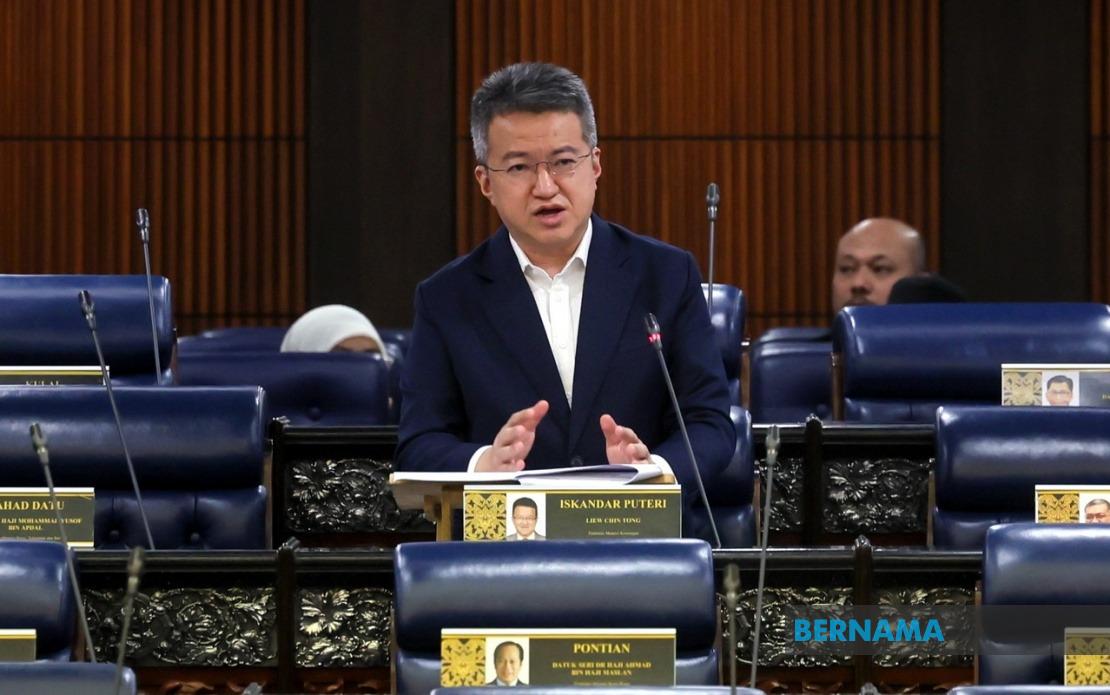
Deputy Finance Minister Liew Chin Tong has categorically rejected claims that fugitive financier Low Taek Jho, commonly referred to as Jho Low, clandestinely returned to Malaysia late last year alongside a Chinese delegation to conduct settlement discussions regarding the sprawling 1Malaysia Development Berhad scandal. The denial came during parliamentary Question Time in the Dewan Rakyat after opposition member Syed Saddiq Syed Abdul Rahman raised queries based on media reports suggesting such a meeting had taken place to discuss a potential 1MDB repayment arrangement involving the Ministry of Finance.
The emergence of these allegations reflects the lingering uncertainty surrounding Jho Low's whereabouts and activities, a central concern in Malaysia's ongoing struggle to recover the estimated billions siphoned from the state investment vehicle. Despite international legal efforts and interpol involvement, the fugitive businessman has managed to evade capture for several years, fueling speculation about possible back-channel negotiations or unofficial diplomatic channels that might facilitate recovery of misappropriated assets. The deputy minister's swift and unequivocal denial serves to underscore the government's official position that no such negotiations have occurred through improper or secretive means.
Liew's parliamentary response occurred within the broader context of Malaysia's multifaceted legal campaign to reclaim 1MDB funds and hold those responsible accountable. The government has pursued parallel strategies through both criminal prosecutions and civil recovery suits, demonstrating a comprehensive approach to the scandal's aftermath. These concurrent legal tracks have yielded significant results in recent months, marking a critical phase in one of Asia's largest financial crimes. The high court's conviction of former Prime Minister Datuk Seri Najib Tun Razak on December 26, 2025, represented a watershed moment, establishing Najib's culpability in 25 charges encompassing money laundering and abuse of power in pursuit of personal enrichment through 1MDB mechanisms.
The sentencing of Najib to 15 years imprisonment coupled with a RM11.38 billion financial penalty demonstrated the judiciary's willingness to impose substantial consequences on high-level political figures implicated in the scandal. This verdict carries immense symbolic weight in Malaysia's recent political history, as it marks one of the most severe sentences handed down to a former premier for financial crimes. The magnitude of the fine underscores the systematic nature of the scheme and the extent of public funds that were diverted, though recovery of such massive amounts remains challenging given the global dispersal of assets and the involvement of international financial networks.
Beyond Najib, the government has expanded its legal offensive to encompass other key figures allegedly involved in the misappropriation scheme. Civil proceedings against Datin Seri Rosmah Mansor seek recovery of approximately US$380 million, equivalent to roughly RM1.56 billion, in damages related to 1MDB funds allegedly utilized to purchase luxury commodities including high-end handbags and jewellery. These civil suits complement criminal investigations and represent efforts to trace and recover specific assets that may be more tractable to repatriation than uncovering hidden bank accounts or overseas investments. The focus on identifying concrete luxury goods purchased with stolen funds provides investigators with tangible leads and potential recovery pathways.
Jho Low himself remains the subject of both criminal and civil legal action, with the government's civil claim against the alleged principal architect of the 1MDB scheme valued at US$3.78 billion, approximately RM15.4 billion. This extraordinary sum reflects the scale of Jho Low's alleged culpability and the extent of funds his network mobilized through 1MDB mechanisms. Despite his fugitive status, maintaining active legal proceedings against him serves multiple purposes: establishing official records of wrongdoing, building frameworks for potential future asset seizure should he be apprehended, and signalling international commitment to accountability that may influence his movements and options.
The 1MDB scandal has inflicted damage across four distinct dimensions of national interest, according to Liew's parliamentary statement. Direct financial losses represent the most quantifiable harm, encompassing the billions transferred to unauthorized accounts and converted for personal use. However, opportunity costs constitute a second category of harm, representing the foregone development projects, infrastructure investments, and social programs that could have been funded had 1MDB functioned as intended. A third dimension involves irrecoverable losses—assets that have been liquidated, transferred offshore, or absorbed into international financial systems beyond practical retrieval. Most intangibly, the scandal has inflicted lasting reputational damage to Malaysia's international standing, complicating diplomatic relations and undermining confidence in Malaysian financial institutions and governance standards among international investors and partners.
The allegations that Jho Low entered Malaysia for secret negotiations must be contextualized within the diplomatic and financial complexities surrounding 1MDB resolution. International cooperation, particularly involving countries hosting Jho Low or possessing information about asset locations, remains essential to comprehensive recovery efforts. The involvement of a Chinese delegation, as reported in media accounts, would suggest potential multilateral dimensions to any settlement discussions, given China's substantial financial interests and investments in Malaysia. The government's denial of such negotiations—if accurate—indicates that Malaysia is pursuing legal remedies rather than extra-judicial settlements that might have generated contentious political fallout.
Parliamentary scrutiny of 1MDB-related matters reflects broader concerns about governmental transparency and accountability in post-scandal Malaysia. The willingness of opposition members to interrogate government officials during Question Time, combined with ministerial responses, demonstrates functioning democratic oversight mechanisms. However, the persistence of unverified allegations and speculation about secret negotiations also underscores the challenge of public trust recovery following such a comprehensive breach of governance standards. Media reports alleging Jho Low's clandestine return would naturally provoke alarm among lawmakers concerned about potential deals that might compromise legitimate recovery efforts or provide safe harbour to fugitives.
The denial itself warrants careful consideration given its stakes. If accurate, it reaffirms official commitment to legal accountability rather than negotiated settlements that might allow Jho Low to escape full consequences. If inaccurate, it would represent one of the scandal's most troubling developments—suggesting that recovery negotiations have proceeded through unofficial channels potentially disadvantageous to Malaysian interests. The government's continued emphasis on criminal proceedings and substantial civil claims suggests that official policy remains oriented toward accountability and comprehensive asset recovery rather than negotiated compromise.
Moving forward, Malaysia's approach to the 1MDB aftermath will continue balancing legal accountability with practical asset recovery challenges. The criminal convictions and financial penalties imposed on Najib establish important precedent while ongoing litigation against Rosmah and Jho Low addresses other nodes within the misappropriation network. International cooperation mechanisms, including mutual legal assistance treaties and coordinated asset recovery efforts through bodies like the Financial Action Task Force, remain crucial for tracking funds distributed across multiple jurisdictions. The government's rejection of alleged secret negotiations reinforces that official policy prioritizes transparent legal processes over diplomatic accommodation.

