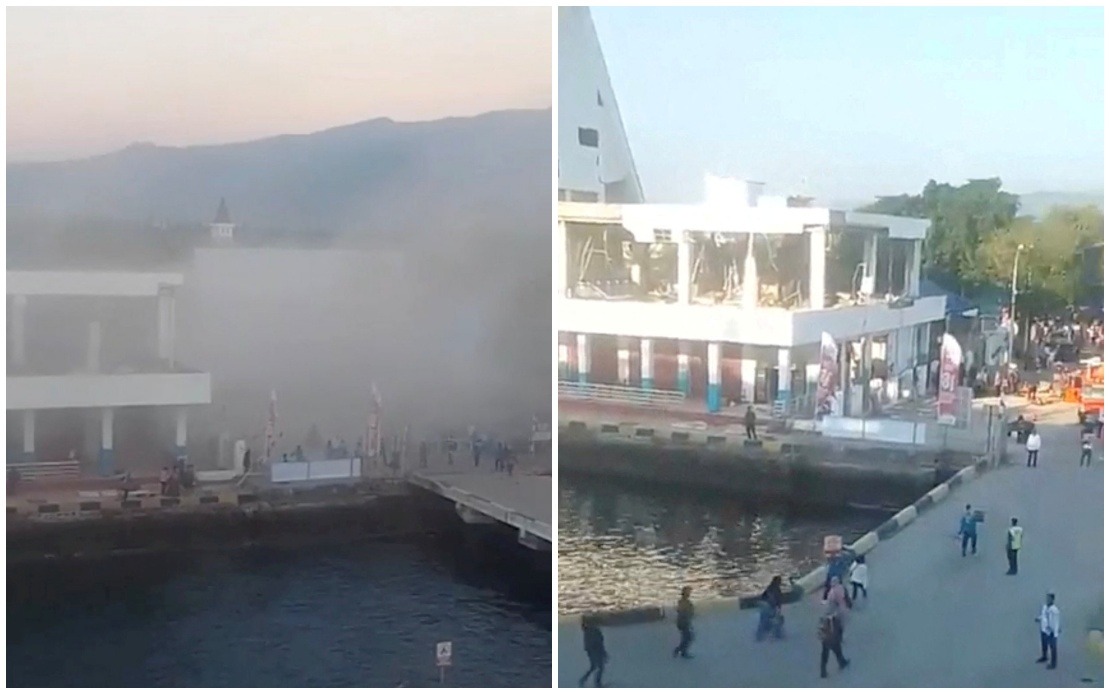
Eastern Indonesia was struck by a powerful magnitude 7.7 earthquake early Saturday morning, triggering a humanitarian crisis in one of the archipelago's most remote and vulnerable regions. The tremor, which originated near Mbay town in Nagekeo Regency on Flores Island, has claimed at least 20 lives according to officials from the Maumere Search and Rescue Office. The initial death count represents only a preliminary assessment, as rescue teams continue their operations across affected areas with six confirmed injuries and two individuals still trapped beneath rubble.
The earthquake's destructive force was compounded by a series of powerful aftershocks that continued to shake the region throughout Saturday. These secondary tremors heightened the danger for both survivors attempting to escape damaged buildings and rescue workers coordinating relief efforts. Indonesia's Meteorology, Climatology and Geophysics Agency initially issued a tsunami warning following the earthquake, though this was subsequently lifted after careful monitoring of coastal waters. However, officials have maintained heightened vigilance, urging residents to remain alert for potential additional aftershocks that could further destabilise already compromised structures.
Physical damage across the impact zone has been substantial and multifaceted. Governor Melki Laka Lena of East Nusa Tenggara province reported extensive destruction to both residential dwellings and commercial buildings throughout the affected municipalities. The earthquake's force triggered widespread landslides that have cut off access routes and blocked several critical roads, severely hampering emergency response operations and complicating efforts to reach isolated communities. Video footage circulating on social media captured the horrifying moments when structures collapsed into dust and debris, with terrified residents fleeing into streets as the ground shook beneath them.
The disruption to transportation infrastructure has had cascading consequences for the region's connectivity and economic activities. Multiple commercial flights to and from East Nusa Tenggara province were cancelled in the immediate aftermath of the earthquake, effectively isolating the province and complicating the logistics of bringing in additional medical supplies, rescue equipment, and humanitarian assistance. This isolation is particularly concerning given that rural areas of eastern Indonesia often lack adequate medical facilities to handle mass casualty events, necessitating evacuation of severely injured patients to larger urban centres.
Chinese nationals and tourists present in the affected region became a focal point for diplomatic attention following the disaster. The Chinese Consulate General in Denpasar issued an urgent advisory to all Chinese citizens within its consular jurisdiction, with particular emphasis on tourists visiting the popular destination of Labuan Bajo. The consulate instructed visitors to heighten security awareness and maintain constant monitoring of official earthquake and disaster warnings. Citizens were explicitly warned to exercise extreme caution regarding aftershock risks and potential tsunami activity, with guidance to maintain distance from coastal areas until the threat of secondary disasters had fully subsided.
The earthquake struck in a region already vulnerable to natural disasters, reflecting the seismic and geological complexity of eastern Indonesia. The area sits along a major tectonic boundary where the Australian and Eurasian plates meet, creating frequent earthquake activity. For Malaysian readers and businesses operating across Southeast Asia, this event underscores the importance of robust disaster preparedness frameworks and regional cooperation mechanisms that extend beyond national borders. Several Malaysian-registered companies and citizens operate throughout the Indonesian archipelago, making such natural disasters relevant to Malaysia's business continuity and humanitarian interests.
Provincial authorities under Governor Melki Laka Lena's leadership have initiated comprehensive damage assessment procedures, though the scale of destruction has made rapid compilation of complete casualty figures and property loss estimates a challenging undertaking. The governor acknowledged that assessment teams are still in the field gathering comprehensive data, suggesting that both the death toll and economic damage figures are likely to undergo revision as rescue operations progress. This uncertainty is typical in the immediate aftermath of major earthquakes, particularly in remote regions where communication infrastructure may be disrupted and some communities difficult to access quickly.
The international response to the disaster reflects Indonesia's active engagement with regional and global disaster management frameworks. Beyond the Chinese consulate's advisory, various international organisations and neighbouring countries have presumably offered or begun coordinating assistance. For the Southeast Asian region more broadly, the earthquake demonstrates the necessity of maintaining strong disaster response networks and pre-positioned emergency resources that can be rapidly mobilised when natural disasters strike. The Indonesian government's institutional capacity to coordinate rescue operations and provide initial relief demonstrates the importance of investing in domestic emergency management infrastructure.
Looking ahead, the recovery and reconstruction phase will likely extend for months or years, particularly in rural communities where local economies have been disrupted and livelihoods destroyed. Flores Island communities dependent on agriculture, fishing, and tourism will face significant challenges rebuilding infrastructure and restoring economic productivity. International development partners, including those from Malaysia and other ASEAN nations, may be called upon to provide reconstruction assistance. The disaster also serves as a sobering reminder of Indonesia's ongoing vulnerability to geological hazards and the necessity for continued investment in earthquake-resistant building standards, early warning systems, and community preparedness initiatives across the archipelago.

