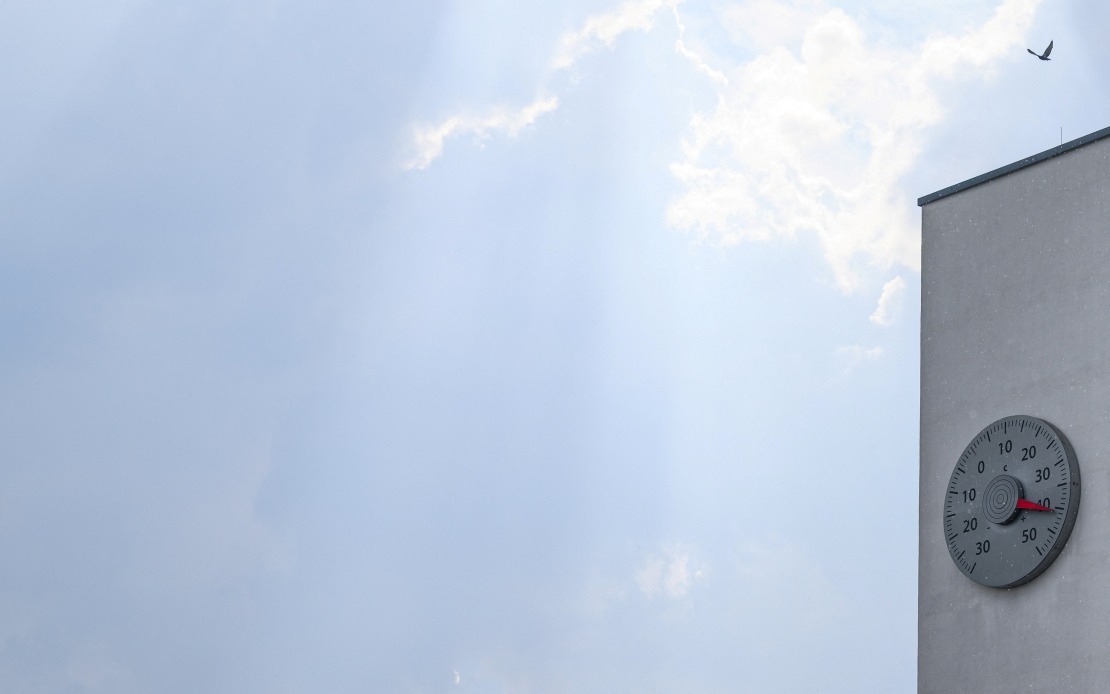
Extreme heat has claimed at least 25 lives across the United States in a weather event that has exposed the vulnerability of millions to intensifying climate hazards. The week-long heat wave has left 40 million Americans under heat alerts spanning the East Coast, Southeast and Southwest regions, while the National Weather Service simultaneously warns of imminent thunderstorms that could bring destructive winds, large hail and localised flash flooding across eastern areas through Monday. This dual weather emergency underscores the increasingly complex challenges facing North America as extreme temperature swings become more frequent and intense.
The death toll reflects a grim toll distributed across several states, with New Jersey reporting the heaviest burden at 22 suspected heat-related fatalities. Illinois and Mississippi have each recorded additional deaths attributed to the dangerous conditions. These figures, drawn from state and local health authorities, represent only confirmed or strongly suspected cases and may not capture the full human cost of the prolonged heat exposure, as many heat-related deaths go underreported or are attributed to other medical causes without investigation.
The geographical scope of the flooding threat is staggering, with flood alerts in place affecting 34 million residents stretching from Delaware through Connecticut and encompassing New York City. Meteorological forecasts predict rainfall totals reaching up to 3 inches across New York City alone, creating substantial risk for urban flooding given the density of infrastructure in the region. The combination of saturated ground from prolonged humid conditions and the anticipated heavy precipitation creates an especially dangerous scenario for communities with aging stormwater management systems.
Beyond the immediate loss of life, the heat wave and associated storms have inflicted significant infrastructure damage. Power outages have cascaded across multiple eastern states, leaving hundreds of thousands without electricity—a particularly dangerous scenario when temperatures remain dangerously elevated and air conditioning becomes essential for survival. The cascading nature of these outages, stemming from both the heat surge straining electrical grids and the severe storms damaging transmission lines, illustrates how interconnected modern infrastructure vulnerabilities have become.
Heat index measurements, which account for the combined effect of high temperature and humidity, have reached alarming levels in major population centres. Philadelphia, Washington DC, Baltimore, Raleigh, Charleston and Jacksonville face heat index values between 37.7 and 40.5 degrees Celsius—conditions that pose serious health risks even for young, healthy individuals and are potentially fatal for elderly people, infants and those with underlying medical conditions. These indices represent the perceived temperature experienced by the human body, making the actual environmental conditions feel even more extreme than raw temperature readings suggest.
Urban emergency departments have been overwhelmed by heat-related medical emergencies. New York City's health department documented more than 378 people seeking emergency care for heat-related illnesses, representing a surge in demand that strains already stretched medical resources. This statistic, while specific to a single city, suggests the scale of health system stress occurring across all affected regions, as emergency departments grapple with heat exhaustion, heat stroke and exacerbation of existing chronic conditions triggered by the extreme environment.
The weather service projects some gradual amelioration along the East Coast through the coming week, with daytime maximum temperatures expected to settle into the 21–32 degrees Celsius range for most areas. However, this respite remains conditional on the region avoiding additional complications from the anticipated storms, and improvement across the East Coast contrasts sharply with worsening conditions elsewhere. The Southwest is bracing for intensification of dangerous heat, with extreme heat watches issued for parts of California and Arizona covering the period from Tuesday through Thursday, during which Phoenix and Tucson are forecast to reach 45.5 degrees Celsius or higher.
For Malaysian and Southeast Asian observers, this American weather crisis carries instructive implications for understanding climate risk management in tropical and subtropical regions. The United States possesses substantial meteorological forecasting capacity, early warning systems and emergency response infrastructure, yet continues to experience significant mortality and disruption from extreme weather events. This reality should inform regional policymakers about the limitations of technological solutions alone and the necessity of building resilient social systems, adequate cooling infrastructure in vulnerable communities, and integrated heat action planning across sectors.
The parallel emergence of both extreme heat and severe convective storms reflects the broader pattern of weather destabilisation accompanying climate change, where traditional seasonal patterns become less predictable and extreme events cluster together. The energy released by warming surfaces fuels more intense storm systems, while heat waves themselves become more prolonged and severe. This compounding of hazards creates scenarios where societies must simultaneously manage multiple emergency responses with limited resources, a challenge that will intensify unless adaptation measures accelerate substantially.
Infrastructure resilience emerges as a central concern highlighted by this event. Power grid failures during peak demand periods, inadequate urban drainage systems for extreme precipitation events, and heat island effects in densely built areas all demonstrate how physical systems designed for historical climate conditions prove increasingly inadequate. The economic and social costs of these cascading failures extend far beyond immediate casualty figures to encompass lost productivity, supply chain disruptions and long-term health impacts from deferred medical care and poor air quality during smoke events.

