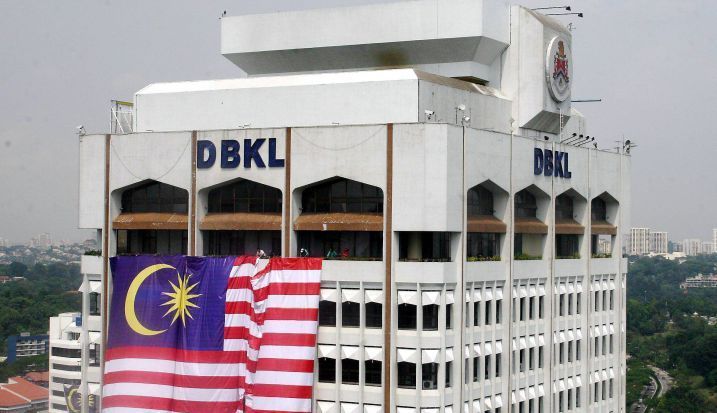
Kuala Lumpur City Hall (DBKL) has issued a formal notice requiring the Taman Desa Phase 1 Residents Association (TDP1RA) to dismantle facial-recognition scanning equipment and automated boom gates from public thoroughfares within a two-week timeframe. The enforcement action, initiated through red notices affixed to scanning devices at two guard posts on Thursday, marks an escalation in a months-long dispute between the municipal authority and the residents' group over neighbourhood access control measures. Yellow enforcement tape was additionally placed around the equipment to signal the formal nature of the directive.
According to DBKL officials, the structures violate municipal regulations because they were installed without prior authorisation from the Kuala Lumpur mayor. The notices explicitly cited Section 70 of the Street, Drainage and Building Act 1974, the statutory provision governing construction and obstruction on public thoroughfares. A DBKL spokesperson explained that the two-week deadline—running from the date notices were posted—represents a final opportunity for the residents' association to comply voluntarily. The municipal authority has signalled that failure to comply will result in DBKL enforcement teams removing the structures themselves, a more costly and confrontational resolution neither party presumably welcomes.
This latest municipal action stems from a protracted disagreement over the TDP1RA's gated-neighbourhood initiative, which has progressively restricted vehicle and pedestrian access through various entry points. An inspection conducted by DBKL on August 17 revealed that despite being granted a 30-day extension to rectify compliance issues, the association had not aligned its security scheme with municipal requirements. Subsequent correspondence dated August 18 ordered TDP1RA to restore full vehicular access through three designated posts (Posts 2, 5, and 6) and to remove any unapproved infrastructure impeding public road usage. DBKL had previously notified the association in March that the facial-recognition and CCTV systems themselves lacked municipal consent.
The dispute reflects broader tensions between privacy, security, and property rights in Malaysian residential communities. The facial-recognition technology represents an increasingly intrusive form of access management, extending municipal concerns beyond the scope of traditional gated-community safeguards. For residents opposing the scheme, the system raises fundamental questions about surveillance in shared spaces and the precedent such measures establish for other neighbourhoods. Early-morning pedestrians have particularly complained about operational restrictions—notably at Jalan Desa Ria's Gate 5, which remains locked to foot traffic until 6am, forcing residents to navigate dangerous detours along major roads to access a public park.
On August 24, more than 40 residents, predominantly those aged 50 and above, staged a public demonstration against the access restrictions. Their grievances transcend inconvenience: restricted egress poses genuine safety hazards for emergency services, elderly residents, and families with children. The forced detours expose residents to traffic risks and compress outdoor recreation opportunities for an ageing demographic particularly reliant on accessible public spaces for health and wellbeing. These practical concerns carry weight with municipal authorities, who bear responsibility for ensuring public roads function as intended and that emergency response capabilities remain unimpeded.
TDP1RA leadership has maintained that the association followed proper procedural channels and secured resident endorsement, with association president Frank Yeh previously asserting that 81 percent of residents supported the security initiative. This claim reveals a significant division within the community—while a plurality favoured enhanced security, a substantial minority did not. The residents' association appears to have interpreted majority support as sufficient justification for implementing infrastructure changes affecting all neighbourhood users, including non-residents with legitimate access rights to public roads. Municipal law, however, does not subordinate public thoroughfare management to residents' preferences, particularly where structures physically obstruct common areas.
The security rationale underlying the residents' initiative warrants consideration. Gated communities and access-controlled neighbourhoods have proliferated across Malaysia's urban centres as residents seek to address crime concerns and maintain community cohesion. Facial-recognition and automated barrier systems represent technologically sophisticated iterations of traditional gatekeeping. Yet security imperatives must be balanced against statutory obligations and public rights. DBKL's position essentially holds that whatever security benefits these systems provide, they cannot supersede municipal authority over public infrastructure or circumvent the approval processes designed to protect the public interest.
This case also illuminates the regulatory framework governing residential developments in Malaysia. Under current municipal law, public roads within residential schemes remain public property despite their physical location within private neighbourhoods. The distinction proves crucial: residents can implement security measures within privately owned communal spaces, but cannot unilaterally restrict public thoroughfares without municipal consent. DBKL's enforcement action, while potentially unpopular with residents who value the security benefits, reasserts this fundamental principle. Permitting residents' associations to install access-control infrastructure without approval would effectively allow privatisation of public roads—a precedent with significant implications for urban governance.
The two-week deadline creates an immediate decision point for TDP1RA leadership. Compliance requires dismantling systems residents invested financially and politically in establishing, potentially generating internal friction between those who prioritise security and those prioritising accessibility. Non-compliance invites municipal removal of the infrastructure and potential legal consequences for the association. The residents' group faces pressure from both municipal authority and internal constituency—residents who support the restrictions versus those demanding access restoration. This difficult position reflects the inherent conflict between community preferences and municipal statutory obligations.
For the broader Malaysian property and governance context, this dispute underscores recurring tensions in managing residential security without encroaching on public rights. As urbanisation continues and residents increasingly seek gated, controlled-access arrangements, municipalities must clarify boundaries between permissible private security measures and prohibited public-road restrictions. The DBKL action suggests Kuala Lumpur authorities will enforce these boundaries robustly, potentially discouraging similar schemes in other neighbourhoods. Whether this enforcement stance reflects broader policy direction across Malaysian municipalities remains unclear, but Taman Desa will likely serve as a cautionary reference for other residents' associations contemplating unauthorised access-control infrastructure.

