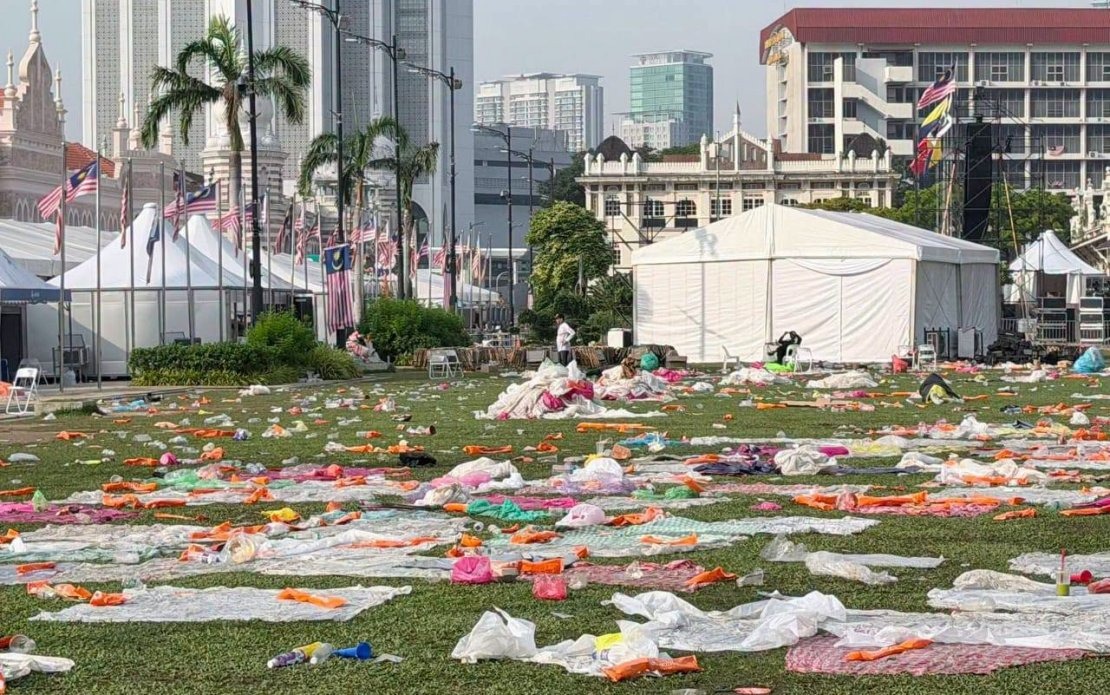
Kuala Lumpur City Hall announced on Wednesday that it would mobilise cleaning teams to address extensive litter left behind at Dataran Merdeka after more than 25,000 football enthusiasts gathered in the early morning hours to watch the 2026 FIFA World Cup final between Spain and Argentina broadcast live at the historic public square. The event saw Spain emerge victorious with a 1-0 result, but the celebration left the nationally significant venue in a condition that prompted municipal authorities to issue a candid public statement about civic responsibility and urban cleanliness.
The litter situation at Dataran Merdeka underscores a recurring challenge facing Malaysia's capital: maintaining public spaces during and after large gatherings. While the authority confirmed that its cleaning personnel would remove the debris, DBKL stressed through its official Facebook statement that the burden of maintaining a clean city should not fall primarily on municipal staff, but rather reflect a shared commitment among residents and visitors. This framing represents a deliberate pivot from simply announcing cleaning operations to making a broader statement about public behaviour and collective responsibility.
The venue's temporary transformation into an outdoor stadium for the World Cup broadcast reflects the enduring passion for football across Malaysia, particularly when major international tournaments reach their climax. The decision to screen the final at Dataran Merdeka, rather than directing crowds to enclosed venues, democratised access to this sporting spectacle for the general public. However, the aftermath revealed the tension between enabling mass public engagement and maintaining the physical integrity of significant civic landmarks.
In its formal communication, DBKL articulated a pointed critique of the disconnect between celebration and stewardship. The authority characterised Dataran Merdeka as a symbol of national dignity and historical significance, suggesting that how citizens treat such spaces reflects broader values about how they regard their country. This messaging appeals to nationalist sentiment and civic pride, positioning cleanliness not merely as a practical municipal concern but as an expression of patriotism and respect for national heritage.
The statement acknowledged the legitimacy of public celebration and emotional expression at sporting events, recognising that gathering in large numbers to share excitement about football represents a valid form of communal enjoyment. However, DBKL drew a careful distinction between the right to celebrate and the responsibility to avoid despoiling common areas. This nuanced position avoids appearing anti-celebration while clearly establishing that freedom to enjoy public spaces carries an implicit obligation to preserve them for others.
For Malaysian readers and urban planners across Southeast Asia, this incident illustrates persistent questions about how major cities can accommodate mass gatherings while preserving public infrastructure. The region has experienced similar challenges following sporting events, concerts, and political gatherings, where enthusiasm for the occasion sometimes eclipses consideration for the venue itself. DBKL's response suggests that awareness campaigns and infrastructure improvements alone may prove insufficient without cultivating a cultural shift in how citizens view their responsibilities toward shared spaces.
The scale of attendance—exceeding 25,000 people—indicates substantial public appetite for live broadcast experiences of major international sporting events. This demonstrates that Kuala Lumpur's residents value opportunities to participate collectively in global moments, and authorities recognising this demand by provisioning such events represents responsible urban governance. Nevertheless, the logistical consequences of accommodating such crowds, particularly regarding waste management and post-event conditions, require careful planning and public cooperation.
DBKL's appeal for citizens to treat the capital as their own home, worthy of care and maintenance, taps into psychological research suggesting that fostering a sense of ownership and belonging encourages individuals to behave more responsibly in public contexts. Rather than relying solely on enforcement or penalties, the authority attempted to inspire voluntary compliance by framing public cleanliness as an extension of personal domestic values and national pride. Whether this aspirational messaging proves effective in altering behaviour at future mass gatherings remains to be observed.
The incident also raises practical questions about event management infrastructure. Providing adequate rubbish receptacles, strategically positioning them throughout gathering areas, and deploying cleanup teams during rather than after events could mitigate accumulation of litter. Some jurisdictions have implemented deposit systems for food and beverage containers, incentivising removal of waste, while others employ coordinated volunteer programmes to manage refuse alongside professional municipal services. For Kuala Lumpur's future public events, such integrated approaches might better balance accessibility with environmental responsibility.
Beyond the immediate cleanup, this episode reflects broader tensions within rapidly urbanising Southeast Asian capitals regarding public space management, environmental sustainability, and civic culture. As cities expand and attract growing populations engaged in shared experiences, the tension between enabling vibrant public life and maintaining dignified, clean urban environments will likely intensify. DBKL's response—combining practical action with moral suasion about collective responsibility—represents one administrative approach, though sustained success probably requires ongoing dialogue between authorities and citizens about mutual obligations.
The World Cup final broadcast at Dataran Merdeka ultimately succeeded in its apparent objective of enabling widespread public participation in a global sporting moment. Yet the subsequent cleaning operation serves as a reminder that spectacular public gatherings generate real physical consequences requiring attention. For Malaysian urban administrators and residents alike, the challenge ahead involves extracting the benefits of mass public engagement while institutionalising practices and mindsets that preserve the spaces where such moments occur, ensuring they remain available for future celebrations and collective experiences.

