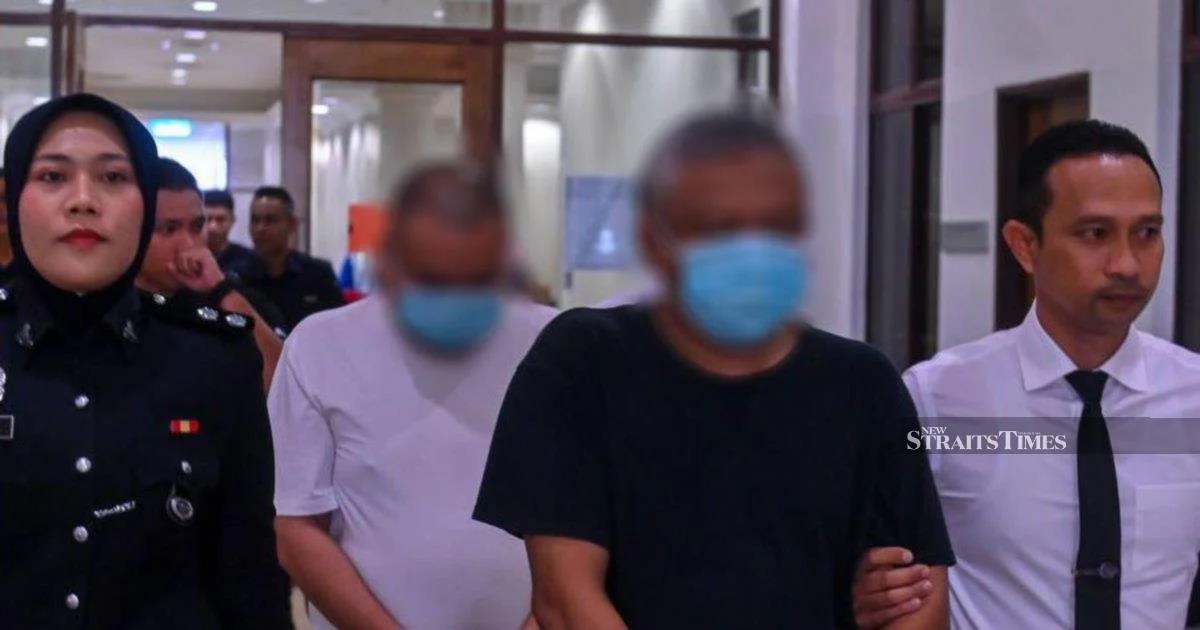
Authorities in Kuantan have arrested a businessman bearing the Datuk title alongside his assistant in a fraud investigation centring on the production of counterfeit correspondence bearing official symbols of Pahang's royal household. The pair stand accused of fabricating a letter that carried the coat of arms of the Tengku Mahkota of Pahang, a serious breach involving the misuse of royal insignia and the creation of forged official-looking documents.
The discovery of such counterfeited materials raises significant concerns about document fraud in Malaysia, where the unauthorised use of royal symbols carries substantial legal consequences. The Tengku Mahkota of Pahang holds a prominent position within the state's constitutional hierarchy, and the deliberate falsification of correspondence bearing his official seal suggests a calculated scheme to lend unwarranted credibility to fraudulent dealings. Such sophisticated forgery typically indicates an attempt to deceive third parties into believing that transactions or arrangements carried royal sanction or approval.
The involvement of a Datuk-titled individual in this case carries particular reputational weight within Malaysian society, where such honours traditionally signify civic standing and trustworthiness. That someone holding this distinction would allegedly engage in document forgery underscores how fraud schemes can penetrate across different social strata and professional circles. The assistant's inclusion suggests the operation was not a simple one-off deception but rather an organised effort requiring multiple participants to execute and sustain the fraudulent arrangement.
Forged official documents pose multifaceted dangers to Malaysia's institutional systems and commercial environment. Beyond the immediate victims of the alleged deception, such documents can undermine confidence in legitimate royal correspondence and administrative processes. Businesses and individuals who receive communications purporting to originate from the palace must now contend with heightened uncertainty about authenticity, potentially disrupting legitimate official communications.
The Pahang authorities' swift apprehension of both suspects demonstrates law enforcement's commitment to protecting the integrity of royal symbols and institutional frameworks. Such investigations typically involve coordination between commercial crime divisions and specialist units tasked with handling matters touching on royal institutions. The case will likely proceed through the courts with careful attention to both the forgery charges and any underlying fraud allegations that prompted the initial investigation.
From a broader perspective, this arrest illustrates emerging patterns in Malaysian fraud where perpetrators increasingly attempt to exploit the prestige and perceived authority attached to royal connections. Fraudsters recognise that documents bearing royal insignia carry psychological weight that makes potential victims more inclined to trust accompanying claims or requests. By examining how these particular suspects manufactured and deployed the counterfeit letter, investigators can likely identify a broader scheme affecting multiple parties.
The commercial implications extend throughout Pahang's business community, where legitimate enterprises may find themselves questioned if their dealings somehow intersect with the fraudulent arrangements now under investigation. This ripple effect demonstrates how document forgery cases inevitably affect stakeholder confidence in various markets and administrative processes. Companies conducting business with government-linked entities or those seeking state-level approvals may now require additional verification procedures to ensure they are not inadvertently engaging with fraudulent documentation.
The case also highlights vulnerabilities in how official documents can be replicated in an increasingly sophisticated digital age. Creating counterfeit letters bearing specific coat of arms requires either access to authentic printing materials or the technological capability to produce convincing visual reproductions. Understanding the methods employed by these suspects could inform improved security features and verification protocols for future official correspondence emanating from royal institutions across Malaysia.
Legal consequences for misusing royal symbols in Malaysia are notably stringent, reflecting the constitutional importance placed on protecting the monarchy and state institutions. Both the forgery itself and any underlying fraud charges carry potential imprisonment and substantial fines. The fact that this case has reached the arrest stage indicates prosecutors believe they possess sufficient evidence to proceed with charges, suggesting the investigation uncovered concrete proof of fraudulent intent rather than mere administrative oversights.
As this case progresses through Kuantan's courts, it will likely generate significant interest among legal professionals and business community observers who track fraud trends in Malaysia. The outcome may influence how companies verify official correspondence and how law enforcement approaches document crime investigations. For Malaysian readers and regional observers, the case serves as a reminder that titles, status, and apparent legitimacy do not shield individuals from criminal liability when fraudulent schemes are uncovered.

