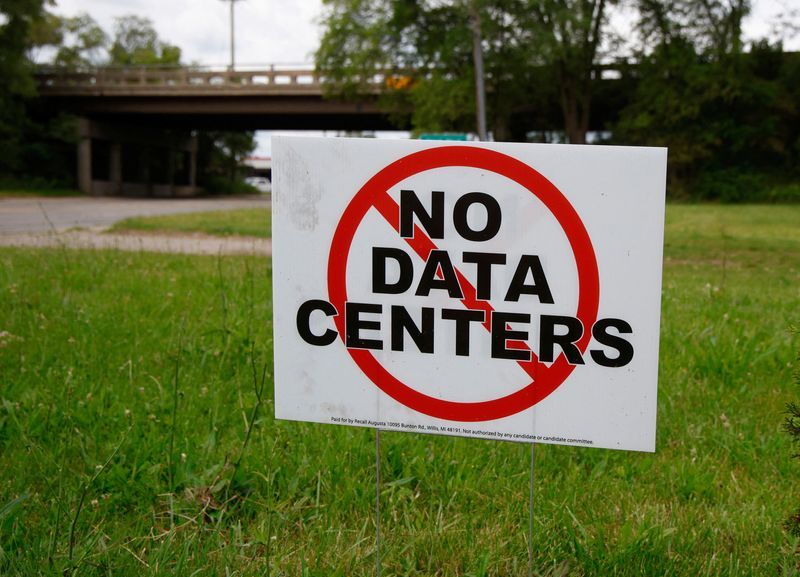
A groundswell of public resistance to the accelerating rollout of artificial intelligence data centers has crystallized into an organized nationwide movement, with protesters planning simultaneous demonstrations across more than 125 communities in the United States this Saturday. This represents the first major coordinated national campaign against the explosive expansion of computing infrastructure that has become central to the global AI arms race, driven by technology titans competing to develop and deploy large language models and other advanced systems.
The protest initiative, organised by HumansFirst, a grassroots coalition led by Amy Kremer, a prominent figure from the conservative Tea Party movement of the late 2000s, reflects deepening alarm about how data center development is reshaping American communities. Kremer has drawn explicit parallels between today's data center opposition and the fiscal conservatism and anti-government sentiment that galvanized Republicans a decade ago, though she emphasises that current anger transcends traditional political boundaries. The comparison underscores how technological change is creating political coalitions that cut across conventional ideological fault lines, potentially reshaping electoral dynamics in ways that strategists are still grappling to understand.
Communities have confronted data center proposals with growing skepticism, often discovering that local officials negotiated deals shrouded in secrecy through non-disclosure agreements with developers, sometimes proceeding despite community objections or inadequate environmental review. This opacity has bred resentment, particularly as residents realise the long-term costs to their quality of life may be substantial. State and federal politicians, sensing voter frustration, are now scrambling to craft responses, though no clear consensus has emerged about how to balance technological investment with community welfare. The issue has become sufficiently prominent that it is shaping how residents view their representatives' attentiveness to local concerns.
Public opinion data illustrates the depth of resistance to data center proliferation. A Reuters/Ipsos survey conducted in June found that only one-third of Americans support the current pace of data center construction nationally, a striking finding given American enthusiasm for technological advancement. When the question becomes personal—whether respondents would accept a data center in their own community—support collapses to just 14 percent, even when framed as necessary infrastructure for artificial intelligence development at companies like Meta, Alphabet, Amazon, Microsoft, and Elon Musk's xAI venture. This gap between abstract support for AI progress and concrete opposition to its physical footprint suggests that many Americans have not yet reconciled their desire for technological innovation with discomfort about its local impacts.
The breadth of the emerging coalition is striking. Amy Kremer has openly criticised Republican politicians for granting technology companies what she calls a "free pass" from scrutiny, yet she and fellow organisers have also rejected outright moratoriums on data center development, such as those implemented by New York's Democratic administration. Instead, protesters are articulating a more nuanced agenda centred on transparency in the development process, genuine protection of environmental resources and public health, community benefit agreements that prioritise quality employment, and meaningful mechanisms to hold developers accountable when they fail to meet commitments. This suggests that opposition is not rooted in technophobia but rather in legitimate governance concerns—residents want a voice in decisions affecting their futures and assurance that corporate interests do not entirely override public welfare.
Geographic distribution of Saturday's protests reveals interesting patterns. Texas, the epicentre of American data center expansion and a Republican-dominated state, will host 16 demonstrations, the highest concentration anywhere. Georgia, a crucial swing state that has become a magnet for data center investment, will see 11 protests. California, Florida, and Pennsylvania each expect seven separate demonstrations, indicating that resistance spans regions regardless of political leanings. This distribution suggests that data center anxiety is not concentrated in any particular corner of the country but rather reflects nationwide concern about how communities are being reshaped by infrastructure investments that prioritise corporate needs over resident preferences.
Eva Cardona, a 31-year-old first-time activist organising a Texas protest, describes herself as a political nomad but emphasises that alarm about unregulated AI expansion and the rapidity of data center growth motivated her to move beyond passive digital commentary into direct community organising. Her participation exemplifies how the data center issue is activating citizens who might not typically engage in political mobilisation. Ivan DelSol, a 54-year-old organizing an Imperial County, California protest, articulates environmental concerns with particular clarity, highlighting a proposed facility that would consume 260 million gallons of water annually from the already-stressed Colorado River. His description of such consumption as "dystopian" captures a perspective increasingly common in water-scarce regions, where the abstract benefits of AI advancement collide with concrete fears about resource depletion and ecological degradation.
Water consumption represents a focal point of grassroots anxiety, particularly across the American West where precipitation is limited and competing demands for water intensify annually. Data centers require vast quantities of water for cooling systems, and expansion into drought-prone regions has prompted legitimate questions about whether silicon-based economic development should take priority over agricultural interests, municipal supplies, and environmental sustainability. The industry has responded by arguing that data center water usage is modest compared to other sectors, a technical claim that may be accurate but which misses the political point—residents in water-stressed communities increasingly question whether any expansion of resource consumption is justified when alternatives exist or when growth could be managed more deliberately.
The Data Center Coalition, the industry's primary lobbying and advocacy organisation, has declined immediate comment on Saturday's demonstrations, having previously stated that members are committed to responsible community engagement. This measured non-response reflects broader industry recognition that dismissing public concerns as ignorant or obstructionist risks further politicizing the issue. Technology companies and data center operators face a perception problem: many residents view the buildout as something happening to them rather than something decided through genuine consultation. Even communities that welcome economic development often resent the secretive processes and fait accompli nature of announcements, suggesting that industry communications strategies have failed to build trust or perceived legitimacy.
Among the few political issues achieving genuine bipartisan resonance, data center expansion has emerged as something that unites Americans across conventional ideological divides. Left-wing environmentalists concerned about ecological impact and right-wing populists worried about corporate overreach and government capture find common cause. This unusual coalescence suggests that data center opposition may shape electoral outcomes in November's midterm elections and the 2028 presidential race, as Kremer predicts. Politicians who dismiss community concerns risk appearing beholden to technology corporations, while those who address grievances thoughtfully may attract broad support. The extent to which national leaders from both parties recognise this political opportunity or threat will significantly influence how data center policy evolves over the coming years, potentially determining whether communities gain meaningful voice in technological infrastructure decisions or whether corporate priorities continue overwhelming local preferences.
The broader significance of these protests extends beyond immediate data center policy. They reflect underlying tensions about who controls decisions affecting community futures, whether technological progress justifies environmental costs and resource consumption, and whether corporate interests should be privileged over resident welfare in local decision-making. For Malaysia and other Southeast Asian nations increasingly courted by technology companies seeking locations for data center development, the American experience offers sobering lessons about grassroots mobilisation, the importance of transparent governance, and the political costs of appearing to privilege foreign investment over local community interests. As artificial intelligence infrastructure expands globally, the models of community engagement and resource management established now will likely influence how Asian nations approach similar questions.

