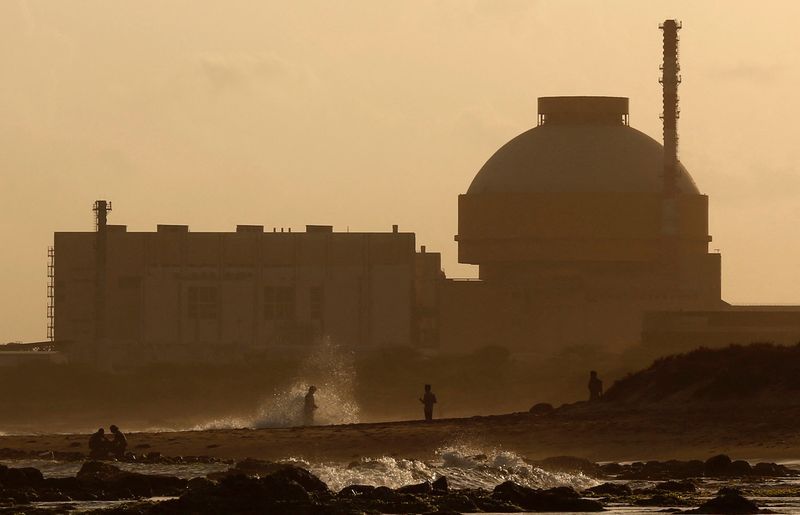
A significant cybersecurity incident has exposed sensitive operational details of India's flagship nuclear energy project, the Kudankulam Nuclear Power Plant in Tamil Nadu. Ransomware group World Leaks has published thousands of files on the dark web purportedly obtained from Reliance Group, one of the primary contractors overseeing construction of the facility's expansion units. The leaked materials, dating between 2016 and mid-2025, allegedly contain technical blueprints, supplier information, meeting records, and insurance documentation related to Units 3 and 4 of the plant—expansion phases that form a cornerstone of Prime Minister Narendra Modi's strategic vision to substantially increase India's nuclear energy generation capacity.
Reliance Group, the conglomerate controlled by billionaire businessman Anil Ambani, acknowledged in a statement to news agencies that its systems experienced a "partial breach" involving a data server maintained by third-party Indian provider Yotta. The group disclosed that government authorities had been formally notified of the incident but provided no specifics about which data categories were compromised. The deliberate vagueness surrounding the breach's scope reflects the sensitivity surrounding nuclear infrastructure vulnerabilities in the region, an area where transparency often conflicts with security concerns. For Malaysian readers and policymakers tracking India's energy ambitions and regional stability, this disclosure underscores the interconnected nature of Asian nuclear development and its cyber exposure.
Yotta's technical team detected suspicious activity originating from Reliance Infrastructure's hosted server on May 29, immediately terminating the connection and preventing what appeared to be ransomware execution. However, the data centre operator subsequently learned in late June that external threat actors had claimed successful data extraction. While Yotta has not independently verified the breach claims, the company has shared its forensic findings with Reliance Infrastructure to support an ongoing investigation. This timeline reveals a significant gap between initial detection and public disclosure—a delay that characterises how organisations often handle nuclear-related incidents to avoid triggering wider panic or regulatory interventions.
World Leaks, an established ransomware syndicate previously linked to breaches affecting multinational corporations including Nike and India's Tata Group, published approximately 19,000 specially significant files from a total corpus of 858,000 Reliance documents. The group typically employs a standard extortion methodology: demanding ransom payments and publishing stolen data when organisations refuse to comply. In a June incident involving the Tata Group, World Leaks publicly confirmed requesting USD 1.5 million for files containing confidential technology designs belonging to Apple and Tesla, subsequently releasing the materials after Tata declined the demand. The group has not responded to inquiries regarding the Kudankulam-related breach, maintaining the operational silence typical of professional cybercriminal enterprises.
Among the leaked materials are purported blueprints depicting ventilation and cooling infrastructure serving Units 3 and 4, alongside what appears to be the complete floor plan of a shared control room facility. Additional documents allegedly show vendor proposals, approved supplier rosters, and photographic records from a 2024 joint inspection conducted by the Nuclear Power Corporation of India and Reliance. Perhaps most concerning for security analysts is evidence suggesting that Reliance Infrastructure and the Nuclear Power Corporation obtained insurance coverage providing USD 112 million in protection against terrorism-related damage to either unit. While the disclosed materials do not appear to involve Russia's Rosatom-supplied reactor core systems, security researchers emphasise that the leaked information could enable adversaries to trace the plant's auxiliary systems, identify vulnerable points in its contractor network, and locate security gaps across its operational chain.
Nickolas Roth, a senior director at the Nuclear Threat Initiative advising governments on atomic security preparedness, characterised the breach as posing "serious" risks to plant safety. The leaked documentation, in malicious hands, could theoretically facilitate detailed reconnaissance of support infrastructure, revealing not only which contractors possess facility access but also which operational systems their credentials permit them to influence. This type of granular intelligence proves invaluable for hostile actors planning sophisticated sabotage scenarios or industrial espionage campaigns. The incident exemplifies a broader vulnerability affecting Indian enterprises, many of which lack adequate technical capacity and institutional frameworks to resist contemporary cyber threats effectively.
India's cybersecurity landscape presents concerning vulnerabilities at national scale. The country ranks third globally for data breaches, with 28.9 million compromised accounts reported during the preceding year—exceeded only by the United States and France. A comprehensive assessment published last year by the Data Security Council of India and cybersecurity firm Seqrite revealed systemic deficiencies across the nation's institutional infrastructure: among 204 surveyed organisations, approximately 73 percent possessed no clear understanding of whether their systems had experienced prior attacks, while 57 percent failed to maintain basic cyber hygiene protocols. These statistics reflect how India's rapid digital transformation has outpaced its institutional capacity for defensive security measures, a pattern visible across Southeast Asia as nations accelerate technology adoption without corresponding investments in protective frameworks.
The Kudankulam incident represents the second documented cyber event affecting this particular facility. In 2019, malware attributed to North Korean hacking groups was discovered within the plant's administrative network infrastructure. The Nuclear Power Corporation stated at the time that the intrusion was promptly contained and that core reactor systems remained uncompromised. Nevertheless, the recurrence of cyber incidents targeting this strategically significant installation suggests that adversaries maintain sustained interest in India's nuclear capabilities, whether motivated by nation-state intelligence collection, competitive industrial espionage, or opportunistic criminal exploitation. The repeated targeting pattern warrants serious concern regarding whether current defensive postures adequately protect critical infrastructure against evolving threat methodologies.
Reliance Infrastructure secured its contract for Units 3 and 4 design and construction in 2018, with both reactors projected to commence commercial operation by 2027 and collectively generate 2,000 megawatts of electrical capacity. These expansion phases constitute integral components of India's broader nuclear energy strategy, which envisions substantially enlarged atomic generation to satisfy rapidly growing electricity demand while addressing climate change imperatives. However, the cyber breach demonstrates that infrastructure expansion occurring at accelerated pace may outstrip corresponding security implementation. For Malaysia and neighbouring nations monitoring India's energy trajectory and regional stability, the incident highlights tensions between rapid development objectives and security consolidation—a challenge increasingly relevant across Asia's industrialising economies.
The Nuclear Power Corporation of India, the government body commissioning and operating all national nuclear facilities, has maintained communication with Reliance regarding the breach while India's primary cybersecurity authority, the Indian Computer Emergency Response Team (CERT-In), pursues technical investigation. Nevertheless, the Department of Atomic Energy declined substantive comment, while Prime Minister Modi's office offered no response to information requests. This institutional silence reflects how nuclear-related security matters typically resist transparent disclosure, with authorities balancing legitimate confidentiality requirements against public interest in critical infrastructure protection. The response pattern extends to Reliance, which has provided minimal detail regarding breach scope despite public acknowledgment of the incident itself.
For policymakers across the Asia-Pacific region, the Kudankulam breach carries substantial implications beyond India's borders. As countries throughout Southeast Asia and South Asia expand nuclear energy portfolios to address rising electricity demands and climate commitments, the incident demonstrates how cybersecurity deficiencies in contractor networks can expose entire national infrastructures to exploitation. Malaysian and regional authorities planning nuclear capacity expansion must evaluate whether procurement practices adequately mandate cybersecurity standards across contractor ecosystems, particularly third-party service providers hosting sensitive operational data. The breach illustrates how critical infrastructure protection extends beyond reactor facilities themselves to encompass the interconnected digital networks supporting design, construction, and operational oversight.
The broader implications extend to questions of supply chain vulnerability and international technology partnerships. The leaked documents include detailed information about approved suppliers, vendor proposals, and contractor relationships—intelligence that competitors or hostile actors could exploit to infiltrate project networks through weaker links in the organisational chain. For Malaysian enterprises and government entities involved in regional infrastructure development, the incident underscores the necessity of implementing robust cybersecurity governance frameworks that extend beyond individual organisations to encompass entire contractor networks. The challenge intensifies as countries increasingly source components and expertise from international suppliers, creating distributed vulnerability across geopolitically sensitive projects.

