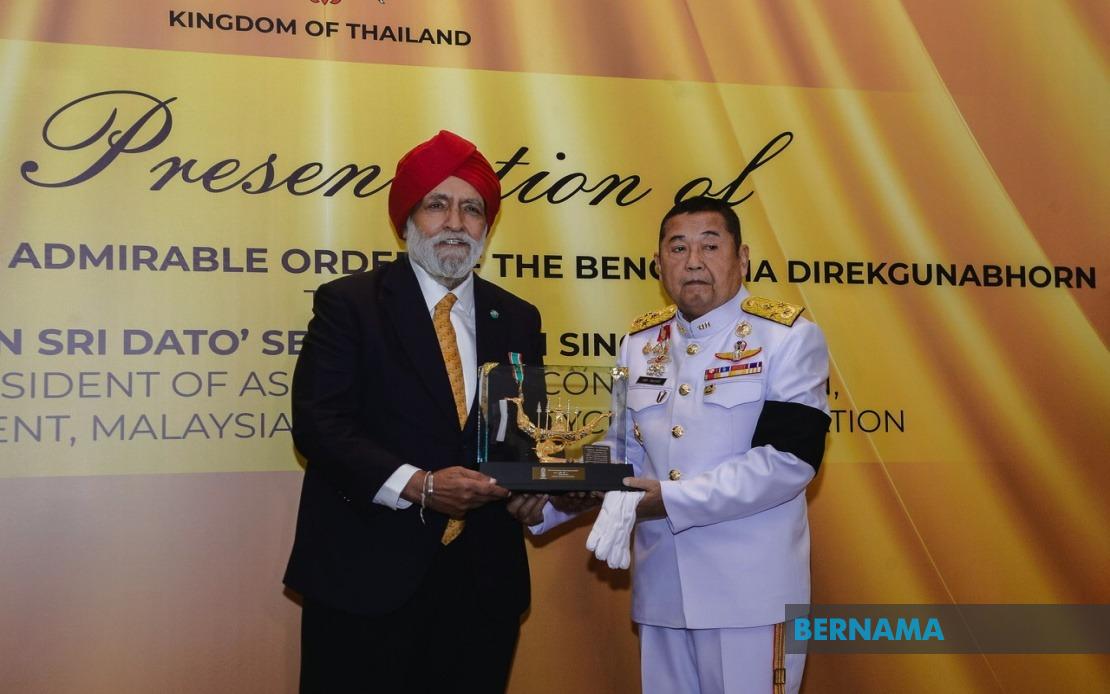
Tan Sri Darshan Singh Gill, a towering figure in Asian cycling administration, has been invested with one of Thailand's most esteemed honours. The Most Admirable Order of the Direkgunabhorn at Fifth Class, presented in Kuala Lumpur on August 6, represents formal recognition of his decades spent shaping the sport's trajectory across the region. ACC senior vice-president General Decha Hemkasri conferred the royal decoration, originally bestowed by His Majesty the late King Bhumibol Adulyadej The Great, Rama IX, under current Royal Patronage.
Darshan's tenure at the helm of Malaysian cycling spanned pivotal years that laid groundwork for the sport's subsequent growth. During his presidency of the Malaysian National Cycling Federation from 1988 to 1990, he steered the federation through a period of institutional development. His influence extended far beyond Malaysia's borders when he assumed the presidency of the Asian Cycling Confederation, a position he held from 1996 to 2005. These nine years were instrumental in establishing continental frameworks and developing regional talent pipelines that would eventually produce world-class athletes.
The recognition speaks to more than individual achievement. Speaking after the ceremony, Darshan characterised the honour as validation of Malaysia's standing within international cycling governance and athletic performance. He emphasised that the decoration transcended personal prestige, instead reflecting the nation's progress and the collective endeavours of administrators and athletes who have elevated Malaysian cycling on the global platform. The award arrives at a moment when Malaysia's cycling programme is experiencing a renaissance, with multiple stakeholders contributing to its upward trajectory.
Darshan referenced the historical evolution of Malaysian track cycling, invoking names from earlier generations before contextualising contemporary success. Athletes such as M. Kumaresan and Rosman Alwi represented pioneering phases of the sport's development in Malaysia. The present era belongs to figures like Datuk Mohd Azizulhasni Awang, whose recent triumph exemplifies how consistent investment and administrative excellence translate into medals. Just weeks before Darshan's investiture, Awang captured gold in the men's keirin event at the Sir Chris Hoy Velodrome in Glasgow, concluding a sixteen-year drought in Commonwealth Games track cycling championships for Malaysia.
This athletic breakthrough cannot be separated from administrative competence at the international level. Darshan highlighted a parallel achievement in governance: Datuk Amarjit Singh Gill's election as vice-president of the International Cycling Union represents a watershed moment for Malaysian representation in world sport administration. As the first Malaysian to secure a vice-presidential position within the UCI, Amarjit's 2025-2029 tenure signals that Malaysia possesses not merely talented athletes but administrators capable of steering global sporting institutions. This dual progress—excellence in performance and leadership—substantiates Darshan's assertion that Malaysia has earned recognition as a serious cycling nation.
The distinction proves particularly significant for Southeast Asian readers considering the region's emerging sporting ambitions. Malaysia's cycling achievements, both on the track and in the committee room, provide a blueprint of how sustained institutional development and visionary leadership create pathways to global prominence. The region contains substantial untapped potential in cycling, a sport requiring infrastructure investment but delivering outsized returns in international prestige and health benefits across populations.
Darshan's era as ACC president coincided with Asia's gradual assertion of influence within international cycling governance. When he assumed the confederation presidency in 1996, Asian cycling occupied a secondary position relative to European and North American interests. The expansion of continental championships, development of talent identification systems, and cultivation of sponsorship relationships during his tenure altered that dynamic. Asian teams and riders gradually penetrated international competition spaces previously dominated by traditional cycling powers.
The honour also underscores Thailand's own investment in cycling development and regional cooperation. The Thai monarchy's bestowal of the decoration reflects Bangkok's commitment to rewarding individuals whose work strengthens cycling across Southeast Asia. This recognition of cross-border contribution to sport development exemplifies how the region's sporting organisations function as networks of mutual support and common purpose, transcending national competitive boundaries when nurturing the sport's foundations.
Darshan's journey from federation administrator to internationally decorated figure illustrates a broader pattern within Asian sports governance. The generation that built continental institutions during the 1990s and 2000s earned recognition from peers and monarchical patrons precisely because they anticipated and facilitated Asia's rising sporting ambitions. Their work created the conditions enabling contemporary athletes to compete at the highest levels and contemporary administrators to assume leadership roles in global sporting bodies.
For Malaysian cycling stakeholders, the investiture carries contemporary resonance. As Awang competes for medals and Gill navigates UCI responsibilities, they operate within systems and structures that Darshan helped establish. The recognition validates the philosophy undergirding those structures: that patient institution-building, combined with strategic resource deployment, produces compound returns across generations. Young cyclists entering Malaysia's development pathways today benefit from administrative frameworks and regional connections forged during Darshan's era of leadership.
The award ceremony itself reflected evolving protocols within international sport, where honours flow not merely to champions but to administrators whose contributions prove foundational to competitive success. This recognition of administrative work mirrors broader developments in how sporting nations measure contribution and allocate prestige. Darshan's investiture affirms that building cycling capacity across nations and continents merits the same formal recognition traditionally reserved for individual athletic achievement.

