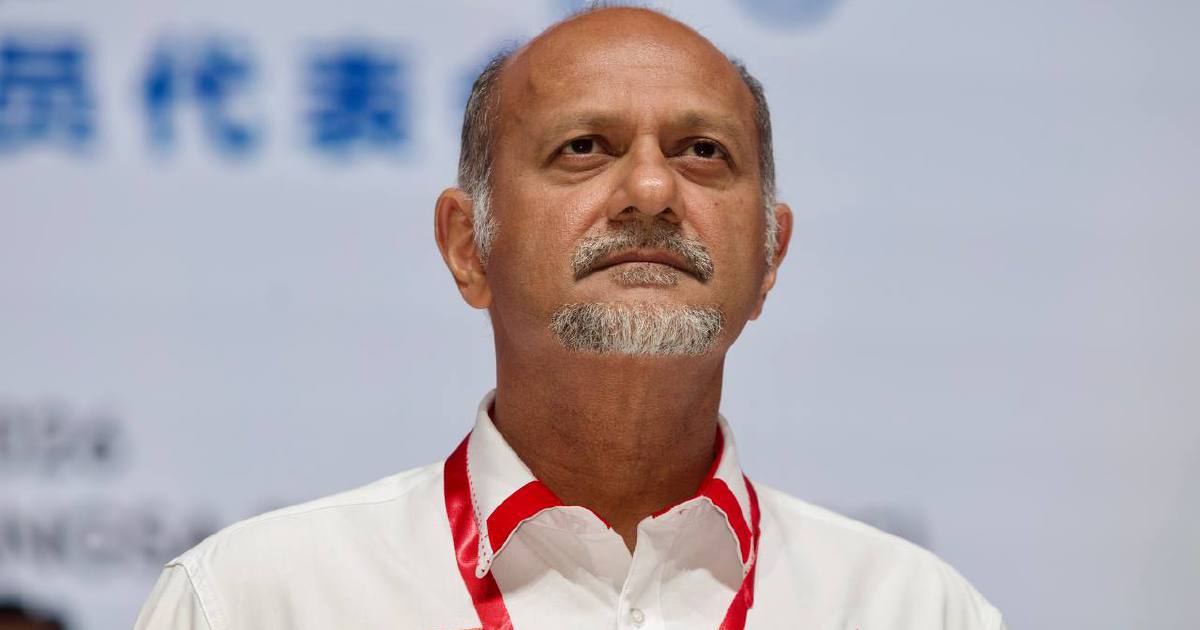
The Democratic Action Party has intensified pressure on the federal government to pursue more aggressive structural reforms, with national chairman Gobind Singh Deo making the case directly to Prime Minister Datuk Seri Anwar Ibrahim during a high-level engagement in Putrajaya. The appeal comes at a pivotal moment, with the unity coalition now approaching the midpoint of what has been characterised as a foundational period for Malaysia's political and economic trajectory.
Gobind Singh Deo's intervention reflects growing impatience within DAP circles over the pace of systemic change. The party, a significant component of the federal government alliance, has signalled that incremental adjustments are insufficient to address the structural weaknesses that have constrained Malaysia's economic competitiveness and institutional credibility. This public positioning also underscores internal coalition dynamics, where coalition partners are staking out distinct positions on governance priorities even while maintaining formal government unity.
Institutional reform has emerged as a particular focus. Malaysia's bureaucratic and administrative apparatus has long been flagged by international observers and domestic reformers alike as requiring modernisation. Issues ranging from transparency in procurement processes, merit-based advancement in the civil service, and accountability mechanisms have remained persistent concerns. DAP's emphasis on institutional strengthening suggests the party believes that without foundational changes to how government operates, economic policies alone will struggle to deliver measurable improvements in living standards or investor confidence.
On the economic front, the unity government inherited an economy facing multiple headwinds. Post-pandemic recovery, inflationary pressures, and competition from regional neighbours have complicated Malaysia's growth trajectory. The manufacturing sector confronts pressure from shifting supply chains, while the service economy requires modernisation to capture higher-value opportunities. DAP's call for accelerated economic reform likely encompasses tax structures, regulatory frameworks, and industrial policy—areas where Malaysia lags behind more agile competitors in Southeast Asia and the broader Indo-Pacific region.
The timing of DAP's call carries political significance. Three and a half years into the unity government's lifecycle signals an approach toward a potential electoral cycle. Coalition partners are beginning to differentiate themselves politically, preparing narratives for voters about their respective contributions and priorities. For DAP, positioning itself as the advocate for transformative reform—rather than merely managing the status quo—allows the party to maintain momentum with its urban, educated voter base that expects substantive change.
Anwar Ibrahim's leadership has been marked by a gradualist approach to reform. The Prime Minister inherited a deeply fractured political system, requiring delicate coalition management to maintain government stability. However, this pragmatism has sometimes appeared to conflict with reform advocates' sense of urgency. Gobind Singh Deo's public appeal suggests DAP believes the moment for caution has passed and that the government now possesses sufficient political capital to pursue more ambitious changes.
Sectoral implications deserve consideration. Malaysia's financial services industry, manufacturing base, and technology ecosystem all stand to benefit from institutional clarity and economic liberalisation. Regional competition is intensifying—Thailand, Vietnam, and Indonesia are all implementing reforms to attract investment and talent. Malaysia's ability to accelerate its own transformation could determine whether it maintains its traditional position as a upper-middle-income regional anchor or risks relative decline.
The call also reflects generational perspectives within the coalition. DAP's support base includes younger professionals and entrepreneurs who perceive institutional rigidity and economic insularity as impediments to their aspirations. Their frustration is palpable in professional networks and business communities where the gap between Malaysia's potential and actual performance has become a recurring conversation point. By voicing these concerns, DAP simultaneously appeals to its base while attempting to shift government priorities toward more growth-oriented policies.
International dimensions are at play as well. Malaysia's reputation globally depends partly on demonstrated institutional quality and economic dynamism. Foreign investors evaluating the country against regional alternatives are increasingly sensitive to governance indicators. Visible commitment to institutional reform could affect Malaysia's attractiveness relative to ASEAN peers and its standing among developed nations considering trade and technology partnerships. This context makes DAP's public pressure less about partisan point-scoring and more about strategic positioning amid regional economic competition.
The response from Prime Minister Anwar Ibrahim's office will be revealing. Whether the government accelerates reform initiatives or maintains its current pace will indicate how much coalition pressure influences policy direction. It will also signal to investors, civil society, and other reform advocates whether the government interprets its remaining term as an opportunity for transformative action or as a period focused primarily on consolidating political stability.
Moving forward, the tension between DAP's reform ambitions and the government's coalition management needs will likely define the unity government's final years. The party's willingness to voice these concerns publicly suggests impatience with gradualism is hardening across reform-minded segments of Malaysian politics. Whether this catalyses faster action or merely signals the beginning of coalition fissuring remains to be seen, but the pressure is clearly mounting for more decisive institutional and economic transformation.

