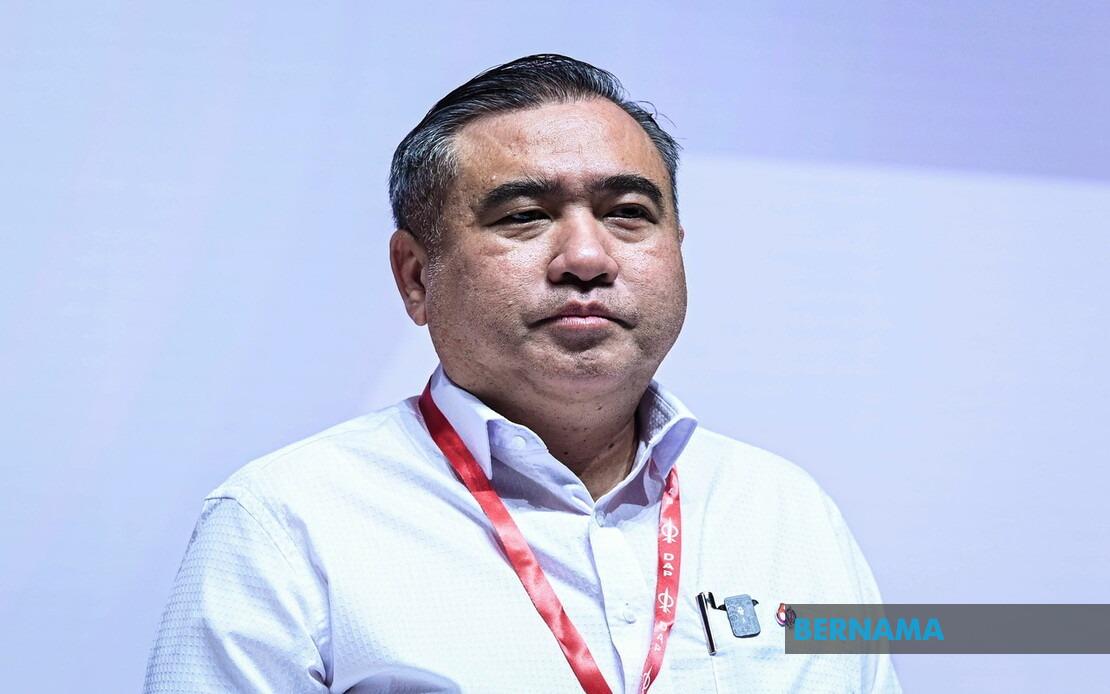
The Democratic Action Party has committed to channeling delegate concerns about government assertiveness directly to the Cabinet, even as the party decisively reaffirmed its participation in the Unity Government framework. At the conclusion of the 2026 DAP Party Conference held at the Putrajaya International Convention Centre, party secretary-general Anthony Loke acknowledged that while the overwhelming majority voted to stay within the coalition, a significant body of opinion exists demanding the administration adopt a more forceful and decisive approach to governance.
The internal party debate reflected a candid assessment of the government's performance. During open discussions at the conference, delegates seized the opportunity to voice criticisms not only of DAP's strategic choices but also of broader government decision-making. Rather than suppressing these viewpoints, party leadership chose transparency, allowing grassroots members to express reservations about whether the current administration was moving boldly enough on key policy fronts. This willingness to air disagreement internally—while maintaining coalition discipline externally—reveals the delicate balance that coalition partners must strike when seeking to influence government direction without destabilising the wider partnership.
The voting outcome underscored strong support for the party's continued membership in the Unity Government. Of 2,106 ballot papers distributed, 1,857 delegates voted to remain within the coalition while 242 opted for withdrawal, with seven ballots rendered invalid. This 88 per cent endorsement provides Anthony Loke with a substantial mandate to justify the party's participation despite persistent pressure from critics questioning whether DAP has sacrificed its independence or compromised its ideological commitments. Yet the 12 per cent opposition—representing 242 delegates—signals a meaningful strand of party opinion that remains unconvinced of the benefits of continued coalition involvement.
Loke's commitment to respect dissenters carries significance for Malaysia's democratic culture, particularly within multi-party coalitions where internal unity can sometimes override legitimate minority perspectives. The party secretary-general explicitly rejected any suggestion of punitive action against delegates who voted against remaining in government, framing the decision as a moment to honour democratic process. This stance matters as Southeast Asian political systems often struggle with accusations of authoritarianism within parties; by explicitly protecting dissenting voices, DAP seeks to model internal pluralism even while maintaining coalition discipline.
The feedback gathered during the conference now becomes leverage for DAP within Cabinet discussions. Rather than accepting government positions passively, the party intends to invoke its delegate mandate when advocating for policy changes or accelerated implementation of reforms. This mechanism—formalising grassroots input into high-level government negotiations—represents one way coalition partners attempt to preserve accountability to their membership while participating in shared governance. For Malaysian readers accustomed to hierarchical, top-down political structures, the transparency of this process offers a counterpoint, though its effectiveness ultimately depends on whether Cabinet colleagues respond substantively to DAP's input.
Loke simultaneously sought to reframe criticism that DAP was using the party conference to impose its own agenda onto government. He insisted that the reforms being championed at the conference—including separating the Attorney-General's and Public Prosecutor's roles, limiting prime ministerial tenure to two terms, and intensifying anti-corruption efforts—were not distinctly DAP initiatives but rather components of the unified agenda that Pakatan Harapan had negotiated and the broader Unity Government had agreed to pursue. This distinction carries weight because it addresses a persistent accusation that smaller coalition partners attempt to hijack government machinery to advance narrow partisan interests.
The reforms Loke identified represent some of Malaysia's most contested constitutional and institutional questions. The separation of Attorney-General and Public Prosecutor functions has been debated for years as a mechanism to prevent prosecutorial politicisation and strengthen judicial independence. Similarly, limiting prime ministerial tenure reflects democratic theory about preventing excessive executive concentration, though implementing such constraints requires constitutional amendments that no single party controls. By positioning these as collectively endorsed objectives rather than DAP demands, Loke attempts to build broader support among coalition members and the public for changes that might otherwise appear self-serving if attributed solely to one party.
The decision to hold an open debate where delegates could criticise both party and government reflects evolving expectations about internal party democracy in Malaysia. Historically, such conferences sometimes featured carefully scripted proceedings with dissent kept private. The willingness to broadcast internal disagreements—and to acknowledge that 12 per cent opposed continued coalition participation—suggests party leadership believes transparency strengthens rather than weakens its position. This approach particularly resonates with younger, urban DAP members who increasingly demand accountability and genuine consultation rather than deferential acceptance of leadership decisions.
From a broader coalition perspective, DAP's conference vote has important implications for Unity Government stability. The 88 per cent endorsement provides political cover for DAP's continued participation, but the existence of a significant minority who questioned continued involvement serves as a permanent pressure point. Other coalition partners may view this debate as evidence that DAP leadership must be responsive to grassroots concerns or risk defections. Conversely, the decisive majority vote confirms that, despite chronic tensions, DAP's base generally accepts that coalition participation offers better outcomes than opposition positioning, a calculation that reflects both pragmatism and the recognition that Malaysia's complex ethnic and religious politics require inclusive governance frameworks.
The Cabinet channel through which DAP plans to convey its mandate represents the formal mechanism through which Malaysian coalition politics actually operates, distinct from public parliamentary theatre. These behind-the-scenes negotiations between coalition partners—where DAP can invoke its delegate votes, Pakatan Harapan partners can coordinate positions, and the Prime Minister must balance competing demands—determine how responsive government becomes to various constituencies. For Malaysian readers, understanding that such channels exist and function, even imperfectly, provides insight into how coalition governments navigate competing pressures without constantly collapsing into crisis.
Anthony Loke's handling of the conference outcome demonstrates political skill in acknowledging both the assertiveness demands voiced by delegates and the need to maintain coalition stability. By explicitly committing to relay feedback through Cabinet channels while simultaneously defending the collective nature of reform agendas, he positions DAP as a responsible coalition member that neither surrenders its principles nor prioritises narrow advantage. Whether this balancing act proves sustainable depends on whether government demonstrates sufficient decisiveness on the issues that concerned delegates, or whether continued caution breeds frustration that might resurface at future conferences.

