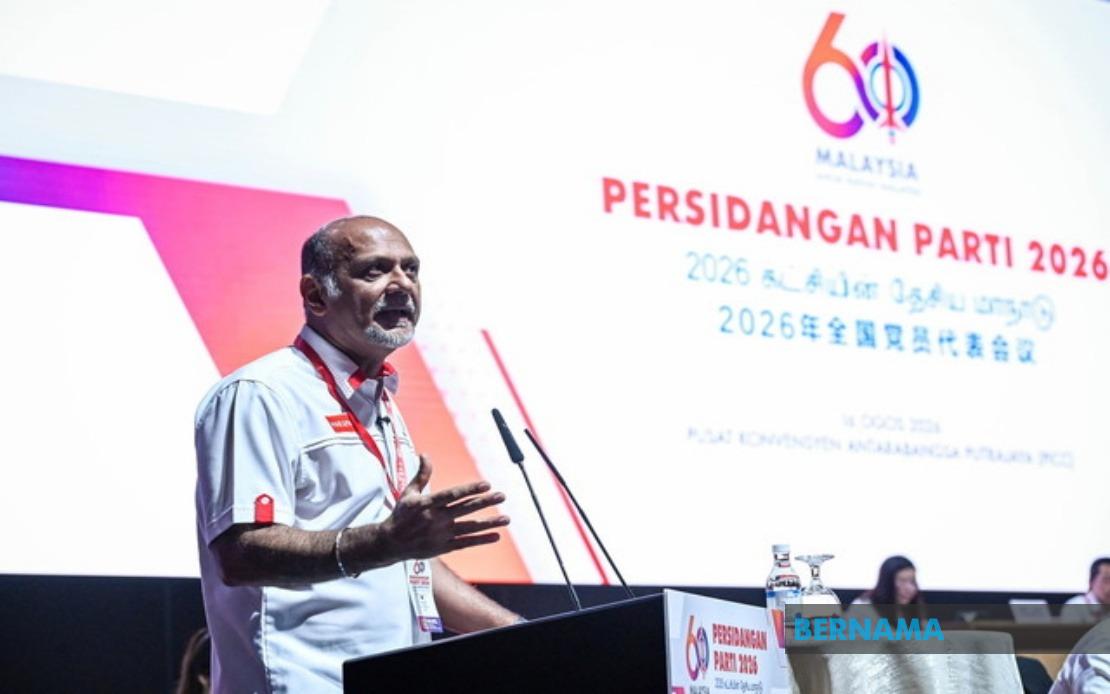
The Democratic Action Party faces a critical inflection point, according to its national chairman Gobind Singh Deo, who called on members at the DAP Party Conference 2026 in Putrajaya to use recent electoral outcomes as a springboard for strategic recalibration. Speaking at the gathering on August 16, Gobind acknowledged that the party must adapt to an increasingly complex political terrain whilst maintaining its relevance within Malaysia's shifting democratic dynamics. His remarks came three and a half years into DAP's involvement with the Unity Government, a period long enough to assess what has been accomplished and where the party may have fallen short of its initial ambitions.
Gobind's call for introspection reflects a broader tension within DAP's leadership between maintaining ideological consistency and accepting the pragmatic constraints of coalition politics. The party entered the Unity Government with ambitious plans, but governing as part of a multi-party alliance inevitably requires compromise. Rather than presenting this as a retreat, Gobind framed it as a necessary maturation of political thinking. The electorate's recent message, he suggested, should prompt the party to distinguish between aspirational goals and those reforms that can realistically command agreement across coalition partners. This distinction matters significantly for Malaysian voters who expect their representatives to deliver tangible improvements in governance rather than symbolic gestures.
The chairman specifically advocated for a more selective reform agenda, one calibrated to what competing coalition partners could support. Instead of attempting to implement DAP's complete manifesto independently, the party should identify those institutional and economic changes where consensus already exists or can be built. This approach addresses a common criticism of DAP in government: that the party sometimes pursues reforms without adequately persuading its coalition partners, leading to either watered-down outcomes or public disappointment when initiatives stall. By adopting a narrower but achievable reform platform, DAP could potentially deliver more concrete victories and rebuild confidence among voters frustrated by slow progress on governance issues.
Gobind's proposal for a special parliamentary sitting to advance institutional reforms offers a concrete illustration of this recalibrated strategy. He identified several priority areas deserving urgent attention: amendments to the Security Offences (Special Measures) Act 2012, modifications to the Peaceful Assembly Act 2012, separation of the Attorney General's office from the Public Prosecutor's role, and constitutional limits on prime ministerial tenure to two terms. These reforms address concerns that have motivated much of DAP's political base, particularly educated urban voters concerned about democratic backsliding and potential executive overreach. By channelling these aspirations into specific legislative proposals, the party could demonstrate commitment to institutional renewal without making impossible demands on coalition partners.
The significance of these proposed amendments extends beyond DAP's internal politics. Constitutional and legal reforms reshape the distribution of power within Malaysia's political system, affecting not only current officeholders but also setting precedents for future governments. The separation of the Attorney General and Public Prosecutor positions, for instance, has been debated for decades as a way to insulate prosecutorial decisions from political pressure. Limiting prime ministerial tenure could prevent the concentration of executive power that has characterised past administrations. These are not merely technical adjustments but fundamental questions about how Malaysia's democratic system should function. Gobind's framing of these reforms as essential to preventing power abuse suggests DAP views them as non-negotiable components of good governance.
Economic management emerged as another crucial concern in Gobind's address, reflecting growing public anxiety about cost of living pressures and employment prospects. He stressed that the government must grasp the genuine hardships facing Malaysians and respond with concrete measures to alleviate financial strain. This emphasis on economic sensitivity indicates that DAP recognises the limits of institutional reform as a political platform; voters increasingly demand that government address their immediate material circumstances. The party appears to be recalibrating messaging to balance its traditional focus on democratic governance with contemporary concerns about inflation, housing affordability, and job creation. For Southeast Asia's political landscape, this shift reflects a broader pattern where established democratic parties must simultaneously advance institutional improvement and deliver economic results.
Gobind's argument for political stability as an investment attractor connects DAP's continued government participation to broader national development objectives. He contended that maintaining a stable, functioning coalition government reassures foreign investors that Malaysia offers a reliable environment for capital deployment. This reasoning helps explain DAP's calculation in remaining within the Unity Government despite electoral disappointment: withdrawal might satisfy the party's most committed supporters but could destabilise the government and harm economic prospects. The statement reveals how coalition partners in Malaysia often remain bound not by ideological alignment but by recognition that governmental collapse serves no one's interests. For investors and international observers, Malaysia's political stability directly influences assessments of business risk and long-term economic viability.
The conference itself carried procedural significance beyond Gobind's keynote remarks. Party secretary-general Anthony Loke was expected to table a motion requiring delegates to vote whether DAP should remain within the Unity Government until the sixteenth Parliament completes its term or withdraw from the coalition. This secret ballot mechanism represents an important democratic moment for the party, allowing grassroots members to weigh in on a question that could reshape Malaysian politics. A vote to exit the government would signal disillusionment with the coalition experiment and potentially trigger broader realignments within Pakatan Harapan, the opposition coalition that nominally supports the Unity Government. Conversely, a vote to remain would affirm DAP members' belief that incremental progress through coalition participation outweighs the appeal of returning to opposition politics.
The composition of DAP's leadership attending the conference underscored the breadth of the party's influence. Beyond Gobind and Loke, attendance included vice-chairmen Chong Chieng Jen, Teo Nie Ching, Ng Suee Lim, Syahredzan Johan, and J. Arul Kumar, alongside senior advisers Lim Guan Eng and Tan Kok Wai. This gathering of senior figures reflected the significance of the moment and the stakes involved in the party's strategic reassessment. These individuals represent different regional power bases and factional interests within DAP, yet their collective presence suggested an effort toward unified messaging during a vulnerable period. The conference drew participation from 4,264 delegates representing 1,704 eligible branches, giving the proceedings genuine representative weight within the party structure.
The timing of the reassessment coincided with DAP's 60th anniversary, adding historical dimension to contemporary deliberations. The party, established in 1966, has evolved from a principled opposition movement into a governing force, a transformation that raises fundamental questions about institutional identity and political purpose. Gobind's call for direction reassessment essentially asks whether DAP can maintain its core commitment to democratic reform whilst accommodating coalition constraints. For Malaysian politics more broadly, DAP's trajectory matters because the party has long positioned itself as a guardian of constitutional governance and transparent administration. How successfully DAP navigates the tension between principle and pragmatism will influence whether voters view coalition governance as compatible with sustained democratic improvement or as inherently corrupting to reformist movements.
The broader implication of this reassessment extends to Malaysia's entire political ecosystem. DAP remains one of three core pillars supporting Pakatan Harapan alongside PKR and Amanah, making the party's strategic calculations consequential for all coalition members. If DAP concludes that coalition participation prevents meaningful reform, or conversely that the electorate demands more tangible economic results, these conclusions will necessarily influence broader coalition decisions. The state election results that prompted Gobind's call for reassessment presumably reflected voter dissatisfaction with governance outcomes or the pace of change, signals that reverberate across Malaysia's political landscape. For observers of Southeast Asian democracy, DAP's response to these challenges offers instructive lessons about how reform-oriented parties navigate the often-uncomfortable intersection of principle and power.

