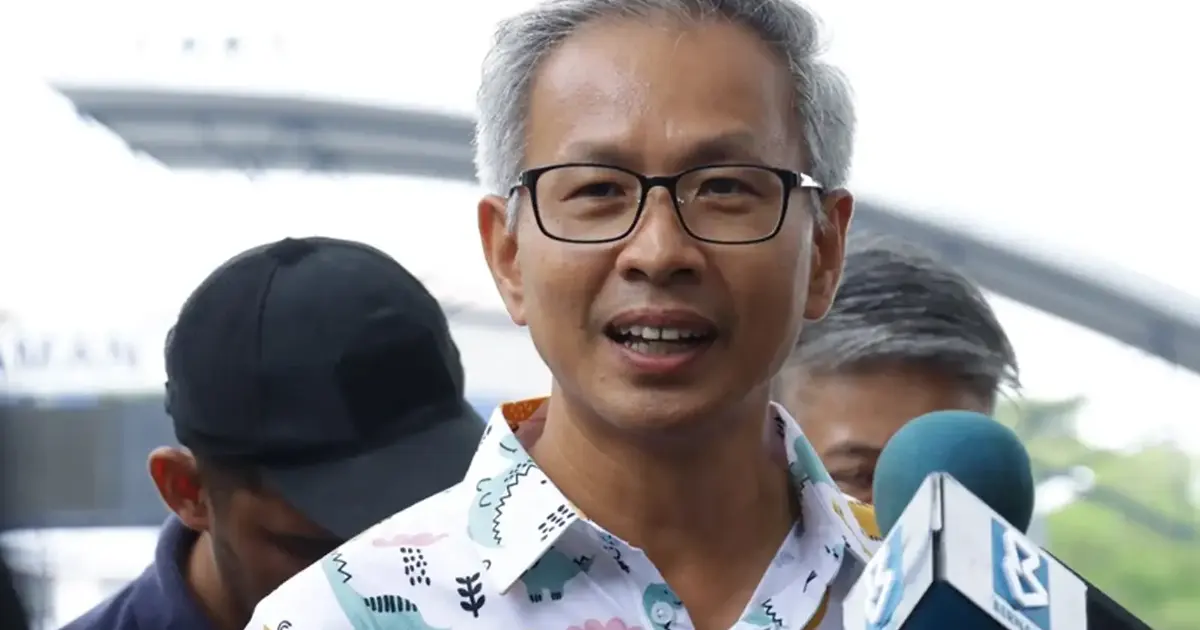
Tony Pua, a prominent DAP parliamentarian and political figure, remains the subject of an active police investigation, according to a statement from the Home Minister. The continued scrutiny follows a significant volume of public complaints, with authorities having received 140 separate police reports centred on a single Facebook post by the politician that touched upon Malaysia's constitutional monarchy framework and the Rukun Negara—the nation's foundational principles of unity and national identity.
The investigation represents a notable intersection of digital-age politics and Malaysia's sensitive constitutional arrangements. Social media has become an increasingly contentious arena for political discourse in the country, with posts that engage with constitutional matters frequently attracting heightened official attention and public reaction. The sheer number of reports filed against Pua underscores the polarised nature of discussions around the monarchy and state ideology in contemporary Malaysian politics.
Pua's Facebook post appears to have touched a nerve within segments of the Malaysian public, suggesting that commentary on constitutional structures remains a volatile topic despite Malaysia's long democratic history. The Rukun Negara itself—comprising the principles of belief in God, the Monarchy, the Constitution, the Rule of Law, and mutual respect and courtesy—is officially enshrined as fundamental to national cohesion, yet discussions interpreting or critiquing these concepts continue to generate considerable public concern and official response.
The investigation's continuation signals that authorities are treating the matter with deliberation rather than expedience. The volume of reports—140 in total—indicates widespread public concern was registered with police, though such mass reporting phenomena in Malaysia often reflect organised complaint campaigns as much as spontaneous public grievance. This pattern is consistent with how certain political and constitutional matters mobilise different segments of Malaysian society to engage with law enforcement mechanisms.
For DAP, an opposition party that has long positioned itself as a defender of constitutional democracy and individual rights, the investigation against one of its senior figures carries political significance beyond the individual case. The party has historically advocated for expanded interpretations of constitutional freedoms, particularly regarding political speech and assembly, making Pua's situation relevant to broader debates about the scope of permissible political discourse in Malaysia.
The Home Ministry's confirmation that investigations remain ongoing suggests that police are still examining whether the Facebook content contravenes any relevant legislation. Malaysia maintains several legal provisions related to sedition, national security, and respect for constitutional institutions, and prosecutors must determine whether any alleged transgressions warrant formal charges. The investigative phase, which can extend considerably in complex cases, typically involves gathering evidence, interviewing relevant parties, and legal analysis.
This situation reflects deeper tensions within Malaysian politics regarding how the nation's constitutional arrangements should be discussed publicly. While Malaysia maintains constitutional protections for freedom of expression, those protections exist alongside competing legal frameworks designed to protect state institutions and public order. Politicians and commentators regularly navigate these boundaries, and high-profile cases like Pua's investigation inevitably influence how others approach similar topics.
The timing and nature of such investigations also carry implications for Malaysia's international standing on matters of democratic governance and press freedom. International observers and rights groups frequently monitor high-profile cases involving political figures, and the manner in which Malaysian authorities conduct investigations into political speech attracts scrutiny from regional and global perspectives. How the authorities ultimately resolve the Pua matter may send signals about the boundaries of acceptable political discourse in contemporary Malaysia.
Within the Southeast Asian context, Malaysia's approach to managing political speech on constitutional matters compares with approaches taken by neighbouring democracies. Thailand, Indonesia, and the Philippines all grapple with balancing constitutional protection of institutions against freedom of expression, though each nation has developed distinct legal and practical approaches. The Malaysian case therefore holds relevance for understanding how the region's democracies manage these fundamental tensions.
For political analysts, the Pua investigation exemplifies how digital communication has transformed the mechanics of political oversight and complaint in Malaysia. A single social media post can now trigger hundreds of formal police reports within hours or days, creating investigative workloads that would have been unimaginable in earlier eras. This technological shift has practical implications for how police resources are allocated and how investigations are prioritised.
As the investigation continues, observers will likely scrutinise whether the police conclude that the Facebook post warrants criminal charges or whether the matter eventually concludes without formal prosecution. Either outcome carries political messaging value and may influence how other politicians assess the risks of engaging with constitutional topics in public forums. The investigation thus extends beyond the individual defendant to shape broader political behaviour and self-censorship calculations across Malaysia's political landscape.

