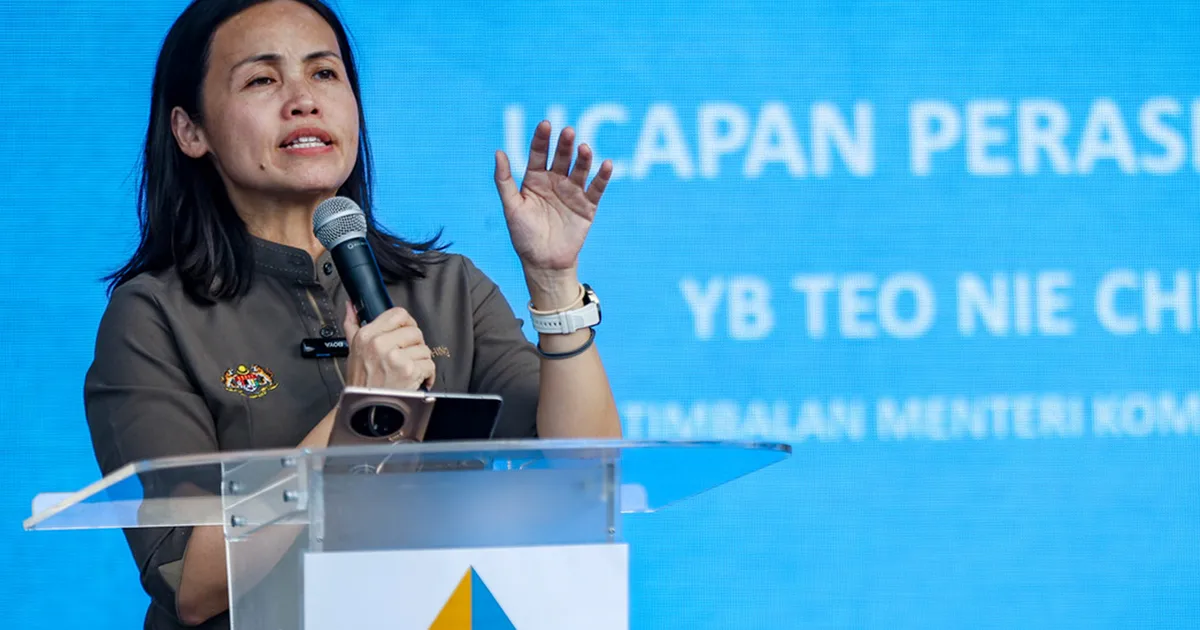
A senior Democratic Action Party (DAP) leader and deputy minister has publicly accused coordinated actors of creating multiple social media accounts with the explicit purpose of attacking her character and spreading disinformation about her alleged connections to gang-related activities.
The accusation reflects a troubling trend in Malaysian politics where political opponents increasingly resort to manufactured online personas to damage rivals through unsubstantiated claims. Rather than engaging in traditional debate or policy criticism, the attackers created fresh accounts—a tactic that often involves minimal digital footprints and harder attribution—specifically designed to disseminate false allegations that could undermine her credibility and standing within both her party and the broader electorate.
Such coordinated disinformation campaigns have become more sophisticated across Southeast Asia, leveraging social media platforms' algorithmic amplification to reach wide audiences rapidly. The fact that dedicated accounts were established for this purpose suggests premeditation and organisation rather than spontaneous, isolated criticism. This represents a departure from conventional political discourse and indicates deliberate strategic intent to manipulate public perception through false narratives.
The gang-related allegations are particularly serious because they carry criminal implications and can permanently damage a public figure's reputation, even when entirely fabricated. In the Malaysian context, where organised crime remains a genuine public concern, such accusations weaponise legitimate anxieties to create maximum political damage. The deputy minister's public response demonstrates her determination to confront these attacks directly rather than ignore them, signalling to both constituents and party colleagues that she will not allow false narratives to go unchallenged.
This incident occurs within a broader pattern of intensifying online political warfare in Malaysia. Social media has become a battleground where traditional gatekeeping mechanisms—fact-checking, editorial standards, journalistic ethics—operate weakly or not at all. Malicious actors exploit this permissive environment to circulate falsehoods that would never survive scrutiny in mainstream media channels. The ease with which fake accounts proliferate means that even debunked claims can achieve significant circulation before corrections reach audiences.
The targeting of senior female political figures like the deputy minister reflects additional dimensions of online harassment that transcend normal political competition. Research consistently shows that women in public office face disproportionate levels of coordinated online abuse, often combining political attacks with personal insults and threats designed to discourage their participation in public life. When these campaigns fabricate criminal allegations, they weaponise gendered harassment alongside disinformation.
From a Malaysian governance perspective, this pattern raises urgent questions about platform accountability and the government's role in protecting political figures from coordinated disinformation. Unlike traditional media, social media companies operate with minimal regulatory oversight in Malaysia, allowing harassment campaigns to flourish largely unchecked. The platforms themselves have global policies against coordinated inauthentic behaviour, yet enforcement remains inconsistent and often reactive rather than preventive.
The DAP's response to this attack also signals internal party dynamics. By publicly highlighting the manufactured nature of the accusations, the party leadership demonstrates solidarity with the deputy minister and sends a message that disinformation tactics will be exposed and contested. This transparency approach contrasts with strategies of silence that some political figures adopt, which can inadvertently allow false narratives to metastasise unchallenged in public discourse.
For Malaysian voters and civil society observers, this incident underscores the critical importance of digital literacy and media literacy in an era where sophisticated disinformation campaigns can target specific politicians with coordinated precision. Citizens must develop capacity to distinguish between authentic criticism arising from genuine political disagreement and manufactured attacks designed to manipulate rather than inform. The intentional creation of accounts specifically for launching false allegations represents the latter category clearly.
The broader implications extend beyond this single case. As Malaysia approaches electoral cycles and navigates complex coalition politics, the proliferation of coordinated social media disinformation campaigns threatens to degrade the quality of public debate and citizen decision-making. When political actors resort to fabricating criminal allegations rather than engaging opponents on policy substance, democratic discourse suffers. This particular case serves as a visible reminder of threats to electoral integrity and political integrity that operate in digital spaces and demand sustained attention from both policymakers and civil society organisations.

