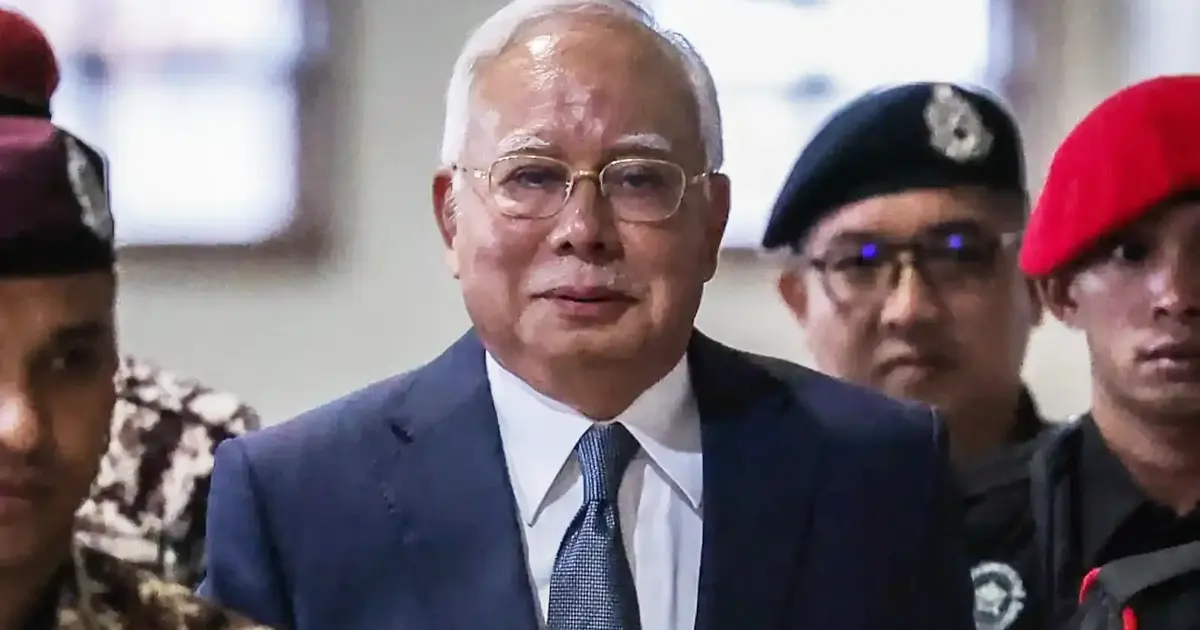
The DAP has put pressure on the MCA to publicly state its position regarding intensifying calls from Umno leaders for a full pardon of former Prime Minister Najib Razak, signalling growing tensions within the federal coalition over how to handle the high-profile legal saga. Ong Hui Xue, a DAP legislator, raised the question as members of the ruling Umno party continue to advocate aggressively for clemency for the ex-leader who faces criminal convictions related to the 1Malaysia Development Berhad scandal.
The push for Najib's pardon has emerged as a contentious issue threatening to expose divisions among governing coalition partners. Umno figures have become increasingly vocal in their demands that the King grant a full pardon or commutation of sentence, framing it as a matter of party loyalty and political rehabilitation. This coordinated campaign reflects deep factionalism within Umno itself, where supporters of Najib remain influential despite his legal troubles and the party's electoral setbacks attributed to his tenure.
Ong's intervention specifically targets the MCA, the second-largest component of the Barisan Nasional coalition, suggesting the party must move beyond silence and declare clearly whether it endorses or opposes Umno's pardon agenda. The timing of this challenge carries significance given the delicate balance required to maintain the coalition's coherence ahead of future electoral contests and policy decisions. The MCA, which represents Malaysia's Chinese business and professional classes, has historically positioned itself as a stabilising moderate voice within the Barisan framework.
Najib's legal predicament traces back to investigations into 1MDB, a sovereign wealth fund whose collapse triggered one of the largest financial scandals in Asia. He was convicted on charges of abuse of power and money laundering, resulting in substantial prison sentences, though some convictions have been overturned on technical grounds. The broader 1MDB matter continues to unwind across multiple jurisdictions, with billions in assets still subject to ongoing recovery efforts internationally.
The campaign for Najib's pardon reflects the complex intersection of legal accountability and political patronage networks in Malaysian governance. Umno leaders contend that Najib was unjustly pursued through selective prosecution or cite purported procedural irregularities, framing the clemency request in terms of fairness and party reputation restoration. Critics counter that pardoning him would undermine judicial independence and send damaging signals about accountability for financial misconduct at the highest levels of government.
MCA's position matters considerably because the party's support or neutrality could influence broader attitudes within the coalition and among centrist voters who initially backed reform movements partly in reaction to governance scandals. The party's silence or ambiguity on this issue creates an opening for opposition parties to characterise the entire Barisan as protecting its own at the expense of institutional integrity. This dynamic becomes especially acute given ongoing public concern about anti-corruption measures and transparent governance.
Ong's intervention also reflects DAP's broader strategy of using parliamentary mechanisms to expose inconsistencies and pressure coalition partners into positions that might alienate their support bases. By demanding clarity from MCA, the DAP simultaneously highlights the ruling coalition's apparent lack of unified standards regarding accountability and justice. This tactic can prove effective in eroding coalition cohesion without DAP itself needing to propose legislation or take direct enforcement action.
The implications for Malaysian politics extend beyond the immediate question of Najib's fate. A successful pardon would effectively conclude legal proceedings that have consumed enormous public and judicial resources while establishing a precedent that political prominence provides insulation from conviction consequences. Conversely, maintaining his conviction upholds judicial finality but risks perpetuating grievances among Umno's traditionalist faction, potentially destabilising coalition governance.
Regional observers note that how Malaysia handles this situation carries implications for governance standards across Southeast Asia, where concerns about selective justice and patronage-driven decision-making persist. International investors and multilateral institutions monitor such developments closely, considering them indicators of rule-of-law commitment and institutional resilience. The outcome may influence foreign confidence in Malaysia's regulatory framework and judicial independence.
The situation also demonstrates how unresolved legal controversies can linger as sources of political instability long after initial prosecutions conclude. Rather than achieving closure, convictions sometimes merely relocate disputes into campaigns for clemency, potentially sustaining factional conflicts and preventing institutional healing. This pattern has appeared elsewhere in Southeast Asian democracies, suggesting systematic challenges in transitioning from crisis periods to normalised governance.
Looking forward, MCA's eventual response will reveal how the coalition manages internal disagreements and whether its constituent parties have developed mechanisms for reconciling divergent positions on sensitive matters. Should the party explicitly distance itself from Umno's pardon campaign, it signals greater independence within the coalition. Should it acquiesce or support the calls, it suggests subordination of principle to coalition loyalty, with potential consequences for its standing among constituencies valuing institutional integrity and transparent governance standards.

