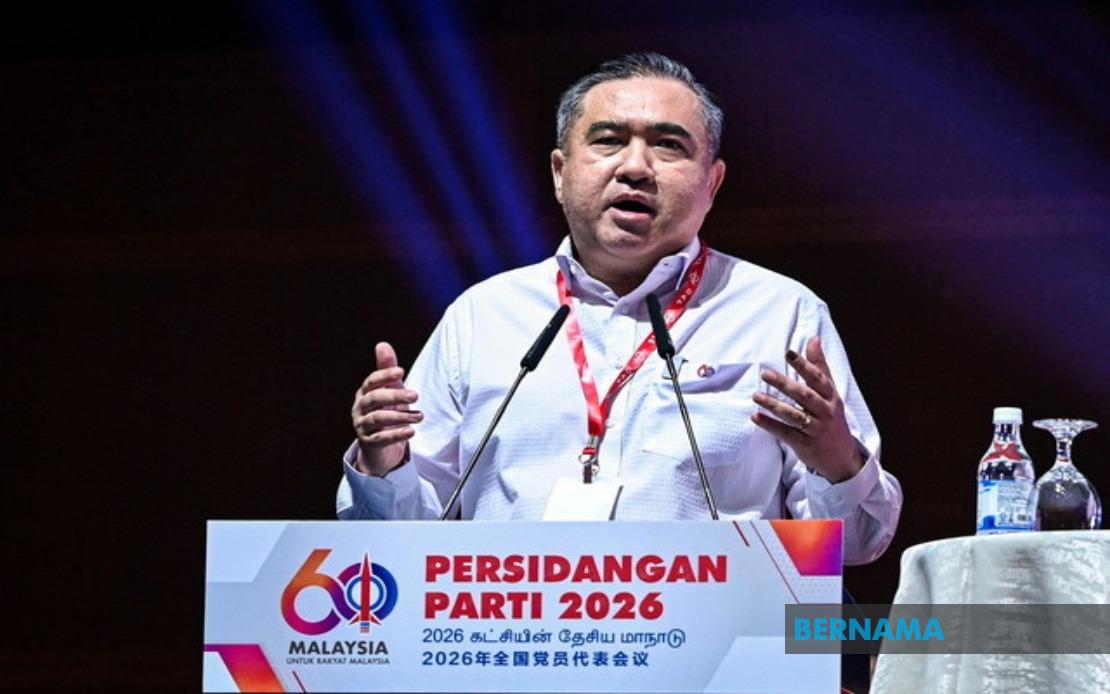
The Democratic Action Party has committed to maintaining its presence within the federal government until the conclusion of the 15th Parliament's term, following a decisive vote at its annual conference in Putrajaya. Party secretary-general Anthony Loke submitted the motion to delegates at the 2026 DAP Party Conference held at the Putrajaya International Convention Centre, seeking formal endorsement for the party's continued participation in the ruling coalition. The overwhelming support for the motion represents a significant statement of unity from the party's grassroots membership and signals DAP's intention to see through the current parliamentary cycle without withdrawing from the government framework.
The voting process demonstrated the party's commitment to transparency and democratic procedure. Rather than relying on traditional voice votes or shows of hands, which can be subject to interpretation, delegates cast their ballots through secret ballot to ensure each member's choice remained confidential. Conference Speaker Cha Kee Chin announced the final tally: 1,857 delegates voted to remain within the government, 242 opted to withdraw, and seven ballots were spoilt. The 1,857 affirmative votes represented 88.2 per cent of the 2,106 ballots cast, indicating broad consensus within the party hierarchy and membership.
DAP's ministerial presence within the cabinet reflects the party's substantial role in the coalition government. Transport Minister Anthony Loke, who tabled the motion, heads the party's government contingent. Four other DAP figures occupy ministerial portfolios: Steven Sim manages the Entrepreneur and Cooperatives Development portfolio, Gobind Singh Deo oversees Digital affairs, Nga Kor Ming leads Housing and Local Government, and Hannah Yeoh operates within the Prime Minister's Department overseeing Federal Territories. This distribution across key economic, infrastructure, and social development ministries demonstrates DAP's integration into core government functions.
Beyond the five ministerial positions, DAP maintains significant influence through its seven deputy ministers spread across multiple departments. Teo Nie Ching operates in Communications, Datuk Chan Foong Hin in Agriculture and Food Security, and Wong Kah Woh in Education. The Finance Ministry hosts Liew Chin Tong, while M. Kulasegaran operates in the Prime Minister's Department handling Law and Institutional Reform. Lim Hui Ying represents the party in Women, Family and Community Development matters, and Mordi Bimol manages Youth and Sports. This extensive network of positions indicates DAP's integration into administrative structures across multiple government levels.
The attendance figures highlight the scale of DAP's organizational apparatus. Conference Speaker Cha reported that 4,264 delegates representing 1,704 branches across Malaysia were expected to participate in the conference and held voting rights. The breadth of branch representation across the country demonstrates DAP's nationwide presence and organisational capacity. The 2,106 ballots ultimately cast represented meaningful participation from the party's delegate base, suggesting engagement with this significant governance decision rather than mere formality.
This decision carries implications for Malaysia's political stability during a critical period. By committing to remain in government through the end of the current parliamentary term, DAP removes uncertainty about potential coalition shifts that could destabilize the administration or force premature elections. For the government's policy agenda, this commitment provides assurance that DAP will continue supporting legislation and budgetary initiatives required to implement its programs. For businesses and investors, clarity about governmental continuity reduces political risk variables when making medium-term strategic decisions.
From a Southeast Asian perspective, Malaysia's coalition stability contributes to regional economic confidence. As the region's second-largest economy and a major trading hub, Malaysian political predictability affects regional investment flows and trade relationships. DAP's commitment to governmental continuity extends beyond domestic implications, supporting the broader regional framework within which countries like Singapore, Thailand, and Indonesia conduct their economic partnerships with Malaysia.
The vote also reflects evolving dynamics within Chinese-Malaysian political representation. DAP's willingness to remain in a broad-based coalition government—rather than pursuing oppositional politics—demonstrates how Malaysia's largest Chinese-majority party has adapted to governance realities. This pragmatic approach balances representation of Chinese community interests against the operational requirements of multi-ethnic coalition governance, a balance that remains central to Malaysian political stability.
For the opposition and potential future governments, this decision establishes a timeline within which the current political configuration will persist. The commitment to remain through the end of Parliament's term provides clarity for opposition parties planning their own strategic positioning. Should dissatisfaction emerge among DAP's constituent communities regarding government performance, such concerns will be addressed within the coalition framework rather than triggering immediate political realignment.
The 88.2 per cent support level reflects strong party consensus, though the 242 dissenting votes and seven spoilt ballots indicate not total unanimity. This minority opposition likely represents concerns about specific government policies, the pace of implementation of DAP's agenda, or philosophical questions about coalition participation. However, the strong majority mandate provides DAP's leadership with clear authority to continue negotiations with coalition partners and defend government decisions to the party membership.
Looking forward, DAP's commitment positions the party for negotiations regarding the coalition's policy direction during the remaining parliamentary term. With five ministerial positions, DAP possesses sufficient leverage to advance priorities in transport, entrepreneurship, digital development, housing, and federal administration. The party can use this committed timeframe to demonstrate tangible achievements in these areas, building evidence of effective governance that could strengthen its position in future electoral cycles.
The timing of this decision, occurring at the 2026 party conference, provides approximately two years of certainty before Malaysian general elections become constitutionally due around 2028. This window allows sufficient time for policy implementation, budget cycles, and evaluation of government performance. For stakeholders ranging from infrastructure planners to business leaders to foreign investors, DAP's formal commitment to governmental stability through this period provides reassurance about Malaysia's political direction and administrative continuity.

