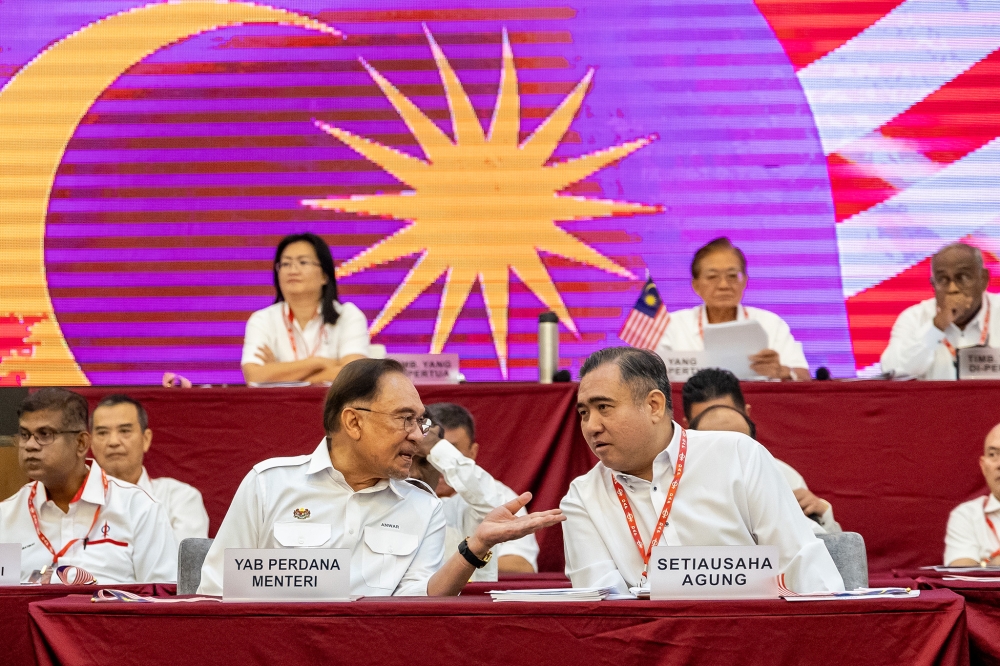
Transport Minister Anthony Loke has delivered a clear statement of intent that the Democratic Action Party will remain committed to Prime Minister Datuk Seri Anwar Ibrahim's Pakatan Harapan coalition, effectively closing speculation about potential fractures within Malaysia's governing alliance. Speaking in Kuala Lumpur on July 17, Loke acknowledged the inherent tensions that arise when multiple political parties must coordinate their agendas, positioning the DAP's continued participation as a strategic choice rather than a forced accommodation.
The minister's remarks come at a moment when coalition governance in Malaysia faces persistent scrutiny, with observers questioning whether diverse political partners can sustain the compromises necessary to function effectively. Loke's intervention signals that despite documented disagreements over the pace and scope of reforms, the DAP leadership views the Pakatan framework as preferable to the alternative of opposition politics. This stance carries weight given the party's historical prominence in Malaysian politics and its vocal constituencies, particularly among urban voters and civil society advocates.
Central to Loke's argument is the notion that governing as part of a coalition inevitably requires accepting slower implementation of preferred policies. This represents a significant concession from a party that campaigned on transformative change, particularly regarding institutional reform, judicial independence, and anti-corruption measures. The transport minister essentially framed the gap between campaign promises and governing reality as an inherent feature of coalition politics rather than a failure of political will, a formulation that may resonate with pragmatically minded voters but risks disappointing reform-focused supporters.
For Malaysian readers observing coalition dynamics, Loke's statement illuminates the difficult calculus facing coalition partners. The DAP must balance its need to maintain internal party cohesion and satisfy its voter base with the practical necessity of working within a broader political structure that includes parties with competing interests. The Pakatan configuration brings together ideologically diverse partners, creating constant negotiations over policy priorities, resource allocation, and strategic direction.
The implicit backdrop to Loke's comments is the ongoing tension between DAP's reform agenda and the more cautious approach of other coalition members. Previous instances of disagreement over issues ranging from religious affairs to development priorities have occasionally surfaced publicly, creating uncertainty about the coalition's durability. By explicitly ruling out a DAP departure, Loke addresses these concerns head-on, positioning party leadership as committed to making the current arrangement function.
The broader implications extend beyond immediate coalition management. A fractured Pakatan would have profound consequences for Malaysian politics, potentially returning the country to a period of unpredictable coalition shifting, as occurred in previous parliamentary cycles. Voters who supported Pakatan because they sought continuity and policy stability would face renewed uncertainty. Additionally, such a rupture could embolden opposition forces hoping to exploit divisions within the government.
Loke's framing of slower reforms as the price of governing also warrants examination in the context of Malaysia's development needs. Reform fatigue exists in certain quarters, with businesses and investors sometimes preferring predictability over rapid change. Conversely, civil society groups and reform advocates argue that momentum on institutional transformation cannot be indefinitely deferred without losing credibility. The minister's statement suggests the coalition has chosen a middle path, maintaining reform commitment while acknowledging practical constraints.
The transport minister's remarks should be understood within DAP's electoral calculations. The party faces pressure from both directions: supporters expecting significant change, and coalition partners concerned that aggressive reforms might destabilize their political standing or offend their own constituencies. Loke's messaging attempts to satisfy both audiences by confirming commitment to the coalition while implicitly defending the pace of change as reasonable given political constraints.
From a regional perspective, Malaysia's coalition governance model carries lessons for other Southeast Asian democracies navigating multi-party partnerships. The ability of ideologically distinct parties to function within a shared government depends significantly on leadership's willingness to communicate trade-offs transparently, as Loke has attempted. His honesty about the constraints of coalition politics, while potentially disappointing to idealists, may actually strengthen long-term coalition stability by setting realistic expectations.
Looking forward, Loke's statement effectively sets the terms for DAP's participation in Pakatan through at least the next electoral cycle. The party is signalling that it will continue advocating for its preferred policies and reforms, but within the cooperative framework rather than through exit threats or obstruction tactics. This positioning allows the DAP to maintain its reform credentials while accepting the slower pace of implementation that coalition governance demands.
Ultimately, the transport minister's comments reveal a political calculation that the benefits of coalition participation outweigh the frustrations of compromise. Whether this assessment proves accurate will depend on whether the DAP and its partners can maintain sufficient policy progress to satisfy their respective constituencies while continuing to function as a coherent governing entity. The next test will come when specific policy disagreements emerge, as they inevitably will, requiring coalition partners to again balance their competing interests.

