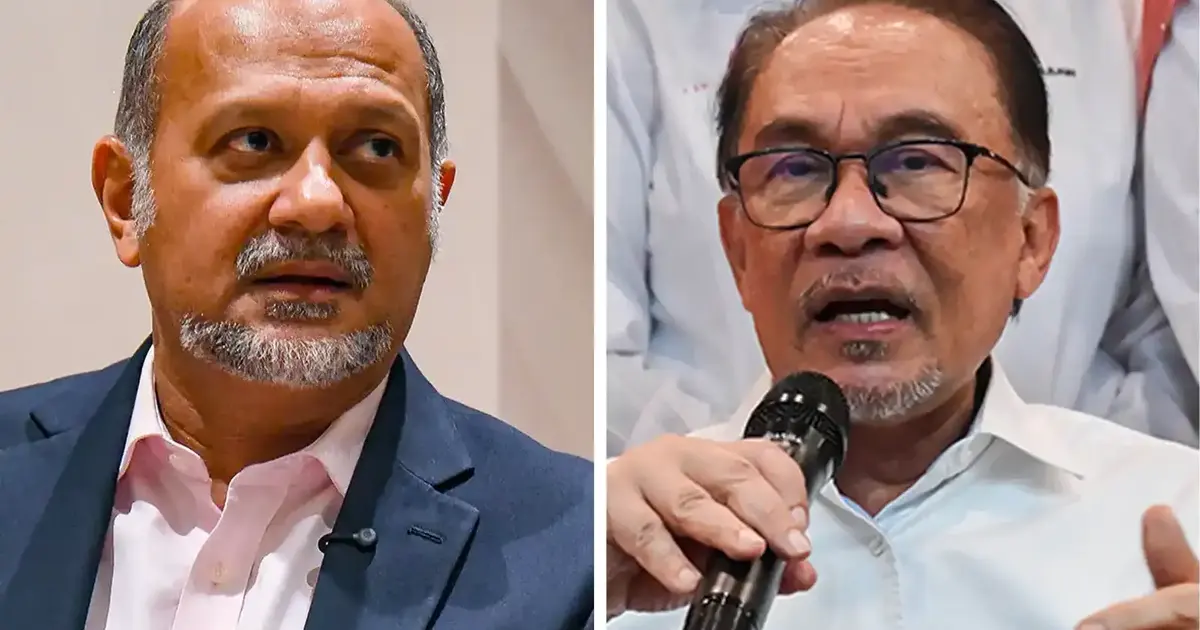
The Democratic Action Party is escalating its campaign to guarantee equitable financial distribution across all parliamentary constituencies, with prominent party figure Gobind Singh Deo emphasizing that the measure should be embedded in legislation rather than operating as a discretionary executive practice. The DAP leader disclosed that the party leadership has held multiple discussions with Prime Minister Anwar Ibrahim specifically addressing the necessity of establishing uniform constituency allocations across the entire House of Representatives, underscoring the party's commitment to resolving what it views as a structural inequity in how development resources reach different electoral divisions.
The push for legislative safeguards reflects growing concerns within Malaysia's opposition and coalition ranks about the fairness of constituency funding mechanisms, which historically have been subject to political considerations and administrative discretion. By advocating for a binding legal framework rather than voluntary compliance, the DAP is essentially arguing that current arrangements—which may favour constituencies held by government-aligned parties or represent political bargaining chips—perpetuate systemic disadvantages for communities represented by opposition MPs. This framing transforms what might otherwise be viewed as a budgetary allocation question into a matter of democratic principle and equal representation.
The timing of this renewed advocacy is significant given Malaysia's current political landscape, where the Unity Government coalition led by Anwar Ibrahim brings together disparate political forces including PKR, DAP, and Amanah, along with several component parties. The DAP, as one of the largest Chinese-majority parties in Parliament, holds considerable sway within this coalition, yet its members may perceive that constituent funding still reflects historical patterns of allocation established under previous administrations. By formalizing equal distribution through legislation, the party seeks to insulate this principle from political fluctuations and individual ministerial preferences.
The constituency fund system operates as a crucial mechanism for Malaysian MPs to support community development, undertake infrastructure projects, and respond to constituent needs outside of their party's resources. Disparities in these allocations directly affect a lawmaker's capacity to deliver visible improvements in their constituency, influencing public perception of representative effectiveness and voter sentiment during election cycles. Constituencies that receive substantially larger allocations can undertake more ambitious projects—from road resurfacing to community centres—while those with smaller amounts face resource constraints that limit their competitive positioning in the electoral marketplace.
From a governance perspective, the DAP's proposal touches on broader questions about parliamentary equality and the principle that every voter's representative should possess equivalent means to serve their constituents. In many mature democracies, uniform allocation per constituency is considered standard practice, though allowances for population size and geographic considerations exist. Malaysia's current approach, which appears more variable and discretionary, raises questions about whether all citizens receive equivalent service quality from their elected representatives based largely on which party controls their constituency.
The challenge for the Anwar administration in responding to this proposal involves balancing several competing interests. Any legislative requirement for equal distribution would constrain executive flexibility in resource deployment and might necessitate substantial budget reallocation toward constituencies currently receiving lower amounts. Government-aligned constituencies might see reductions in funding, potentially creating political friction among coalition partners or backbenchers, whilst opposition-held areas would benefit from increased resources. Such rebalancing could face resistance from legislators whose constituencies would experience cuts.
Historically, opposition parties have had fewer resources at their disposal for constituency-level development, partly because they lack access to government procurement channels and do not benefit from the administrative machinery advantages of ruling parties. Equalizing parliamentary allocations would partially address this disparity by ensuring that opposition MPs have equivalent government funding available for community projects. This would represent a significant shift toward creating more level competition between government and opposition in maintaining constituency relations and demonstrating tangible benefits to voters.
For Malaysian voters and civil society observers, the DAP's position aligns with broader demands for institutional reform that reduces opportunities for political patronage and resource manipulation. Equal funding requirements would make allocation decisions more transparent and predictable, reducing the scope for politically-motivated disparities that undermine public confidence in institutions. It would also ensure that electoral competition between parties turns primarily on policy platforms and performance rather than on differential access to developmental resources.
The DAP's insistence on legislative codification—rather than accepting administrative or executive assurances—suggests the party doubts that voluntary compliance by successive governments will prove durable. Legislation provides permanence across changes in administration and prevents future reversals of policy as different coalitions assume power. This reflects a calculated judgment that only binding legal requirements offer sufficient protection against discretionary reversal based on shifting political alignments or factional considerations within government.
As this discussion evolves within government circles and Parliamentary proceedings, the outcome will signal broader commitments to democratic equality and institutional fairness in Malaysia. Whether the Unity Government ultimately adopts legislative measures for equal constituency funding will indicate its willingness to implement structural reforms that may inconvenience some coalition members but strengthen democratic institutions. The resolution of this issue may also influence how opposition parties assess whether reform commitments made during coalition negotiations are being genuinely implemented or remain aspirational.

