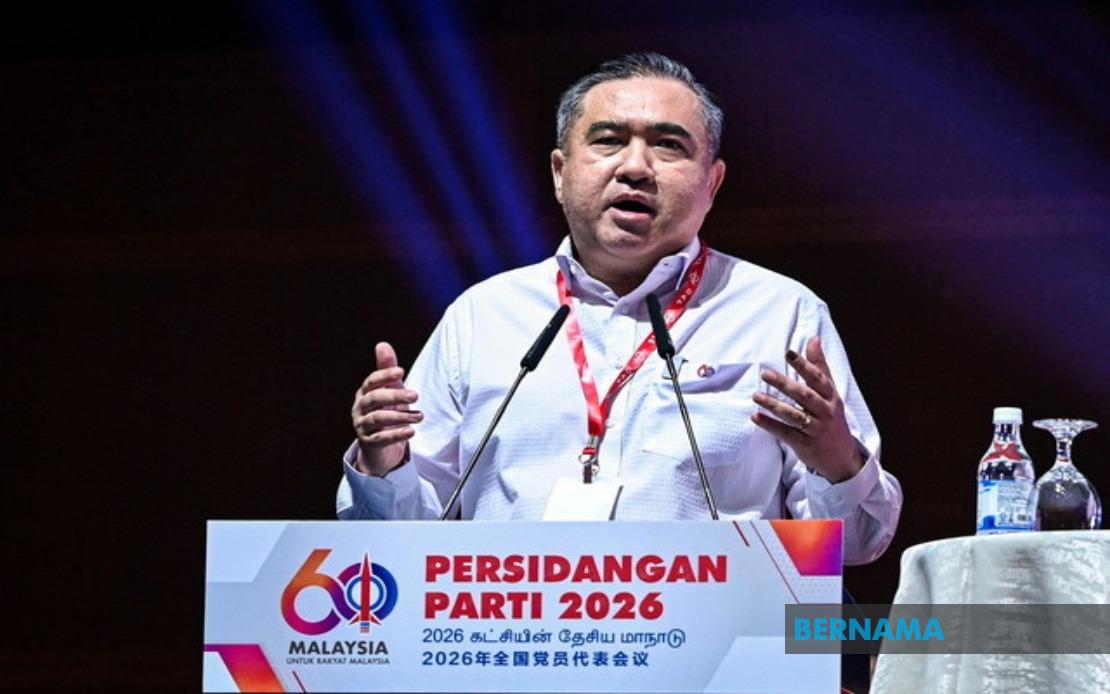
The Democratic Action Party has declared unequivocal support for the government's intention to repeal the Universities and University Colleges Act 1971, positioning the decision as validation of decades-long advocacy by the opposition-turned-coalition partner. Speaking at the DAP 2026 National Conference at the Putrajaya International Convention Centre on August 16, party secretary-general Anthony Loke framed the endorsement as evidence that his party's participation in the Pakatan Harapan coalition transcends mere accumulation of ministerial portfolios, instead focusing on translating campaign promises into legislative action that reshapes institutional structures governing Malaysian public life.
Prime Minister Datuk Seri Anwar Ibrahim unveiled the repeal proposal during his keynote address at the PKR 2026 National Congress, anchoring the decision to petitions and memorandums submitted by student leaders demanding comprehensive statutory reform. The Cabinet will formally consider the government's proposal at the following Wednesday's meeting, setting the stage for parliamentary proceedings that could fundamentally alter the legal framework regulating student conduct and political participation at public universities across Malaysia.
The AUKU framework has proven remarkably resistant to overhaul despite mounting pressure from civil society organisations, student unions, and political parties across the ideological spectrum. Since its enactment in 1971, the legislation has undergone seven amendments, reflecting the tension between administrative convenience and democratic imperatives. The 2012 modification represented a watershed moment by permitting students to engage in political party activities beyond campus boundaries, tacitly acknowledging that the original prohibition had become untenable in a maturing democracy.
More recent modifications have further eroded the Act's restrictive architecture. The 2024 amendment to Section 16B transferred disciplinary authority from vice-chancellors to Student Disciplinary Committees, introducing an accountability mechanism that theoretically dilutes administrative overreach while potentially complicating enforcement procedures. Simultaneously, amendments to Section 15A expanded financial autonomy for student representative councils and associated bodies, allowing them to solicit funds and accept donations subject to applicable regulations—a provision that recognises student organisations as legitimate economic actors rather than mere extensions of university administrative machinery.
Yet these incremental changes, while meaningful within their scope, have failed to address underlying structural constraints that critics argue fundamentally contradict principles of academic freedom and student autonomy. The repeal proposal signals recognition that piecemeal amendment cannot adequately reform legislation designed during an era of greater government paternalism and reduced student political consciousness. Complete legislative replacement would eliminate blanket restrictions that, despite amendments, continue constraining student political organising, protest activities, and independent advocacy within public university campuses.
Loke's statement also reveals strategic positioning within the coalition, suggesting DAP intends to leverage its legislative presence to advance an agenda extending beyond AUKU repeal. The party's explicit call for parallel reforms ensuring equal higher education opportunities regardless of racial background indicates determination to link student freedom with broader social equity objectives. This linkage transforms the AUKU debate from a narrow student rights issue into a comprehensive reconceptualisation of how Malaysia's higher education system allocates opportunity, potentially challenging affirmative action policies and merit-based admission criteria that have historically structured university access.
The timing carries particular significance for Malaysia's coalition politics. By publicly endorsing and amplifying the Prime Minister's announcement, DAP demonstrates alignment with Pakatan Harapan's reformist brand while simultaneously signalling to grassroots supporters that the party remains committed to transformative change rather than administrative consolidation. This messaging becomes increasingly important as the coalition approaches the next general election cycle, where younger voters and urban constituencies—traditional DAP constituencies—expect substantive policy outcomes beyond incremental tinkering.
Student organisations have articulated compelling arguments for comprehensive AUKU repeal, contending that even amended versions maintain excessive restrictions on campus-based political activity and impose disproportionate disciplinary consequences for protest participation. International comparisons with student movements in democracies with robust academic freedom protections reinforce arguments that Malaysia's regulatory framework remains anomalously restrictive. Campus-based activism on issues ranging from climate change to geopolitical developments has illustrated how AUKU constraints potentially silence student voices during formative years of political consciousness.
However, the repeal proposal will inevitably encounter institutional resistance from university administrations concerned about campus order maintenance and academic integrity protection. Vice-chancellors and senior academics may argue that complete statutory repeal creates enforcement vacuums requiring alternative regulatory mechanisms, potentially necessitating university-specific bylaws that could fragment student protections across different institutions. The Cabinet deliberation process will therefore likely witness vigorous advocacy from higher education stakeholders seeking to preserve administrative flexibility even as student freedoms expand.
For Malaysian civil society, the AUKU repeal represents a litmus test of the coalition government's commitment to institutional democratisation beyond rhetorical commitments. The legislation's fate will signal whether the Pakatan Harapan administration prioritises transformative reform over administrative conservatism, and whether parties like DAP can translate coalition participation into concrete policy victories on issues central to their electoral constituencies. Regional observers across Southeast Asia will likely monitor the Malaysian experience as precedent for balancing institutional stability with democratic participation within state-controlled higher education systems.
The broader implications extend to questions of whether complete repeal constitutes optimal policy architecture or whether reformed legislation retaining specified restrictions might better balance legitimate institutional interests with expanded student autonomy. International higher education governance patterns suggest diverse models can accommodate student freedom, from institution-specific frameworks to general statutory protections combined with democratised university governance structures. Malaysia's approach will reflect distinctive institutional cultures and political priorities that evolve during the Cabinet consultation process and subsequent parliamentary debate.

