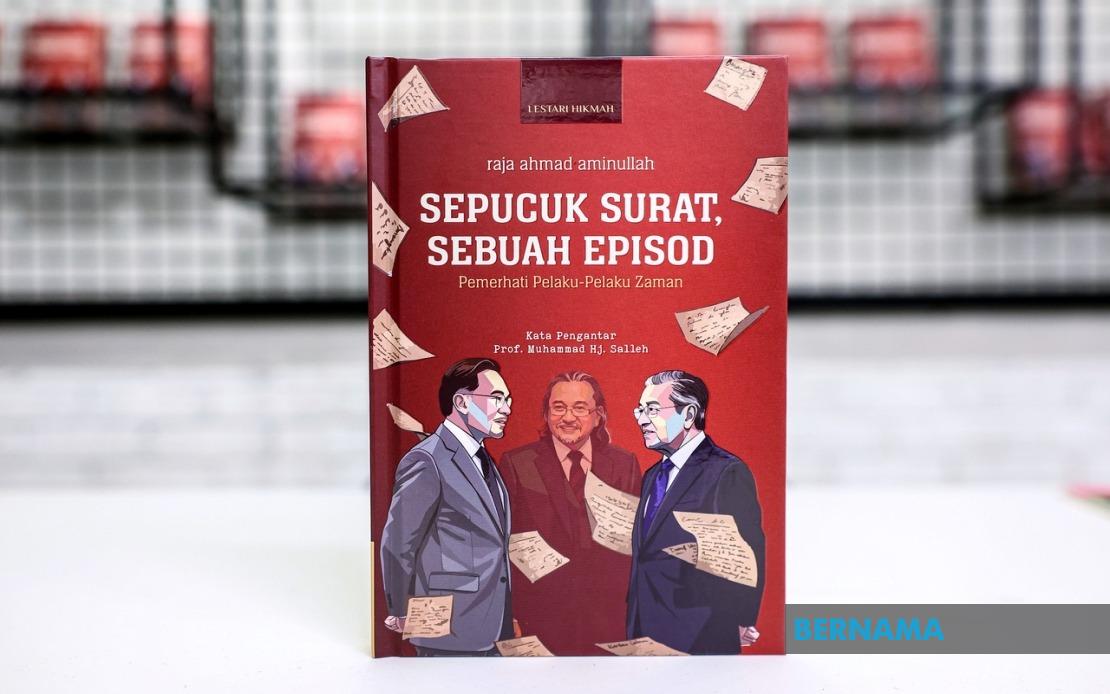
Cultural commentator Raja Ahmad Aminullah, affectionately called Pak Engku, has released a significant collection of personal correspondence with some of Malaysia's most influential personalities. Titled "Sepucuk Surat Sebuah Episod: Rakaman Pelaku-Pelaku Zaman", the work was officially launched in Kuala Lumpur by the National Book Council of Malaysia's director Mohd Khair Ngadiron, drawing together artists, academics, and long-time associates of the celebrated figure.
The 169-page volume represents more than a simple archive of written exchanges. Instead, Raja Ahmad has framed it as a sociological and cultural documentation reflecting his observations of communities across Malaysia over several decades. Rather than positioning itself within political discourse, the book deliberately shifts focus toward the human dimension of Malaysia's public figures and the social dynamics that have characterised recent decades of national development.
Raja Ahmad's approach to the publication reflects a deliberate philosophical stance. He emphasises that the work transcends partisan concerns or personality-focused narratives. The collection does not elevate any single leader or ideology, but instead captures snapshots of a particular historical moment—approximately 25 years prior to the book's release—preserving these moments for broader societal reflection and learning. This positioning is significant given Malaysia's highly polarised political environment, where cultural documentation often becomes entangled with factional disputes.
The author's emphasis on the distinction between political commentary and socio-cultural observation deserves particular attention for Malaysian readers navigating an increasingly fragmented media landscape. Raja Ahmad explicitly rejects what he terms "the politics of confrontation", suggesting instead that his role has been to observe and document social phenomena rather than advocate for specific interests. This measured approach contrasts with much contemporary Malaysian commentary, which frequently conflates cultural analysis with political positioning.
For scholars and students of Malaysian history, the collection offers potential value as a primary source document. The correspondence spans interactions with multiple generations of national figures, potentially illuminating the informal networks and personal relationships that have shaped policy decisions and institutional development. Understanding such behind-the-scenes dynamics enriches historical analysis beyond what official records typically reveal, particularly regarding the social and cultural context within which political decisions were made.
The launch event itself reflected the author's standing within Malaysia's cultural establishment. The presence of literary figures and academics suggests recognition that this work addresses questions relevant to multiple disciplines—history, literature, social sciences, and cultural studies. This interdisciplinary appeal indicates that the book aims to serve audiences beyond narrowly focused political readers, positioning itself as a resource for understanding Malaysia's development from multiple analytical perspectives.
Raja Ahmad's insistence that the work is not "about" any particular figure is worth examining carefully. By disclaiming focus on Tun Dr Mahathir Mohamad, Datuk Seri Anwar Ibrahim, or any single personality, he positions the correspondence itself—rather than the individuals—as the primary subject. This rhetorical move suggests that value lies in the interaction between figures, the historical moment captured, and the broader social patterns visible through personal exchange, rather than in biographical or personality-driven analysis.
The publication arrangements reveal consideration for accessibility across Malaysia's diverse reading population. Produced by Lestari Hikmah and priced at RM30 for softcover and RM80 for hardcover editions, the book is distributed through conventional bookstores alongside online channels. This multi-channel approach acknowledges both traditional and digital reading habits among Malaysian audiences, broadening potential readership beyond urban literary circles.
For regional observers, this work contributes to a broader conversation about how Southeast Asian nations document and preserve their recent histories. Malaysia's transition through multiple political and social phases over recent decades provides rich material for cultural analysis. By capturing personal correspondence rather than official statements, Raja Ahmad's collection potentially reveals nuances about leadership, decision-making, and social change that formal historical records often obscure. This approach aligns with growing international scholarly interest in personal archives as windows into institutional and social history.
The timing of this publication merits consideration within Malaysia's current political and social context. As the nation continues processing significant recent political transitions and institutional challenges, works that offer reflective, non-partisan historical perspective serve important social functions. They provide space for contemplation beyond the immediate demands of contemporary disputes, encouraging readers to engage with history as process rather than as ammunition for current conflicts.
Raja Ahmad's positioning of himself as "inconsequential" within his own narrative demonstrates intellectual humility while simultaneously claiming authority as observer and documentarian. This paradoxical stance—asserting insignificance while publishing a major cultural work—reflects sophisticated understanding of how cultural commentary operates in Malaysian contexts. By minimising personal agency, he elevates the subjects of his observation and the historical moment itself, suggesting that understanding Malaysia's development requires attention to social currents and relationships rather than to individual ego or ambition.
The book ultimately represents an attempt to preserve institutional and social memory at a moment when Malaysia continues renegotiating its identity and direction. Personal correspondence, being inherently intimate and immediate, captures something that official histories often miss—the texture of actual human relationships and concerns underlying public events. For readers seeking to understand not merely what happened in Malaysia's recent past, but how influential figures actually thought and related to one another, this collection promises genuine insight grounded in documented exchange rather than retrospective interpretation.

