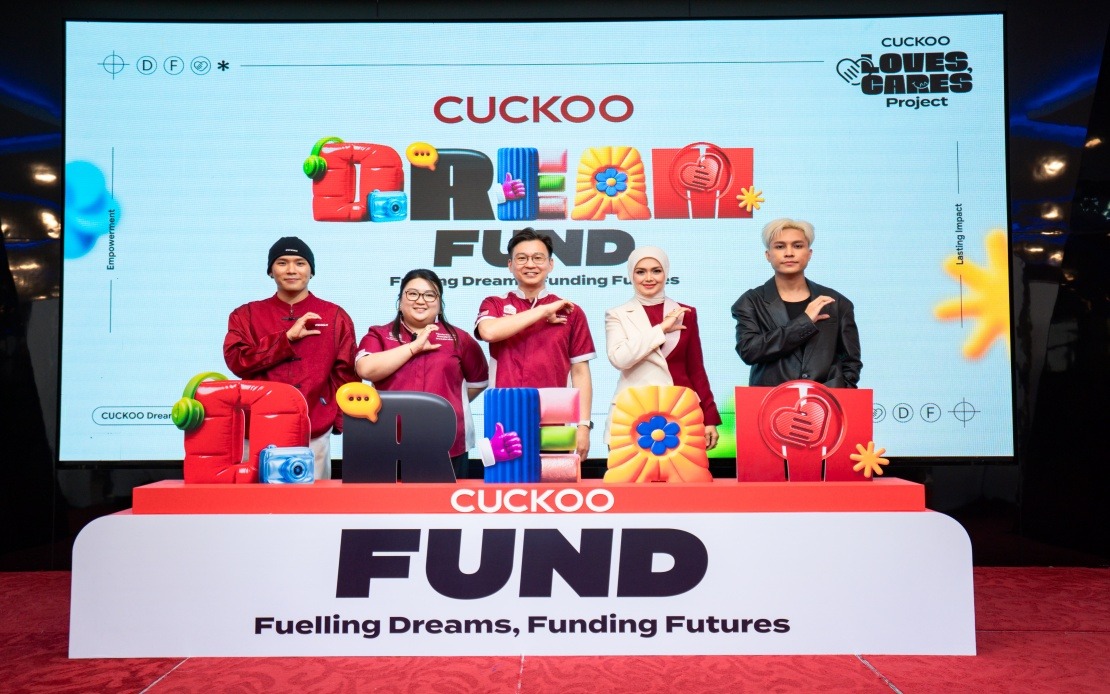
CUCKOO International (MAL) Berhad has unveiled an ambitious programme aimed at channelling corporate resources towards nurturing emerging creative talent in Malaysia. The company's RM100,000 CUCKOO Dream Fund represents a significant commitment to social entrepreneurship, opening doors for young Malaysians aged 15 to 30 to develop and execute creative projects with genuine community impact. Applications for the initiative, branded "Fuelling Dreams, Funding Futures," will remain open until September 30, offering a structured pathway for aspiring creators to transform ambitious ideas into tangible outcomes.
The fund operates as a comprehensive support ecosystem rather than simple grant distribution. Applicants can access creative grants of up to RM5,000 to fund original artistic work and essential project execution costs, with an additional RM5,000 available as social impact alignment funding for initiatives demonstrating clear connection to community needs, awareness-raising efforts, or positive social legacy. During the first funding cycle, successful applicants can receive up to RM10,000 per project, with the total RM100,000 pool divided equally across two application periods of RM50,000 each. This dual-structure approach allows the company to assess emerging ideas continuously while maintaining rigorous evaluation standards throughout the year.
What distinguishes CUCKOO's initiative from conventional grant schemes is its integration of professional mentorship with financial support. The company has appointed musician and songwriter Firdhaus Farmizi as both CSR Friend and primary mentor for the Dream Fund, tasking him with evaluating applications and providing direct guidance to funded projects. Farmizi's involvement brings industry credibility and practical experience to the selection process, helping shortlist candidates whose concepts align with the programme's emphasis on combining artistic excellence with meaningful social messaging. This mentorship dimension addresses a critical gap many young creators face—access not merely to capital, but to experienced guidance during project execution.
The fund welcomes submissions across five creative disciplines, reflecting contemporary forms of artistic expression and cultural engagement. Digital content and storytelling projects can explore multimedia narratives and online platforms for social awareness. Music and sound submissions might encompass compositions, audio documentaries, or sonic installations addressing social themes. Design and visual arts applications cover illustration, graphic design, photography, and installation work. Performance and movement proposals include dance, theatre, spoken word, and kinetic expression. Creative workshops represent the final category, enabling applicants to develop educational programmes that build skills while addressing community challenges. This breadth ensures the fund captures diverse creative voices and methodologies rather than privileging traditional or established art forms.
The eligibility criteria deliberately target transitional stages in creative careers. Students currently pursuing qualifications, recent graduates entering the professional sphere, and self-taught creators navigating independent paths can all apply, recognising that innovation and social consciousness aren't confined to formally trained practitioners. The two-minute pitch video requirement—coupled with detailed project proposals—reflects modern communication norms while remaining accessible to creators from varied backgrounds. By asking applicants to articulate both their creative vision and social impact objectives concisely, CUCKOO signals its expectation that meaningful projects integrate purpose with artistic merit, not treating social concerns as afterthoughts to creative ambition.
This initiative sits within CUCKOO's broader corporate social responsibility architecture, specifically under the #SAMASAMAEmpower action brand encompassing the "CUCKOO Loves, Cares Project." The positioning suggests the company views creative empowerment as integral to its social mission rather than peripheral corporate citizenship activity. For Malaysian stakeholders, this represents a rare instance of a private sector entity—particularly one rooted in consumer electronics manufacturing—directing substantial resources specifically towards arts and culture with explicit social engagement requirements.
The timing and structure offer practical advantages for Southeast Asian creative ecosystems. Malaysian young people increasingly grapple with tensions between economic pressures and creative ambition, often forced to abandon artistic pursuits for stable employment. By providing RM10,000 seed funding alongside professional guidance, CUCKOO reduces this forced choice, at least temporarily, enabling participants to explore whether their creative-social hybrid concepts possess sustainable viability. Success stories emerging from this cohort could influence broader ecosystem attitudes toward socially conscious creative practice, demonstrating that cultural work can address real community challenges while maintaining artistic integrity.
For applicants, the application process mirrors professional grant structures. Submitting materials via the official CUCKOO Dream Fund webpage establishes formality while the video pitch component allows personality and passion to emerge beyond written text. Clear submission guidelines reduce barriers for creators uncertain about institutional language or grant-writing conventions, democratising access across educational backgrounds and socioeconomic circumstances. The September 30 deadline provides roughly two months for interested creatives to conceptualise projects and prepare compelling applications, a realistic timeframe for serious planning without creating artificial urgency.
The social impact emphasis represents a philosophical stance worth examining. By requiring projects to demonstrate community orientation or cause alignment, CUCKOO implicitly challenges the "art for art's sake" position, asserting that creative excellence and social usefulness need not conflict. This approach resonates with emerging global movements positioning arts and culture as legitimate policy tools for addressing complex social challenges—from mental health to environmental awareness to community cohesion. Malaysian creatives responding to this framework might pioneer locally distinctive approaches to socially engaged creative practice, distinct from Western models that often dominated discourse.
Implementation challenges warrant consideration. Evaluating "social impact" requires nuanced judgment—risk exists that selection committees might favour obvious or conventional approaches to social causes over innovative or experimental methodologies. Mentorship quality will substantially influence funded projects' success; Farmizi's involvement provides initial credibility, but the programme's evolution depends on sustained engagement from experienced practitioners. Additionally, RM10,000 per project, while meaningful, may constrain scope for certain proposals, particularly those requiring technical infrastructure or collaborative scale.
Looking forward, this initiative's success hinges on execution quality and sustainability. If CUCKOO commits to multiple funding cycles, establishes transparent evaluation criteria, and publicises outcomes, it could catalyse broader corporate interest in creative economy development within Malaysia. The programme might generate case studies demonstrating how private sector resources can strengthen creative sectors without imposing commercial imperatives that compromise artistic autonomy or social authenticity. For young Malaysians navigating career uncertainties, the Dream Fund offers immediate practical support while signalling that creative work addressing social concerns deserves institutional recognition and investment.

