Cuba's President Miguel Diaz-Canel has launched a sharp rebuke against the United States over newly imposed sanctions, drawing historical parallels to Cold War-era political persecution and warning of what he describes as a contemporary ideological crusade against leftist movements worldwide. Speaking through social media, the Cuban leader characterised recent American measures as a manifestation of "a new and more dangerous version of McCarthyism," invoking the infamous 1950s campaign that targeted suspected communist sympathisers in the United States. His comments reflect Havana's growing frustration with the escalation of bilateral tensions under the Trump administration's renewed hardline approach to the Caribbean nation.
Diaz-Canel's rhetoric extends beyond conventional diplomatic protest, drawing sweeping historical analogies to underscore what he views as a coordinated assault on progressive political movements. He specifically referenced the alignment of transnational far-right coalitions with what he termed echoes of "Hitlerite fascism" and Operation Condor, the notorious clandestine campaign orchestrated by authoritarian regimes across Latin America during the 1970s and 1980s that resulted in tens of thousands of deaths. By invoking these historical episodes, the Cuban president sought to frame current geopolitical tensions as part of a pattern of systematic suppression directed at leftist actors, both domestically and globally. His argument suggests that the targeting of Cuba serves as a component within a broader ideological campaign rather than a standalone foreign policy initiative.
The Cuban government's interpretation emphasises what officials characterise as selective application of international law and human rights standards. Diaz-Canel questioned whether the documented concerns raised against leftist governments are being weaponised as justification for what he termed "new abuses and greater aggression." This framing attempts to reposition Cuba as a victim of geopolitical persecution rather than a state subject to sanctions based on documented governance concerns. The Cuban leadership contends that the philosophical foundation driving international far-right movements—a system centred on "dispossession"—represents the genuine threat to global stability, rather than the policies pursued by governments aligned with socialist or progressive ideologies.
In his broader critique, Diaz-Canel enumerated grievances extending well beyond bilateral Cuban-American relations, connecting US policy to multiple international crises. He attributed the conflict in Gaza, extrajudicial executions, migrant persecution, and military operations such as the bombing of a girls' school in Iran to American involvement or tacit support through allied nations. The Cuban president presented these incidents as manifestations of the same ideological framework underpinning sanctions against Cuba, effectively constructing a narrative of consistent American-led violence against vulnerable populations worldwide. This rhetorical strategy positions Cuba's struggle against sanctions within a larger humanitarian and anti-imperialist framework rather than as a discrete bilateral dispute.
The immediate trigger for Diaz-Canel's statement stems from the Trump administration's May 2024 executive order—signed by President Donald Trump—which imposed fresh sanctions targeting Cuban officials and state entities. The White House justified these measures by citing repression within Cuba and alleged threats to American national security and foreign policy interests. This action represented an intensification of existing restrictions, building upon previous measures including Trump's January 2024 executive order that declared a national emergency regarding oil supplies to Cuba and authorised the imposition of tariffs against nations supplying petroleum to the island.
The sanctions regime targeting Cuba has intensified markedly over recent years, creating cascading consequences for the island's already fragile economy. American measures have proven multifaceted in their reach, extending beyond direct financial penalties to encompass restrictions on corporate transactions with Cuban entities, pressure on international companies to cease operations involving the island, and constraints on Cuba's participation in global financial systems. These restrictions effectively isolate Cuba from conventional sources of international credit and financing, compounding the challenges facing economic policymakers. The cumulative effect has severely restricted the government's capacity to fund imports, maintain infrastructure, and sustain public services.
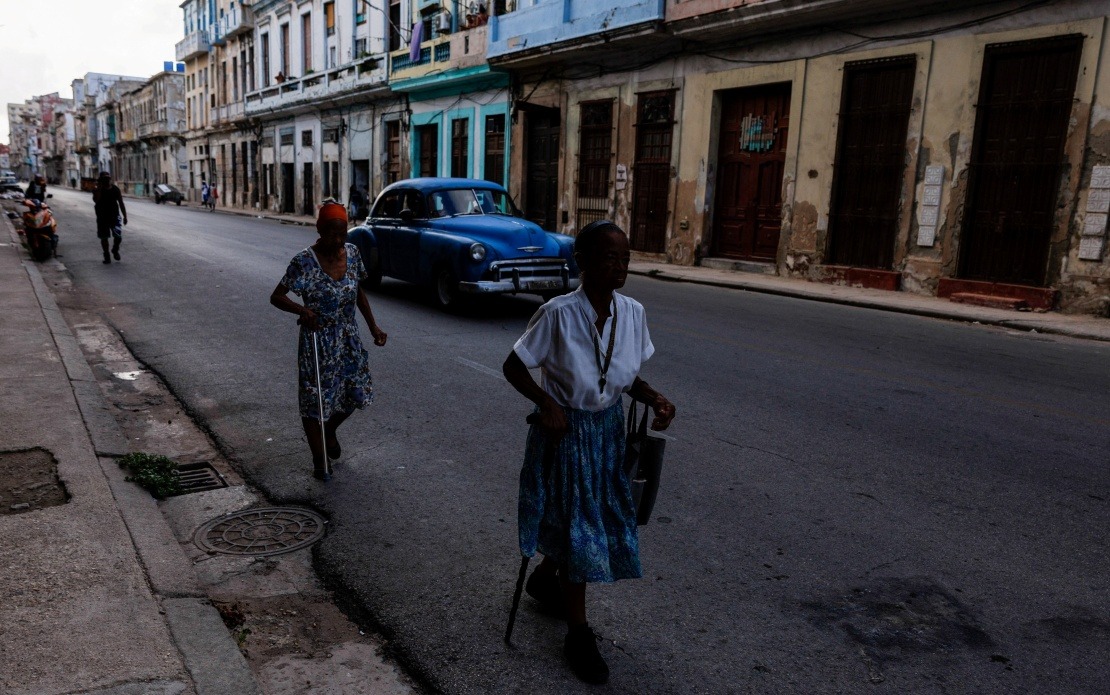
Cuba is currently navigating what authorities characterise as the most severe economic contraction in recent decades, with cascading failures across essential infrastructure and basic services. Official statistics reveal that the economy contracted sharply during the first half of 2024, with electricity generation collapsing to create an unprecedented power deficit of approximately 1,955 megawatts. These technical shortfalls have translated into daily power outages averaging 20 hours across much of the island, severely disrupting industrial production, healthcare delivery, water systems, and household functioning. The severity of these utility failures indicates systemic deterioration extending beyond temporary supply disruptions to reflect fundamental capacity constraints within Cuba's energy infrastructure.
The Cuban government attributes this economic deterioration substantially to the tightening of American sanctions and the broader implications of the embargo that has persisted across six decades. Officials argue that Washington has orchestrated disruptions to oil supplies reaching Cuban ports, mobilised diplomatic and commercial pressure against multinational corporations maintaining Cuban operations, and systematically blocked the island's access to international financial services. These assertions reflect a perspective held broadly within the Cuban leadership that external constraints imposed by the United States represent the primary obstacle to economic stabilisation, though international observers have emphasised that domestic governance issues and inefficiencies within Cuba's economic system have also contributed substantially to the crisis.
The comparison to McCarthyism carries particular significance given the historical context of Cold War antagonism between the United States and Cuba. Senator Joseph McCarthy's 1950s campaigns created a climate of ideological persecution in the United States, characterised by accusations, blacklisting, and institutional discrimination against individuals suspected of communist sympathies or associations. Diaz-Canel's invocation of this historical parallel is intended to delegitimise current American policy as fundamentally rooted in ideological hostility rather than rational security concerns, while simultaneously suggesting that Washington has failed to transcend Cold War mentalities that historically justified aggressive interventions in the hemisphere.
For Malaysia and the broader Southeast Asian region, this escalating Cuba-US confrontation holds significance beyond bilateral hemispheric concerns. The sanctions regime and the ideological framework Diaz-Canel criticises reflect broader geopolitical tensions between liberal democracies and governments identifying with alternative governance models. Southeast Asian nations, several of which maintain non-aligned foreign policies or pursue development paths diverging from Western prescriptions, observe closely how international power structures respond to states resisting American-led global arrangements. The Cuban situation illustrates the potential consequences of sustained defiance against dominant powers, offering both cautionary and inspirational lessons depending on ideological orientation. Additionally, the escalation of US sanctions reflects renewed American assertiveness in global affairs that may have implications for other regions navigating great power competition.
The Cuban economic crisis also underscores how geopolitical isolation translates into humanitarian impacts on ordinary populations, raising questions about the efficacy and ethics of sanctions as foreign policy instruments. As Cuba faces unprecedented shortages of fuel, electricity, and imported goods, the population experiences acute material hardship including constraints on medical supplies, food availability, and transportation. These conditions have prompted increased irregular migration from Cuba to the United States and third countries, creating regional migration pressures affecting neighbouring Caribbean and Central American nations. This humanitarian dimension adds complexity to international evaluations of sanctions regimes, particularly relevant for developing nations concerned about vulnerability to economic coercion.
Moving forward, the trajectory of Cuba-US relations appears unlikely to shift substantially in the near term, given the Trump administration's demonstrated commitment to hardline positioning. However, the accumulating economic pressures and humanitarian consequences may eventually generate internal and external pressures toward negotiation or adjustment of current policies. Meanwhile, Cuba's rhetorical positioning emphasises resistance and solidarity with global leftist movements, framing the conflict as ideological struggle rather than pragmatic dispute amenable to compromise. For regional observers in Southeast Asia and elsewhere, this confrontation exemplifies the enduring tensions between state sovereignty, ideological competition, and the exercise of economic power in international relations.

